Pages

Showing posts with label 1990s. Show all posts

Thursday, 12 June 2014

Album #158: Regurgitator - Tu-Plang

Regurgitator
Tu-Plang (1996)

Regurgitator are like the herpes of Australian music - they refuse to go away and cause an itchy sensation (er maybe.) Their biggest years were in the 90s, when their first two albums - this one and Unit - were massively successful (and in Unit's case, damn catchy retro.) They tried to come back by being a 'Band in a Bubble' (it didn't work.)

The group's debut album Tu-Plang was notable not just for providing several big Hottest 100 tracks, but also for its variety. Covering pop, alternative, hip hop, rap rock, punk and electro, it was a hodgepodge of styles.....and not all of them worked.

The Album

The successes are several, and make the album worthwhile. Opener I Sucked A Lot Of Cock To Get Where I Am is possibly the catchiest song about using the art of fellatio to get ahead....well, ever (it may also be the only song about that topic). A simple yet appealing riff is tied to some occasional harmonies, and the whole thing is headboppy (pardon the pun.) Although it's just electro noise, G7 Dick Electro Boogie is strangely appealing, with some rather entertaining anti-capitalist lyrics set to some thumping beats. Blubber Boy is another example of the Gurge's ability to write 'pop' tunes with an underground edge, Miffy's Simplicity is a very enjoyable slice of punk-tinged rock, while the only hip hop song that hits the mark is the blatant parody of Pop Porn, where every single lyric seems to refer to 'gats' and the protagonist's impressive semen distribution skills, as well as his incredible rhyming abilities; if it were serious it'd suck, but thankfully it's blatant parody.

A couple of songs are honourable mentions for being nice efforts but a little weak - Music Is Sport is an impressive piece of metaphor, mainly in being able to tie the live music experience to the sporting one, while Kong Foo Sing's massive, messy sound and half rapped/half sung vocals create a decent tune, but one that does grate by the end.

Other songs miss the mark completely. Couldn't Do It (Happy Shopper Mix) proves that nobody should ever do Muzak ever, Social Disaster is intolerable rap/rock noise, F.S.O is intolerable punky noise, Manana is a dirge and Young Bodies Heal Quickly is pointless.

The Verdict

I enjoyed Tu-Plang when it was released, and I still like most of it today, but as an overall album there's too many weak spots on it, to be fair. It's a perfect album for the iTunes generation because some of the songs are essential, while others are unnecessary. It's also not as good as its followup, the consistently better Unit.

My rating: 6.7/10

Monday, 9 June 2014

BULK MEGA MINI-REVIEW CATCHUP

Bulk Mega Mini-Review Catchup

In light of the fact that the next two months are going to be extremely busy (thanks to the World Cup, largely) I've made the decision that, where I'm stretched for time, my reviews are going to be much, much shorter.

Now that may come as a disappointment to...well, maybe three of you, but this way I can a) still listen to an album a day, b) not feel pressure to churn out a massive review every day when I'm gonna be busy sleeping/drinking coffee/watching football/watching cycling, and c) stay relatively up to date.

To test out this new 'mini-review' idea I'm going to, today, do a Bulk Mega Mini-Review Catchup of the last four albums I've listened to.

I won't do this for every album, but where I fall behind, it's going to be the way I catch up; and if I'm pressed for time, it's going to be how I get a review out in a timely fashion.

With all those disclaimers out of the way, let's get cracking!

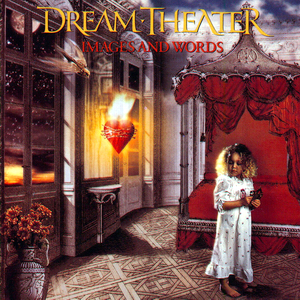
Album #154: Dream Theater - Images and Words


The second album by prog metallers Dream Theater, and the first to feature vocalist James LaBrie. Keyboard whiz Jordan Rudess isn't here yet but that doesn't really matter, not while guitarist John Petrucci and drummer Mike Portnoy are around to blow your mind. In fact, one of the remarkable things about Dream Theater is that technically, all the musicians are fucking superstars.

From the sprawling keyboard chords and monster choruses of Pull Me Under to the insane progressive polyrhythmic masterpiece of Metropolis Part I, it's a kickarse display of progressive rock/metal, and seems like the natural progression of bands like Yes, Rush and King Crimson. It's really rather good and what's more, it's apparently not even their best album

My rating: 8.2/10

Album #155: The Beastie Boys - Paul's Boutique


When Paul's Boutique was released, it was a chart disappointment. Label execs stopped promoting the album because it didn't sell as well as Licenced to Ill. It's proof that people are stupid because Paul's Boutique stomps much ass. Backed by producers The Dust Brothers, who cram every single possible sample possible into a single album, there's some insanely powerful beats, thrilling hooks and that oh so Beastie tongue-in-cheek gift for humourous hyperbole.

I dare you not to listen to this album and jump up every thirty seconds as you recognise yet another sample (the ingenious chopping up of The Beatles' The End on The Sounds of Science and the use of Hendrix's Are You Experienced on B-Boy Bouillabaisse are my personal favourites, along with all the use of John Bonham thunderous drumbeat mastery throughout the album).

My rating: 7.9/10

Album #156: My Bloody Valentine - Loveless


This album was requested by two friends with the promise that it took guitar overdubs to a level that not even the bloated Be Here Now could touch. It came with a further assurance that, unlike Be Here Now, it didn't disappear up its own arse.

That's certainly true, because Loveless ends up being something akin to an orchestral piece, except all the classical instruments have been replaced by endless samples of guitars and drums, and even the vocals themselves are less a standout, more just another instrument. The result is something that drones (a lot) but it's a good drone, if that makes sense - there's textures and layers all over the place, and the album ends up being more than the sum of its parts. Credit must go to Kevin Shields for labouring over this album for so long, because the proof is in the pudding.

The stunning Come In Alone, the rather indie-rocking I Only Said and the Stone Roses-dance-rock of Soon are the biggest standouts on a bloody good record.

My rating: 8.6/10

Album #157: East 17 - Walthamstow


People forget that East 17 were legitimate contenders for Number 1 Boy Band of the early 90s. They sold more records and were generally seen as much cooler than Take That because of their hip, streetwise image. That streetwise image is on this debut album in spades, thanks to the rave-meets-R&B-meets-pop-meets-hip hop flavour of its aesthetic. 

As you'd expect from a boy band album though, it's singles and sweet fuck all else; even if some of those singles are stompingly ace. I mean, come on, if you don't think House Of Love is a fucking anthem and if you're not jumping around like a motherfucker when it's on, you're probably fucking dead, and even if It's Alright has some frankly dreadful lyrics at times ("Alright/alright/everything's gonna be alright/alright/alright/everything's gonna be alright/alright/alright/everything's gonna be alright/alright/alright/it's really alright"), it makes up for it through sheer dancepop power and some hilarious lyrics ("We are the seed of the new breed/We will succeed").

The rest of the album can get stuffed.

My rating: 5.5/10

Tuesday, 27 May 2014

Album #147: Pavement - Crooked Rain, Crooked Rain


Pavement
Crooked Rain, Crooked Rain (1994)

There comes a time in every music lover's life when he just wants to be left alone, to live in relative peace and harmony, free from the neverending nagging and badgering of others. A time when he can enjoy serenity. A time when he can finally satisfy the needs of others and in so doing fill a gap in his own life.

That time has come today because I'm finally going to listen to a Pavement album and get EVERY SINGLE PERSON who has ever said or written, "hey you should listen to Pavement", off my case. So this better be good, because if it's not, I'm going to be sorely disappointed, and I am going to personally make it my mission to discredit every single thing Robert Christgau has said because he thinks Pavement are the ultimate band of the 90s.

The Album

The words I would use to describe Crooked Rain, Crooked Rain are sloppy, messy, chaotic and loose.

I would also use the term 'remarkably carefree'.

I think viewed through those lenses, it's understandable why it has received such high praise, because it's almost the manifesto for underground indie rock - unpolished and rough, yet full of immensely creative musical craft. For the most part, creative force Stephen Malkmus has created an album here full of fire, fury and fizz, where the nods to classic rock are easily found even while there's not a single song that sounds like a ripoff, pastiche or even celebration of those sounds.

Despite a slow start (Silence Kid is good but not great; 70s powerpop vibes meet scratchy vocals and riffs played with reckless abandon, although the mid-song tempo change is like a sledgehammer to the balls, and Elevate Me Later is much the same except for a wonderful false ending) the album soon begins to take flight, and confirm all the buzz of the critics. 

Stop Breathin' is brilliantly produced. Even within all the instrumental noise, Malkmus' vocal seems to occupy its own clear space, and when his vocal gives way to the song's intense second movement, the tension is tightened like a drum. Cut Your Hair is top drawer stuff, with a lyrical theme that seems to target those who critique big hair as representing the worst musical excesses of the 1980s, while musically, the drony choir of guitars are never obtrusive and there's a great drumbreak by the impressive Steve West. It's such a visceral, energetic track that when the comparatively mellow Newark Wilder arrives, with its smooth, jazzy drumming and withdrawn guitars, it provides respite.

Which lasts for approximately one song as the powerful, ballsy Unfair blazes its way into your ears, with abrasive guitar riffery and Malkmus' half bellow/half wail. From there, the high quality is maintained with only a minor dropoff. Gold Soundz probably isn't the ULTIMATE SONG OF THE 90s (good work Pitchfork) - hell I don't even think it's the ULTIMATE SONG OF Crooked Rain, Crooked Rain! It is however an upbeat, jangly tune with clever lyrical turns of phrase.  5-4=Unity (so named for its time signature) is a highly intriguing sonic adventure, where Pavement turn into some sort of indie/jazz fusion band with a splash of avant-garde thrown in (just listen to the repetitive piano meanderings and the dissonant guitar melodies). For sheer chutzpah in including such an out-of-place track (and for doing a good job with it) Pavement deserve praise. They also deserve praise for the fantastic yet folky Range Life (Malkmus offers sage yet honest wisdom on the life of a touring musician, and does it in an old-school folk style, with a vocal that's worldweary, while the music continues the 70s rock vibe) and the jarring, grating Hit The Plane Down (written by guitarist Scott Kannberg, and featuring a rather ingenious guitar effect that sounds like a recording of a car creating the Doppler effect).

Yet it's on the final track, Fillmore Jive, where the brilliance of Pavement is laid bare in all its messy, filthy, creative glory. At almost seven minutes, it's by far the longest track on the album, but what a track; Malkmus and co create a jam track in the finest traditions of 70s bands like The Grateful Dead and Pink Floyd's early 70s work, yet in the lyrics seem to be crying out for this style of music to be left alone; it's rock and roll crying out to have a rest, burned out on thirty years of overexposure ("I need to sleep/I need to sleep/Why won't you let me sleep?" and "Goodnight to the rock and roll era" being the two major examples). The chosen 70s jam rock style acts as a final hurrah even while rock and roll is begging for peace. It's the most terrible timekeeping you've ever heard, and I haven't heard so many flubbed drum fills in my entire life, and some of the solos and riffs are really just fiddly noise, and yet it affirms everything I love about music, that it's the passion and the carefree nature that sometimes creates the greatest work.

The Verdict

Don't believe everything the critics said - this isn't a perfect album. Some of the musicianship is decidedly average and Malkmus, while a stunningly good songwriter and lyricist, is not a particularly good singer (though in a kind of Wayne Coyne way, it fits the music rather well.) Additionally, the first two songs are good but not great, and consequently it takes time to hit its straps.

So it's not perfect but it's a terrifically cohesive body of work, where most of the songs are great (if not brilliant) slices of art. In my view this is what indie music, the really experimental fuck conformity indie music, should sound like.

My rating: 8.9/10

Standout Tracks

Fillmore Jive
Range Life
Cut Your Hair


Monday, 19 May 2014

Album #137: Manic Street Preachers - This Is My Truth Tell Me Yours


Manic Street Preachers
This Is My Truth Tell Me Yours (1998)

Welsh rockers Manic Street Preachers have certainly had an interesting history. Beginning life as a four piece, the band's lyrics were contributed in their early days by rhythm guitarist Richey Edwards, and because of his skills the Manics developed a reputation for politically charged, intelligent songs.

In 1995, however, that all changed; Edwards went missing, never to be found, and the band considered splitting up. However, after six months hiatus, they resolved to carry on, and despite the loss of Edwards were to develop into (for a while at least) one of Britain's biggest bands. With bassist Nicky Wire taking over lyrical duties, the group continued as a threepiece.

1998's This Is My Truth Tell Me Yours is probably the Manics' best known work. Critically and commercially it was a massive success, and that alone makes it worthy of inclusion to the Project. (That, and I haven't listened to the Manics in a very long time.)

The Album

This Is My Truth Tell Me Yours is a collection of Britpop structures and sounds with heavy use of strings and a noticeable arena rock aesthetic. Yet for all those typically commercial flavours, there's an undeniable smartness to many of the tunes. The heavily political lyrics of Richey Edwards have been replaced with a more worldly, mature lyrical approach from Nicky Wire. Consequently, the album very much presents as the sound of a band who are all grown up.

The word 'sprawling' can be used to describe the album's first two tracks, The Everlasting and If You Tolerate This Your Children Will Be Next. Sweeping strings, pleasant if occasionally morose melodies, and the great vocal of James Dean Bradfield tie the two together. If You Tolerate This is one of the standouts - a tune written about Welsh volunteers in the Spanish Civil War, its straightforward phased guitar riff swaps places with more grand strings and keyboards throughout the tune, while managing to keep a stadium singalong quality. You're Tender and You're Tired follows along the same lines, with a grand chorus and plenty of atmospheric production. The most Britpop tune on the album is Ready For Dreaming, right down to the stadium chorus and the Alan White drumbeat (that's Alan White of Oasis, not Alan White of Yes, by the way.)

There are also some tunes that show a greater range of sonic approaches. You Stole The Sun From My Heart creates a point of difference from the string-heavy Britpop aesthetic, forgoing the strings for guitars (and lots of them) - the chorus is a real singalong effort, while the riffs call to mind the likes of Supergrass and Blur; Tsunami is a great little tune, deriving influences from Indian music (it even features a tabla and sitar parts); Nobody Loved You melds a sizzling guitar riff with the oh-so-grungy superquiet verse/SUPERLOUD CHORUS structure, and even sees Bradfield hit some croaky falsetto; and the brilliant Be Natural fuses progressive elements with a Tears For Fears-style 80s powerpop aesthetic, thanks to the heavy reverb throughout on both instruments and bass.

As musicians the three are decent; Bradfield is a fine vocalist and a more than capable guitarist, especially when he's allowed to play nifty little solos, while Wire and drummer Sean Moore are solid players. The Manics are a prime example of the whole being greater than the sum of its parts, because as a threepiece they create a fantastic sound.

The Verdict

There's plenty to like about This Is My Truth Tell Me Yours. It should be played to bands like Coldplay as an example of how bands can make smart, emotionally investing music that still has a 'commercial' aspect. While it sometimes skirts the line of melodrama, there's enough musical difference to pull away from that edge.

My only criticism is the sad lack of Welsh lyrics. Looks like I'll need to rely on the Super Furry Animals for that.

My rating: 7.7/10

Standout Tracks

Be Natural
You Stole The Sun From My Heart
If You Tolerate This Your Children Will Be Next


Thursday, 15 May 2014

Album #132: Live - Throwing Copper


Live
Throwing Copper (1994)

The latest album from my adolescent life to receive a fresh listen through older ears is Live's Throwing Copper. The singles from this album bombarded radio and music video programming (hell, they probably still do), while the album itself used to get a runout alongside Korn and Metallica during the occasional late 90s pissup.

Personally speaking, I found them to be a bunch of pseudo-heavy tryhards, though my opinion of them certainly got worse when they ditched the pretense and became a full on Christian rock band. Lead singer Ed Kowalczyk was largely to blame for this, though I will admit that I thought him a decent vocalist (even if he was another 90s alternative singing-like-he's-constipated dude).

However, it's twenty years since the album's release, and probably twelve or thirteen years since I last heard anything from the album, so in the spirit of The LOAD Project, let's see if we can find the cause that has seen the album shift eight million units to date.

The Album

I'm not quite sure what people were thinking.

I can only assume that people purchased the album to get all the radio staples in one place. I can only further assume that a great many people who purchased the album only actually ever listen to the singles.

I make this assumption because, a handful of tracks aside, Throwing Copper consists of fairly asinine pseudo-grunge, featuring blaring riffs paired with wannabe intellectual lyrical content. It's a shining example of the artistic wasteland that was the great majority of 90s alternative radio rock. Actually, I'm sorry, I called it pseudo-grunge - according to Wikipedia it's post-grunge, a surefire sign that music writers have gone too fucking far in attaching the prefix post- to musical genres.

Don't get me wrong. When Live hit the target, they hit the target well. For example, I Alone is the best of the album's hit rock singles, using clearly contrasting dynamics to create a rollercoaster effect for the listener. The chorus is bold and powerful, Kowalczyk shifts effortlessly from hushed low tones to full throaty rock vocal, and the lyrics are one of the few on the album that aren't craptacular. The same can be said for the ballad Lightning Crashes, where Kowalczyk provides his best vocal on the album (or possibly ever in his entire life), the lyrics tell a simple metaphor for the circle of life, and the song uses a steady, gradual upward shift in dynamics. The album's final released single, the oddly titled White, Discussion, is also one of the better songs here. Although lyrically it's utter wank, and at times Kowalczyk brings back that trusty constipated vocal, sonically it delivers an alternogrunge experience akin to that of early Pearl Jam, even if it doesn't have PJ's dynamic bombast, nor pure musical skill.

Sitting smack bang in the middle of the ledger, occupying the 'distinctly average' zone, are the album's other two singles, Selling the Drama and All Over You, and the attempted prog/alternative fusion of Pillar of Davidson. They have their good moments - the singles, as to be expected, have hooky, fistpumping choruses, while Pillar of Davidson makes a good fist of establishing a storytelling vibe through the tune - but neither really manage to keep the blood flowing. Nevertheless, they are still reasonable listens.

Unlike the rest of the album, which I would rather kindly describe as 'turgid'. Waitress is abhorrent; lyrical dreck about how EVERRBODY NEEEDS SEERMMM CHANNNGE wrapped in a grating riff structure. Not since Nickelback have I ever wanted to skip a song so badly. Shit Towne does its best to live up to the name, because it really is shithouse. T.B.D is four minutes of sweet fuck all (even John Cage's famous 4.33 has more going on in it) and Stage fails where White, Discussion managed some success, trying to be all cool, self-assured angry grunge (resplendent with TEH SWEARZZZ) but instead seems like somebody allowed a fourteen year old to write down his thoughts after his parents said he couldn't have a TV in his room.

The Verdict

We really ought to forget that modern rock radio didn't exist in the 1990s. Albums like Throwing Copper are why. 

Did not like (a few songs aside).

My rating: 5.2/10

Standout Tracks

I Alone
White, Discussion
Lightning Crashes

Thursday, 8 May 2014

Album #126: Smashing Pumpkins - Siamese Dream


Smashing Pumpkins
Siamese Dream (1993)

Few musicians in the last twenty years have divided public opinion quite like Billy Corgan. For every person who extols his guitar playing skills or his virtuosity as a songwriter, there are people who will point out that his whiny vocals are like nails on a blackboard, or that he's an utterly arrogant fuckwit whose head is so far up his own arse that he's able to watch himself digest his own lunch. With Corgan, the truth is that all of these things are correct - his desire for perfection has pissed off many a bandmate, his control freak ways have driven others to depart projects in a huff, but they've also produced some fine, fine musical works.

Given Corgan's twattish behaviour towards his bandmates, it's a wonder Siamese Dream was recorded at all. This becomes more obvious when you research the album's background - significantly overdue and overbudget, plagued by arguments and tension, and recorded while Corgan was seeing a therapist after a nervous breakdown (and drummer Jimmy Chamberlin was bouncing in and out of a serious drug dependency).

That the album is actually pretty bloody good is nothing short of a modern music miracle.

The Album

I said when I reviewed Oasis' Be Here Now that too many overdubs can be a really, really bad thing, especially when it comes off as being self-indulgent bloated crap. It was remarked by a couple of good, also musically knowledgeable mates, that some albums can use a wall of guitar overdub sound for good, not evil, and that Siamese Dream was an example of this (the other example given, Loveless by My Bloody Valentine, will feature on a later edition).

I can confirm that yes indeed, Siamese Dream is an example of how you can overdub guitars to create a wall of buzzsaw distortion, but rather than being a testament to excess, it's gritty, it's necessary, it's heavy....it's good. Most of the album's tracks take the massive guitar sound approach, providing a cutting edge while the songs (for the most part) have radio-ready hooks. It's abrasive music that's ideally suited to rock radio without sacrificing a ballsy edge. 

Corgan's guitar playing is a standout, contributing a number of screeching, sizzling solos throughout, and he ended up playing most of the guitar and bass parts on the album anyway, meaning most of what you hear is him. However, I still cannot (and probably will never) handle that vocal, even if there are songs here where it's actually perfect, and (dare I say it) he does produce a few superb vocal performances. The underrated star of the album though is Chamberlin, who turns in some devastatingly powerful and whippy efforts, especially on Geek U.S.A and Silverfuck.

The album is loaded with some properly fantastic tunes. Opener Cherub Rock is essentially the album's blueprint song, with its buzzsaw guitars, constantly shifting dynamics in the vocals and a general production value that screams 'anthem'. It doesn't hurt that the riff sticks in your head and the song is crunchy and heavy (Corgan's squealy solo adds to its wickedness). Today also uses the shift from quiet to LOUD LOUD LOUD to great effect, and manages to incorporate a decent hook - it's easy to see why it continues to attract significant radio attention. Hummer, Mayonaise and Quiet also follow the major blueprint of buzzing wall of guitar sound tied to a mid-tempo plod.

For mine though, the album's true gems occur when they go more progressive than alternative. Disarm is a wonderfully emotional ballad, thanks largely to the atmospheric strings, timpani/bell percussion and a vocal performance that is straight-up the best thing Billy Corgan has ever done, end of argument, all you Pumpkins fans who are going to write to me saying OH BUT WHAT ABOUT SOME UNKNOWN TRACK OFF MACHINA LOL can save your effort because you are wrong. His tortured, painful cries suit the theme of the song, and the lyrics, perfectly, and there's enough emotion in those cries to fill a whole album. Soma is a supreme tune; half the track is very 'prog', with clean guitar, ride cymbals and a piano accompaniment played by REM's Mike Mills. The other half is a return to the buzzy alt-rock, but Corgan destroys everything with a scintillating solo, managing to squeeze in noise rock, shredding and slower 'feel' sections all in one. Its followup Geek U.S.A is no less brilliant, using (for the most part) a ballsy, energetic riff paired with the buzzsaw guitar sound; Chamberlin delivers a great drum performance also. Out of nowhere though the band smashes you in the balls with a change in dynamic - moody, plodding, gloomy clean guitar - before briefly returning to the original ballsy buzz. Then, there's a final change to a metal section that lays down a wicked groove.

Special mention must also be made of the beautifully touching Spaceboy - made more touching by the fact that it's about Corgan's mildly disabled brother Jesse - and Silverfuck, if only for Chamberlin's performance that is easily as good as anything produced by his bigger name contemporaries, because while the first few minutes are wonderfully cacophonous alt-rock, when the song goes all creepy and moody it loses you as a listener.

The Verdict

I might be twenty years late, but Siamese Dream is a rather fine album. Though I knew the band were more than just angsty rockers (they are still that, mind you) it's reaffirming to discover that they were capable of more than just ANGRY ALTERNATIVE RAGE ROCK.

Thoroughly enjoyable.

(Though Corgan's still a fucking cock.)

My rating: 8.7/10

Standout Tracks

Soma
Geek U.S.A.
Disarm
Cherub Rock

Friday, 2 May 2014

Album #121: NOFX - So Long and Thanks For All The Shoes


NOFX
So Long and Thanks For All The Shoes (1997)

A few bands (and albums) I've reviewed so far on The LOAD Project have been chosen because of their association with my younger years - a sort of musical time machine, if you will. For whatever reason, they form part of the soundtrack of my teens and early twenties. 

Along with bands like Pennywise, Area 7 and Millencolin, NOFX were a staple feature of Friday night drinks at the wetlands/Patto's house/the Wellsy's/wherever we found ourselves. So Long and Thanks For All The Shoes is the album that I associate the closest; I seem to have a hazy, drunken memory of seeing the Neapolitan ice cream album cover a number of times in the CD pile that constituted the musical selections for these nights out. I enjoyed what I heard, but then again, it was twelve years ago and I was usually drunk.

Today, I'm going to listen to it (I'm not drunk....well not as badly anyway) with a fresh, older, objective ear and see how it ranks in punk terms.

The Album

What you see is what you get with NOFX. There's no pretentious bullshit, no massive overdubs or reliance on studio trickery. There's half an hour of straight up frenetic punk rock, with the occasional detour into ska and reggae territory. Fat Mike's lyrics swing between cynical politics and reflections on drug use (or the lack thereof) and explore other places in between; Fat Mike has always been a decent lyricist who is at his best when he's got a reason to be pissed off, and this album is no different. Musically, the band are four very competent, multiskilled musicians (and in the case of drummer Erik Sandin, he's not so much 'competent' as a goddamned beast). 

From the outset, and the acerbic It's My Job To Keep Punk Rock Elite, Fat Mike and friends lay forth the manifesto of the album. There's none of the commercially-minded pop punk here, just an adherence to the 'old' ways of short, fast, loud. For the most part, that's maintained through rapid fire tunes such as Kids of the K-Hole, Murder the Government and the supremely catchy Monosyllabic Girl (the latter two clock in at less than a minute). The highlight though is Fat Mike's bitter attack on Riot Grrl Kathleen Hanna, Kill Rock Stars, which does punk rock anger right, in both vocal delivery and sonic aggression. Special mention also has to be made of The Desperation's Gone, which bemoans the lack of urgency, anger, emotion and malice in late 90s punk rock.

NOFX also feature several ska tracks that act not only as a welcome change but also emphasise the band's ear for clever, pleasant melodies. All Outta Angst is by-the-numbers fun ska-punk, but its breezy reggae-tinged guitar and bright horns make it an ideal skanking song, and it's proof that you can write a commercial sounding punk tune that isn't remotely commercial. The instrumental Flossing a Dead Horse and the mildly confusing, yet still decent, Eat The Meek, keep the ska theme running (the latter in particular has a great trumpet solo at the beginning from guitarist/trumpeter El Hefe). 

Yet the album's defining track is probably the hardest to genre-pigeon hole; it's like a strange combination of French rock, punk and ska. It's a cover of Les Champs Elysees and I guarantee you'll never get it out of your head. Fat Mike does a fine job of singing entirely in French, and it's toetappingly catchy.

The Verdict

So Long.....is a great slice of the NOFX sound. It's stonkingly good fun and stonkingly good punk, even if a couple of songs frustratingly end before they've seemingly begun. When the album closes with a hidden track of American shock jock Howard Stern decrying the band, stating, "no talent, that's the name of this band" and declaring that it's "just not rockin'", you're left with the distinct impression that Stern really is a fucking dickhead if he doesn't think that NOFX rock.

My rating: 6.5/10

Standout Tracks

Les Champs Elysees
Monosyllabic Girl
Kill Rock Stars

Monday, 28 April 2014

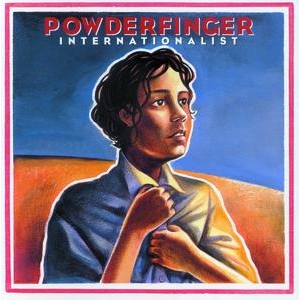
Album #116: Powderfinger - Internationalist


Powderfinger
Internationalist (1998)

Powderfinger's third album Internationalist was said to be, at that point in their careers at any rate, their most experimental work yet. Previous album Double Allergic had been the group's first real success, though it was built on a bedrock of straightforward, if tuneful, alt-rock. By comparison, Internationalist saw the band playing with several different structures and musical styles, as well as maturing their songwriting skills.

It also happens to be the first album I heard by the band in its entirety, and it's for that reason I've selected it for a look back at.

The Album

Darlings of youth radio they may have been at the time, but reflection on the album (particularly a couple of its singles) yields the inescapable conclusion that this is largely radio-friendly commercial rock. It's pretty good radio-friendly commercial rock, but nevertheless it's hooky choruses and riffs packaged in generally careful arrangements and produced in an inoffensive manner. Consequently, it's a good listen overall even if it rarely reaches a crashing high.

Those singles have received significant airplay over the years. Passenger is the best known of them and is pretty good, creating an emotional atmosphere through its lush arrangement (featuring horns, which I had never heard on the song until listening through headphones) and with lyrics that do a decent job of portraying dull routine. The Day You Come is almost as good, its staccato guitar riff juxtaposed nicely with the steady bass line through the verses; and the choruses take on an ethereal quality with floaty instruments and Bernard Fanning's multitracked, delayed and reverberating vocal. Already Gone is pleasant enough but nothing to get excited about. However, the pick is the double A-side, Don't Wanna Be Left Out/Good Day Ray. On the album these are two separate songs, though both have an overarching theme of speedy, raucous rock that skirts the fringe of punk - cracking tempos, feral guitars and some mighty fine fill-heavy drumwork from Jon Coghill.

A couple of album tracks also provide welcome highlights. Belter certainly is; an urgent, gutsy stadium rock tune that really should be the opening track on the album (I firmly believe it's a perfect set opener to a live show, to be honest), thanks to its monster riff and singalong chorus. Celebrity Head is a manic, satirical slam on uppity music writers and reviewers, skewing some of the members of that world to great effect. Musically, it's got another driving tempo, created by a decent riff and some bombastic horns in the chorus. Capoicity is a song that objectively isn't that flash, it's a bit too long and pointlessly noodly. However, I find it to be a remarkably smooth, relaxing and beautiful song to listen to, especially in the last minute or so when Fanning's vocal ceases to be a kind of stage whisper and blooms into something powerful and commanding. The guitars wander effortlessly through pleasing melodies and the drumming is suitably gentle. I realise saying it's not flash yet it's smooth and beautiful is a bit of a contradiction...but I can think of no way to describe it better. I really like the song even though it really is fairly average.

The remaining tracks are more miss than hit. Hindley Street starts as random guitar noodling and somehow manages to go even more nowhere than that, Trading Places and Private Man show promising signs of playing around with different arrangements but don't have any moments that really appeal to the senses, and the rootsy Over My Head is like the Ringo song of Internationalist - the 'give Darren Middleton a song so that he shuts up' approach laid bare.

The Verdict

Internationalist's biggest hurdle is that - at sixteen years old this year - some songs have aged remarkably well, while others sound fairly tired and uninspired. Their popularity however is undeniable and, frankly, understandable - it's the sort of rock that people who can't handle anything edgy would listen to to say that they listen to 'edgy' rock, and it's also decent standard pop rock that at least tries to do unique things with pop structures.

Plus it can't be denied that, for the most part, the album (and the band) produce good quality, highly listenable tunes. 

My rating: ***

Standout Tracks

Good Day Ray
Celebrity Head
Belter

Wednesday, 23 April 2014

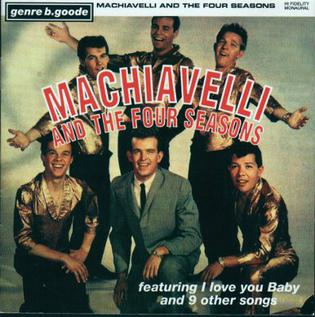
Album #111: TISM - Machiavelli and the Four Seasons


TISM
Machiavelli and the Four Seasons (1995)

There's not really much one can say about the anarchic, anonymous musical collective known as TISM. They trampled (well, tiptoed I guess would be more accurate) through the Australian musical scene for twenty years, treating the industry, and fame in general, with the complete lack of respect that it deserved. Unafraid to lampoon anyone in the universe (including themselves), their humour and intellectual wankery belied their ability to write pop hooks; I would even argue their intellectual wankery was not put on, these were just intelligent men playing games with all the conventions of rock music.

The group never really enjoyed critical and commercial success (though I reckon they were aiming for that exact outcome), however there was a period when TISM became what they hated - a successful pop band. That period was 1995 with the release of Machiavelli and the Four Seasons. Fusing their previous cheesy alt-rock sound with a healthy dollop of synth-based dance music, the group hit the charts and even won an ARIA (famously accepted by Les Murray, who insulted everybody in Hungarian). It's the subject of today's review in an attempt to explain why the album was such a hit.

The Album

There are some cracking hit songs on Machiavelli, in keeping with TISM's ability to produce songs with a hook that stick in the ear, or that have you bopping along and singing the hook long after the song has finished.

There is also some abject shite, in keeping with TISM's ability to write songs that are abject shite.

It's a real mixed bag, in other words.

The good songs? Well, there's album opener (and competitor for best known TISM song) (He'll Never Be An) Ol' Man River, rather tastelessly referring to River Phoenix, yet despite all the tasteless references to dead celebrities there's a hidden undercurrent of satire, poking fun at the rather modern obsession with vapid celebrity gossip and culture. Musically it's built around a rather loud guitar riff and a pumping dance beat, while vocalists Ron Hitler-Barassi and Humphrey B. Flaubert do their thing. Greg! The Stop Sign!! is a catchy slice of dancepop meets Beach Boys pastiche (just listen to the backing vocals and the falsetto chorus), with a danceable hook, about your future not being set in high school. What Nationality Is Les Murray is a more gentle pop tune about the great SBS football legend, pondering his nationality; the real highlight though are all the samples of Les calling the football with his dulcet tones, which take me back to a much younger time....

Garbage is not, surprisingly; a pulsating, club-ready dance track that later incorporates some booming rock riffs, and vocals that target the youthful obsession with recycling motifs from classic rock, and Aussiemandias is half decent, a throwback to TISM's early alt-rock sound, with lyrics that out the average human as a racist piece of crap who treats everybody else like shit (so, you know, a good positive mood piece.

The shite songs? Give Up For Australia is pointless techno junk with no discernible purpose other than to annoy, Jung Talent Time has rather humourous lyrics (witness the list of barely famous douchebags they name, including themselves) set to bog-standard drum 'n' bass, How Do I Love Thee features pointless screamed lyrics over atonal dance crap and All Homeboys Are Dickheads takes a (fairly accurate) lyric and pairs it with fairly boring pap. The other unmentioned tracks aren't shite but are just....well, filler, really.

My biggest kudos though has to go to the sheer number of literary, cultural and musical references the band pack into the album. TISM have always had a bent for what others would call pretentious intellectualism...in fact, they bask in it. However, they're so good at incorporating it into their material that you can never be sure that it's a joke, even though you know that it is. That fact makes most of the non-awesome material at least interesting, as you listen to the band's cheeky, irreverent lyrics.

The Verdict

It's fair to say Machiavelli and the Four Seasons went big on the back of two songs - (He'll Never Be An) Ol' Man River and Greg! The Stop Sign!! - which were rather popular tunes, both making the Hottest 100 top 10 in 1995. In true TISM style, it offends just about everyone unapologetically, but generally wraps it up in a decent musical package. 

It's not a stunning album but its highlight cuts are terrific tracks that deserve an audience, even today...and are, to the band's credit, still relevant today. Though that probably reflects horribly on society, and not on TISM.

My rating: ***

Standout Tracks

What Nationality Is Les Murray?
(He'll Never Be An) Ol' Man River
Greg! The Stop Sign!!

Sunday, 20 April 2014

Album #107: GZA - Liquid Swords


GZA
Liquid Swords (1995)

On the back of their stunning debut Enter The Wu-Tang (36 Chambers), the various members of the Wu-Tang Clan negotiated their own, separate, solo contracts. Amazingly, they were permitted to negotiate with their own label of choice, something that was highly unusual (yet entirely deliberate on the part of the Clan, as part of The RZA's plot to take over the world.)

Consequently, in the few years following their debut release, members of the Clan released the debut solo albums to great acclaim. GZA's release, 1995's Liquid Swords, was not his first solo album, however; he had released one the year before the Clan was formed, but it was released with no promotion (twice) and didn't sell (twice.) This time, with Clan maestro RZA at the helm, and with members of the Clan making guest appearances, the album was released with a great deal of momentum (no doubt helped by Method Man's and ODB's successful solo releases) and sold like hotcakes.

What also helped, of course, is that the album kicked arse.

The Album

In some ways, Liquid Swords is every bit as good as Enter The Wu-Tang. With RZA on production, it has the same sonic hallmarks as the Clan's debut - sparse, drum-heavy production, the clever use of samples adding subtle melodies to the beats, the inclusion of dialogue from martial arts films and clean, prominent vocal lines (generally free of effects.) Lyrically, GZA delivers a series of sharply biting songs that range from insightful, first-hand social commentary to 'mafioso rap' style criminal glorification. His style seems to be less based around pop culture references and more around snappy, out of the box rhymes and lyrical structure. And in terms of his flow, there are few practitioners who are as skilled as GZA. He has no interest in respecting the beat, frequently crossing over into the following bar to complete a rhyme, yet doing it all without missing a single step.

Nowhere is this ability more evident than on one of the album's best cuts, Living In The World Today. GZA crams in three songs worth of rhyme into one single, energetic track by demonstrating a dexterous flow. His work on opening track Liquid Swords is more laconic in style, showing that it's not all about intense, speedy flow; while on the sharply observational Labels, his vocal delivery turns mildly savage as his guns are focused firmly on two of his least favourite things - record labels and A&R people. Late on in the album, he brings out a venomous vocal spit on the outstanding Swordsman, no doubt helped by the song's lyrical themes of educating one's self through experience and questioning, and not just accepting what you are told, while on I Gotcha Back, the voice is that of a sage, reporting on the neverending cycle of inner city violence, told through the prism of his own experiences.

Of the guest appearances from his Clan compadres, it's Inspectah Deck, Method Man and Ghostface Killah who have the best moments on the album. Deck's verse on Duel of the Iron Mic showcases the intense, energetic delivery he unleashed on Enter The Wu-Tang and threatens to steal the show from GZA. Method Man delivers two haunting, menacing verses, in an extraordinarily chilled, laidback style (this is what makes them menacing) on the brilliant Shadowboxin' (matched by GZA's own terrific verse). Ghostface, however, does manage to steal the show with a stunning opening verse on the 'posse cut' 4th Chamber (which also features a laconic verse from Clan affiliate Killah Priest, and a trademark 'ruckus' verse from RZA himself). GZA even gives the closing track, B.I.B.L.E (Basic Instructions Before Leaving Earth) entirely to Killah Priest, and typically of Priest's work, it's full of religious symbolism and imagery (it's also the only non-RZA produced track, being produced instead by Wu-Element 4th Disciple, and it definitely is less sparse than RZA's work).

The Verdict

Liquid Swords is a vital, outstanding hip hop release. Until I've heard more of the Wu's solo efforts it's hard to compare with other releases, however evaluated as a standalone album, it's a superb example of the genre at its best, performed by an artist at the top of his game and produced by a visionary in the middle of a creative peak. The guests enhance the album and such is the strength of GZA's skills, he is rarely outshone by his guests (something that is always a risk on hip hop albums in my view).

Awesome stuff.

My rating: **** and a half

Standout Tracks

Shadowboxin'
Swordsman
Living In The World Today
Liquid Swords

Friday, 18 April 2014

Album #106: Slint - Spiderland


Slint
Spiderland (1991)

It is no surprise that most people (myself included) have never heard of Slint. Operating in the fringes of the edges of the shadows of underground music in the Louisville scene, the band released just two albums, the second of which is today's review. Spiderland was released in 1991, by which time the band had dissolved. When it was released, in the words of their label's founder, "nobody cared" about it. It was only in the years subsequent to its release, when bands like Mogwai, Godspeed You! Black Emperor and Explosions In The Sky entered the musical consciousness that the band's (and the album's) true relevance was revealed.

For it's arguable that Spiderland invented the post-rock sound. This is the prototype post-rock record that set a clear marker for all those who would follow. The number of bands and indie musicians who have subsequently revealed this album to be one of their favourites, or one of their most influential, speaks volumes about its importance to the development of an entire musical genre.

The Album

Many of the hallmarks of post-rock music can be found in Spiderland's sparse, shifting arrangements, from noodling, wandering guitar lines to an atonal, almost disaffected approach to vocals. In my review of Tortoise's Millions Now Living Will Never Die, I remember being struck by the whole-band approach of playing music - no flashy solos or wanky musicianship, just a collective sense of creating a complete musical work. This is also found here on Spiderland generally, though there are some 'solo' sections (they are unobtrusive, however.) Additionally, the drumming of Britt Walford displays many dexterous flourishes crossed with a fair bit of power, and the most obtrusive single instrument here is probably his, although it doesn't take away from that 'whole band' feel.

If I were to be critical of one thing, it's the wandering narrative lyrics and the whisper/scream/non-melodic vocals. While those lyrics do convey the album's central theme of alienation fairly well, they tend to veer towards the 'clumsy poetry' end of the spectrum. As for the vocals, well if I were going to be cruel, I'd say that those who used Spiderland as a template for post-rock decided that vocals were completely unnecessary if they were going to be this grating. There are a fleeting handful of moments where the vocals enhance the music (more on that shortly) but on the whole I found it annoying.

Thankfully the music is more than strong enough to stand on its own. Opening track Breadcrumb Trail sets the scene for the album beautifully. Shifting time signatures, discordant, uncomfortable guitar noodling and chord strumming are accompanied by a low whispered spoken word vocal. Yet it's when the distorted guitars kick in that the song really takes flight - accompanied this time by a throaty, screamed warble, and when the warble goes away we are treated to a Sonic Youth-style post-rock angry guitar noise that's damned powerful. Nosferatu Man continues the post-hardcore FUCK YOU MUSIC theme, all discordant guitar chaos, squealing feedback and manic, powerful drumming. 

The next few songs though take a slightly different turn. Don, Aman is the first of three utterly bleak and miserable tunes. Repetitive clean guitar notes and more mumbled vocals create an atmosphere of futility; it's 'what's the fucking point' set to music and it really, really works. The guitars briefly fire up but the song's mood never shifts. Following that is Washer, which was the only track I found a little bit of a slog to get through, although it again conveys a sense of hopeless depression superbly through its moody post-rock soundscape of snail-slow tempo, insistent ride cymbal and disinterested picked guitar noodling. I was ready to write it off as eight minutes of boring until there's a sudden explosion of sound, and the whole band switches into overdrive. Distorted guitars drone away, there's an electric (in atmosphere) noise solo, and Walford decides to hit EVERYTHING on his kit as hard as possible, playing incredibly aggressively yet with terrific timing. For a few brief moments it manages to be the most energising moment on the record. Part 3 of Bleak and Miserable Town is the somewhat pretty For Dinner, with its sad ambient tone, subtle drums and droning, repetitive guitars.

The closing track though reminds you that Slint could do shifting dynamics superbly. Good Morning, Captain is, for the most part, more of the same; post-rock sounds with mumbled wanky vocals. However, there are some awesome elements in those post-rock sounds. Firstly, there's the jarring, discordant chord progressions and melodies played by David Pajo and Brian McMahan on guitar. Secondly, there's the tight, sharp yet extraordinarily fluid drumwork of Britt Walford. Yet the song's denouement is work the price of admission alone, as all of the alienation, disaffectation and bleakness of the album culminates in a sort of post-rock primal scream. The riffs are angry, the drumming explosive and unrestrained, and even those annoying vocals turn into a scream that seems to sum up the themes perfectly. It's sound and fury signifying pain and disconnection from the world and it's amazing.

The Verdict

Do I think it's some grand, epic masterpiece that stands as one of the greatest albums ever released? Well, no, I don't. It's good (sometimes it's really good) but the non-impressive vocal/lyric combos still mark it as lacking polish, and like all post-rock albums it can be a really tough listen.
But.

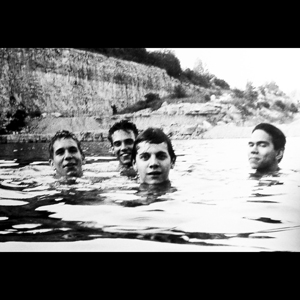
In terms of its importance to post-rock, its commitment to an artistic ideal and the sheer influence it has had on so many musicians, Spiderland deserves all the praise it gets. Even the album cover merely confirms the bleak hopelessness of the music within, and the aesthetic has been executed brilliantly. 

It speaks volumes that today, 23 years after its release, the band are drawing an audience to witness the album performed live (following a reunion in 2005), and even if the songs don't really lend themselves to a live setting, people are wanting to witness this for themselves and give the album the popular acclaim it deserves.

My rating: ****

Standout Tracks

Good Morning, Captain
Breadcrumb Trail
Nosferatu Man

Coming up, a defining solo release from a member of the Wu-Tang Clan.