Pages

Showing posts with label 1980s. Show all posts

Monday, 9 June 2014

BULK MEGA MINI-REVIEW CATCHUP

Bulk Mega Mini-Review Catchup

In light of the fact that the next two months are going to be extremely busy (thanks to the World Cup, largely) I've made the decision that, where I'm stretched for time, my reviews are going to be much, much shorter.

Now that may come as a disappointment to...well, maybe three of you, but this way I can a) still listen to an album a day, b) not feel pressure to churn out a massive review every day when I'm gonna be busy sleeping/drinking coffee/watching football/watching cycling, and c) stay relatively up to date.

To test out this new 'mini-review' idea I'm going to, today, do a Bulk Mega Mini-Review Catchup of the last four albums I've listened to.

I won't do this for every album, but where I fall behind, it's going to be the way I catch up; and if I'm pressed for time, it's going to be how I get a review out in a timely fashion.

With all those disclaimers out of the way, let's get cracking!

Album #154: Dream Theater - Images and Words
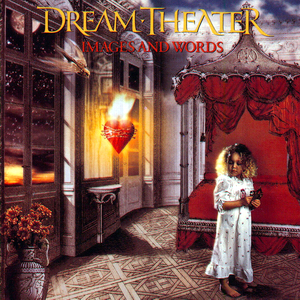

The second album by prog metallers Dream Theater, and the first to feature vocalist James LaBrie. Keyboard whiz Jordan Rudess isn't here yet but that doesn't really matter, not while guitarist John Petrucci and drummer Mike Portnoy are around to blow your mind. In fact, one of the remarkable things about Dream Theater is that technically, all the musicians are fucking superstars.

From the sprawling keyboard chords and monster choruses of Pull Me Under to the insane progressive polyrhythmic masterpiece of Metropolis Part I, it's a kickarse display of progressive rock/metal, and seems like the natural progression of bands like Yes, Rush and King Crimson. It's really rather good and what's more, it's apparently not even their best album

My rating: 8.2/10

Album #155: The Beastie Boys - Paul's Boutique


When Paul's Boutique was released, it was a chart disappointment. Label execs stopped promoting the album because it didn't sell as well as Licenced to Ill. It's proof that people are stupid because Paul's Boutique stomps much ass. Backed by producers The Dust Brothers, who cram every single possible sample possible into a single album, there's some insanely powerful beats, thrilling hooks and that oh so Beastie tongue-in-cheek gift for humourous hyperbole.

I dare you not to listen to this album and jump up every thirty seconds as you recognise yet another sample (the ingenious chopping up of The Beatles' The End on The Sounds of Science and the use of Hendrix's Are You Experienced on B-Boy Bouillabaisse are my personal favourites, along with all the use of John Bonham thunderous drumbeat mastery throughout the album).

My rating: 7.9/10

Album #156: My Bloody Valentine - Loveless


This album was requested by two friends with the promise that it took guitar overdubs to a level that not even the bloated Be Here Now could touch. It came with a further assurance that, unlike Be Here Now, it didn't disappear up its own arse.

That's certainly true, because Loveless ends up being something akin to an orchestral piece, except all the classical instruments have been replaced by endless samples of guitars and drums, and even the vocals themselves are less a standout, more just another instrument. The result is something that drones (a lot) but it's a good drone, if that makes sense - there's textures and layers all over the place, and the album ends up being more than the sum of its parts. Credit must go to Kevin Shields for labouring over this album for so long, because the proof is in the pudding.

The stunning Come In Alone, the rather indie-rocking I Only Said and the Stone Roses-dance-rock of Soon are the biggest standouts on a bloody good record.

My rating: 8.6/10

Album #157: East 17 - Walthamstow


People forget that East 17 were legitimate contenders for Number 1 Boy Band of the early 90s. They sold more records and were generally seen as much cooler than Take That because of their hip, streetwise image. That streetwise image is on this debut album in spades, thanks to the rave-meets-R&B-meets-pop-meets-hip hop flavour of its aesthetic. 

As you'd expect from a boy band album though, it's singles and sweet fuck all else; even if some of those singles are stompingly ace. I mean, come on, if you don't think House Of Love is a fucking anthem and if you're not jumping around like a motherfucker when it's on, you're probably fucking dead, and even if It's Alright has some frankly dreadful lyrics at times ("Alright/alright/everything's gonna be alright/alright/alright/everything's gonna be alright/alright/alright/everything's gonna be alright/alright/alright/it's really alright"), it makes up for it through sheer dancepop power and some hilarious lyrics ("We are the seed of the new breed/We will succeed").

The rest of the album can get stuffed.

My rating: 5.5/10

Friday, 23 May 2014

Album #143: Nik Kershaw - The Riddle


Nik Kershaw
The Riddle (1984)

Begin your reading of today's review by visiting this link : https://www.youtube.com/watch?v=fx9SLfXAudY.

You're welcome.

Anyway, Nik Kershaw is a fairly typical example of an 80s New Wave pop star - burst onto the scene with a big hit, followed it up with a couple of smaller hits, then......gone. He still knocks about making music but his glory days are long gone. The Riddle was his second album, and it's best known for its mystifying title track.

(I also remember seeing a scarf saying NIK KERSHAW - THE RIDDLE waved around at Live Aid....yep somebody had a NIK KERSHAW SCARF and waved it football style.)

It's today's review, though I'm not sure how serious I'll be given I've listened to a glorious piece of comedy prior to reviewing it....

The Album

The 1980s have a lot to answer for.

For example, allowing this to be successful.

The Riddle is 42 minutes of TRIPLE SYNTH MASTERY, where Kershaw may or may not be on a flat bed truck (you don't get this, do you? YOU DIDN'T LISTEN TO THE LINK ABOVE, DID YOU?) There are sparing moments of quality, where it seems like Kershaw actually knows what he's doing, but on the whole it's horrible, dated crap.

Those few positive moments are specks of gold in a river of shit. The Riddle is a genuinely great New Wave pop song; a really catchy guitar/synth riff that repeats throughout the song's choruses, and a decent vocal from Kershaw, who is certainly a capable singer. The lyrics are nonsensical but deliberately so, and pleasingly there's no great mystery or hidden metaphor - it's a guide vocal that was never changed, and it goes well with the title. Roses features some classy tuned percussion work, and on the whole it's unusually minimalist and dark in its composition (bar some typical syrupy MEGA SYNTH moments here and there). You Might is also a genuinely good tune, an upbeat tempo helping it on its way, but it's the emphasis on guitar over synth that gives it a real edge, because the guitars have plenty of bite and underpin the song, while the synths act as a textural accompaniment.

Honourable mentions must also go to Easy and Wide Boy, both decent, catchy slices of synth pop with nice hooks and plenty of pep.

The stinkers though are deplorable. The worst by far is Save The Whale, a six minute treatise about (you guessed it) saving the whale (though I fail to see what good saving a single whale is - what about the rest, Kershaw? NAH FUCK THEM I GUESS.) Musically it's a dirge, with a plodding tempo and 'synth' whale song notes, while lyrically it contains such gold as, "In turquoise inner space/the giants live with grace", and "Jesus Christ Almighty/Save the whale/For all our sakes/Save the whale". City of Angels is dull and uninspired, sounding like a cheap show tune rip off that's been 'updated' to the 1980s, Wild Horses is cliche incarnate, Know How decides the key to WOWING US is with thirty-five WALLS OF SYNTHS all on top of each other (answer: it's not) and Don Quixote is poorly produced noise (I mean come on. I get you want TRIPLE SYNTH MASTERY but when you can't hear the vocals over all of your synths you're probably fucking up your production of the album.

The Verdict

Stay in the 1980s, Mr. Kershaw. That's where you belong. Avoid this album apart from a few tracks.

My rating: 4.2/10

Standout Tracks

The Riddle
You Might
Roses

Album #142: Stevie Ray Vaughan and Double Trouble - Texas Flood


Stevie Ray Vaughan and Double Trouble
Texas Flood (1983)


In the early part of the 1980s, it was fair to say that blues music as a popular style was in a bit of trouble. Many of the genre's luminaries from the 30s to the 60s were either dead, in the mists of obscurity or no longer playing blues music. There were a few artists still playing blues music in the mainstream consciousness (ZZ Top, for one), but as a whole, the genre seemed to have lost relevance, its importance to the development of rock music largely forgotten.

However, just when it seemed all was lost, there were a couple of albums that suddenly reinvigorated the blues scene and brought it to life again. While most of the credit for kickstarting the return of the blues has to go to ZZ Hill's Southern blues release Down Home Blues, the 1983 emergence of Texas bluesman Stevie Ray Vaughan must also attract some thanks. The younger brother of another legendary American bluesman, Jimmie Vaughan, SRV had floated around a number of bands before forming his backing group, Double Trouble, in the late 70s. It took five years and several lineup changes before SRV and Double Trouble (consisting of bassist Tommy Shannon and drummer Chris Layton) grabbed everybody's attention with their debut album, Texas Flood.

Though Vaughan and Double Trouble had smashed their way into view with a legendary set at the 1982 Montreux Jazz Festival, and although Vaughan had guested rather brilliantly on David Bowie's Let's Dance album, it was Texas Flood that announced Vaughan as a bluesman to watch.

The Album

Texas Flood is an album of two halves. The first half is supremely performed Texas blues, with elements of 50s rock and roll and rockabilly thrown in, and the three musicians in unbelievable form; the second half is largely forgettable and struggles to maintain the interest of the listener.

Let's look at the first half first, shall we? It opens with the solid blues/50s rock fusion of Lovestruck Baby, which is where we hear Chris Layton's Texas shuffle drumbeat for the first of several times, and Vaughan's guitar playing is reminiscent of some of those old time 50s guitarists, men like Bill Haley, Buddy Holly and Scotty Moore. It's the next track, Pride And Joy, that really kicks things off though. Another shuffly drumbeat, and we enter 12-bar blues territory for the first time; Vaughan also gives the first taste of his pure blues style, with several neat solos in the intro and during the song. There's also a nice nod to the Sonny Boy Williamson classic Eyesight To The Blind in the first verse. Texas Flood serves as the first of two pure signature songs; every vocal phrase seems punctuated by Vaughan's crying axe, the solos are mindblowingly good and the crawling tempo just adds more depth to what is essentially another simple 12-bar blues. It's all about Vaughan though who produces a masterclass in blues guitar. 

Tell Me is the first half's only 'low' point; it's a solid rendition of a Howlin' Wolf original but lacks the original's grit, though Vaughan's solo is a highlight, mixing all that fretboard wizardry with some really gutsy chords, as he does on the next track, Testify. A cover of an Isley Brothers song from the 60s, the original is famous as one of Jimi Hendrix's earliest recordings, and Vaughan does a sublime job of paying tribute to Hendrix's original work while adding in touches of his own. The final track of that first superb half is the standout track on the album, and possibly Vaughan's finest work ever - the instrumental Rude Mood. Played at a stunning 264 beats per minute, it features some of the most technically gifted guitar playing you'll ever hear, along with some magnificent rockabilly shuffle drumming and insanely good basswork. Vaughan positively shreds his way through the track, and at times some of his passages leave you both breathless and speechless; I was even left amazed at just how good some of the playing was.

The remainder of the album though left me extremely cold. A version of the children's nursery rhyme Mary Had A Little Lamb seems horribly out of place on a rockin' Texas blues album, and it's not even a particularly good attempt to boot. Dirty Pool is okay; a veeeeeerry slow, steadily burning blues tune, where the pain of the lyrics suits Vaughan's throaty, gruff vocal to a T. I'm Cryin' is, I'm sorry to say, an absolute rort. I can handle blues music being derivative of others (so much of it is) and I can handle a songwriter using the same muse a number of times (this song, as is Pride and Joy and Lenny, are all about Vaughan's then wife). What I refuse to accept is when you use exactly the same song with exactly the same arrangement and exactly the same sorts of guitar solo phrases and just change the lyrics ON THE SAME DAMN ALBUM. Because I'm Cryin' is just Pride And Joy with different, more woe-is-me lyrics. That's not a mild exaggeration; that is the literal truth. THEY ARE LITERALLY THE SAME SONG. Sorry, but that's just taking the piss.

Oh and closing track Lenny is pretty boring and has nothing to recommend it, really.

The Verdict

Texas Flood is a good album by an extraordinarily gifted set of musicians, the guitarist being even more extraordinarily gifted than the others. Vaughan's reputation is fully deserved just based on this album alone. But it's not a great album when an entire section of it is either dreadful, lazy or just plain boring. You can safely listen from tracks 1-6 then ditch the rest, quite frankly.

Though those first six tracks will leave you gasping at the sheer talent of Vaughan, a man sadly taken from us too soon, though not before blazing a trail for others to follow. Whether directly or otherwise, he helped rekindle interest in the blues; it wasn't long before men of the calibre of Eric Clapton, John Lee Hooker and Gary Moore were back playing the blues.

For that alone, SRV deserves his place in the pantheon of blues heroes.

My rating: 7.0/10

Standout Tracks

Rude Mood
Texas Flood
Testify

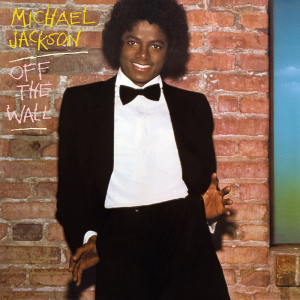
Album #141: Michael Jackson - Off The Wall


Michael Jackson
Off The Wall (1980)

The late Michael Jackson will forever be remembered for different reasons by different people. His army of loyal fans will choose to remember only his musical legacy, his undeniable stage presence and his incredibly array of dance moves; detractors will continue to highlight his questionable personal life, in particular the child sex allegations that haunted him from 1993 until his death, and which, even today, five years after his death, are continuing as others come forward claiming Jackson abused them.

Personally, I find his alleged actions abhorrent and sickening; and yes, I am aware that technically he was never convicted of any crimes....but where there's smoke there's fire, they say, and there's so much smoke around these things (still) that it's hard to accept that Jackson was completely innocent (even if he believed he was.) However, I do not think that devalues the musical work he did, and I do believe it is possible to listen to, judge and even enjoy Jackson's music without condoning his alleged actions.

With that rather lengthy disclaimer out of the way (and I have a horrible feeling it's going to trigger some debate), today's album is Off The Wall, Jackson's fifth studio album, but his first with Epic Records, where he did his finest, most career-defining work. 

The Album

Musically, the album covers an incredible range of influences. There's pop, soul, funk, R&B and disco scattered all over the place; there's even a tender ballad to top it all off. To make the album, Jackson enlisted the help of maestro producer Quincy Jones, the man with whom, in my view, Jackson did his finest work. He also worked with Stevie Wonder, Paul McCartney and Rod Temperton (who continued to work with Jackson on his next album, Thriller), each of whom contributed songs to the album.

For Jackson himself, this was the album where he was let off the Motown hook, finally free to pursue a mature, adult approach to songcrafting and production. The results speak for themselves; Jackson proves to have a superb sense of musical craft, not to mention finally allowing himself to show the full range of his vocal abilities. It might have numerically been his fifth studio album but make no mistake - Off The Wall is the birth of Michael Jackson, King of Pop.

Opener Don't Stop 'Til You Get Enough is a masterpiece - written solely by Jackson, and the first time in his career he had complete control over a solo piece. And holy crap, what a first time! Everything about this funk/disco odyssey just works - from the great strings and horn arrangements to the funky bass and disco/funk guitar...and there's Jackson's outstanding falsetto vocal for good measure. It sets the tone of the album perfectly, because it's disco/funk pretty much for the next twenty minutes. Rock With You heads more down the smooth R&B route but still has heavy elements of disco; Jackson drops his vocal back down to his usual smooth tenor and lends great gravitas to a rather good tune. Workin' Day And Night and Get On The Floor are more uptempo disco tunes; the former features some sublime horn work and a bedrock of electric piano, while the latter is a serious contender for the best track on the album; taking every conceivable cliche of disco (swales of string blasts, horns aplenty, a relentless backbeat, funk guitar) and fusing them together. The real hero though is bass supergenius Louis Johnson, whose slap bass work is not only funky as fuck but technically supreme.

The middle two tracks see a slight drop in quality and intensity. Off The Wall is a decent tune with a great hook, and more stunning bass work from Johnson; but in a rare display of compositional misstep, there's a grating falsetto shriek in the chorus which is rather offputting. Girlfriend is one of only two non-disco tunes, largely as it was penned by Paul McCartney. It's pure pop in sound and structure, but thanks to Quincy Jones it takes on more of an R&B feel. Following those is the ballad She's Out Of My Life (famous to Red Dwarf fans as the first song Dave Lister learned on the guitar), and while it continues the lull in intensity, it is an extraordinary song solely because of Jackson. It must surely rate as one of his finest vocal performances; his heart and soul pouring out of the speakers. The famous final seconds, where Jackson is breaking down in tears, are all thanks to Jones, who made the decision to leave that take in the final mix.

After this, Jackson clearly had had enough of all this wallowing, and closes by returning the aesthetic to cool disco-infused tunes. I Can't Help It is the Stevie Wonder-written tune and it's a smooth little R&B ditty with horns and electric piano aplenty; It's The Falling In Love and Burn This Disco Out close the album in much the same way it started, with funk/disco meeting R&B in a sweet, sweet fusion, even if these last two tracks don't quite have the same irresistible hookiness of the earlier songs.

The Verdict

I really, really enjoyed Off The Wall. This was my first listen to the album, although I'd heard all of Jackson's other Epic solo releases. If it wasn't for Thriller being so damn amazing I'd almost mount a case for this being the best one. Its greatest feature is that it blends the immense danceability of disco and funk music with oodles of pop sensibility, making it toetapping and entertaining.

Worth checking out.

My rating: 8.4/10

Standout Tracks

She's Out Of My Life
Don't Stop 'Til You Get Enough
Get On The Floor

Tuesday, 20 May 2014

Album #138: The Smiths - The Queen Is Dead


The Smiths
The Queen Is Dead (1986)

There's very little I can say about The Smiths that hasn't already been said by hundreds of other music writers. Extraordinarily influential on an entire generation of musicians that followed them (hi Britpop), they boast in Morrissey and Johnny Marr two of the most revered musicians of the 80s. Some critics have even said that the band are the most important guitar band of the 80s. Not bad for four Manc lads signed to an independent record label.

In recent years, Marr and Morrissey have seen themselves all over the music press, though for different reasons - Marr because of his dalliances with other bands (notably Modest Mouse and The Cribs) and his solo work, and Morrissey because....well, he's a fuckwit of the highest calibre. At any rate, despite his fuckwittiness, The Smiths are massively acclaimed, and prime candidates for the LOAD Project. I've chosen their third album, The Queen Is Dead, from 1986. I'm not gonna lie, I expect to have my mind blown.

The Album

I didn't have my mind blown.

That, however, does not mean that The Queen Is Dead is a terrible album; far from it. It's really rather bloody good...in fact I would even go so far to say as it's a fantastic listen with barely any noticeable flaws.

I'm just not convinced it merits OMGWTFBBQBESTALBUMEVARRRR!!!!!!!!!!111!111one!!!!eleventyone status.

What it is, is some fantastic indie guitar pop with a few minor flat points. Lyrically it's strong, apart from.....well, a few minor flat points. Its appeal is probably in the fact that when it's on, it's really on - musically and lyrically there are terrific moments of synergy, where the band show just why they were darlings of the critical and musical performer sets alike.

Moments of synergy like There Is A Light That Never Goes Out - lyrically brilliant (even if it treads on familiar ground that had previously been walked by The Who on Quadrophenia, all tortured young person who feels so alienated at home that they consider themselves homeless), and musically superb (guitar and bass provide a good groove, while synth strings add a mildly sombre touch to the massively depressing lyrics), Cemetry Gates (Morrissey's lyrical FUCK YOU to critics who slagged him off for 'thieving' the words of his literary heroes, set to catchy guitar pop), I Know It's Over (a ballad that throws back to the Mersey Beat sound, with a thick, groovy bass line from Andy Rourke, guitars and synth strings providing melody, some loose improv from drummer Mike Joyce, and a Morrissey vocal that is rather spinetingling....oh and some terrific lyrics, including the brilliant line, "It takes guts to be tender and kind"), Bigmouth Strikes Again (relentless Marr jangly guitar, a great bassline, and lyrics from Morrissey that are rather vicious, while painting the song's protagonist as a self-indulgent entitled wanker.), and Vicar In A Tutu (quite a fun tune - a shuffle beat, a walking bassline and a country-style picked guitar twang accompany some rather tongue-in-cheek lyrics from Morrissey, who shows a cheeky sense of humour to go with all the morose social commentary and depressing woe-is-me self-analysis.)

At other times, the synergy is close but not quite there: The Queen Is Dead is a great opener, all cynical snarl and social observation from Morrissey, jangly layers of guitar from Marr, rock-solid rhythmic power from Rourke and Joyce (in fact, Rourke's bass playing is immense)...it just goes a bit too long, finishing with an overly extended instrumental passage; Frankly, Mr Shankly takes on a bouncy 60s pop vibe and nails it pretty well, with breezy guitars and vocals (yep, even the morose Morrissey sounds happy), though it doesn't fit at all with the rest of the album; The Boy With A Thorn In His Side sees Morrissey direct a bunch of questions at the music industry, bemoaning the band's ignored status, and he delivers a great vocal to boot...musically it's okay, though I found the synth strings to border on the overbearing.

Even the two 'minor flat points' are just that - 'minor'. Never Had No One Ever has a simple, but meaningful, lyric - Morrissey's youthful lament about his childhood as an immigrant in Manchester - but musically, despite Marr's guitars sounding quite nice, it's desperately morose and plodding (I suppose it fits the music, but it's not particularly exciting or awesome; an admittedly minor quibble), while closing track Some Girls Are Bigger Than Others has the inverse problem - musically it's splendid, as multiple guitar tracks create an almost orchestral sound thanks to Marr's superb work, ably supported by Rourke's bass...but Morrissey contributes a fucking awful set of lyrics that were probably meant to be irreverent but come off as being purely shithouse, devoid of....well, everything.

The Verdict

I said I wasn't sure it necessarily deserved the mantle of GREATEST ALBUM IN THE WHOLE HISTORY OF EVER. I stand by that - give me Frances the Mute or Kid A or OK Computer or Highway 61 Revisited or Physical Graffiti any day of the week.

Yet The Queen Is Dead certainly deserves to be at least considered one of the (or possibly the single) finest albums released in the 1980s. It was the blueprint for so much indie guitar pop (and Britpop) that was to follow, and those roots can be heard clearly all over the album. Additionally, it's a slow burner; I liked it as I was listening to it, but it wasn't until going back over my listening notes and thinking about the songs that I realised that it actually was seriously good music by seriously good musicians.

So yeah, highly recommended, worth the hype, and clearly a terrific album.

Morrissey's still an utter fuckwit though.

My rating: 9.5/10

Standout Tracks

There Is A Light That Never Goes Out
I Know It's Over
The Queen Is Dead
Cemetry Gates

Friday, 16 May 2014

Album #133: Split Enz - True Colours


Split Enz
True Colours (1980)

True Colours marked the commercial arrival of Split Enz. I say 'commercial' because the band had actually produced several albums before this, featuring densely packed, bombastically arranged musical epics (some of which, if I'm honest, are seriously bloody good). However the success of I See Red, plus some well received poppy festival sets in 1979, convinced Tim Finn that melodic new wave pop was the way to go.

So it was that this album was the first to wholly pursue the powerpop sound, and consequently it was the launching pad for a few years of towering success (and arguably the launching pad for Tim's younger brother Neil on his path to musical glory.) I've never heard an Enz album in its entirety so I'm looking forward to it.

The Album

True Colours manages to fuse Tim Finn's desire for more melodic, poppy arrangements with elements of the band's earlier, more eclectic sound. Mostly, this is done through the magical keyboards of Eddie Rayner, who in my view elevates this album from good to great. His synthesiser stamps its authority all over this album, creating amazingly varied sounds and textures (added to that, he's a hell of a player). Though to be fair, he is working with some tremendous Finn-crafted material.

The album is famous for providing several of the band's best known songs. I Got You (Neil Finn's first truly great pop song) is worth every bit of its reputation. A great contrast between the uneasy verses, with their staccato guitar and synth swirls, and the dense, hooky choruses, is a great deal of the song's charm - additionally, the chorus is musically magnificent, rather simple yet rich. I Hope I Never is one of my all time favourite Enz tracks. Tim Finn delivers a fucking glorious vocal, paired with his own beautiful piano playing which packs a great emotional punch. While it's closer to baroque pop than anything, it still features Rayner's immense synth strings to add even more grandeur to the arrangement. Poor Boy is the third well known single, and it's decent; again, the mood is somewhat blue, helped by the morose chord progressions and Tim Finn's plaintive vocal. Nigel Griggs provides a notable bass line, but, again, the star of the piece is Rayner. His ethereal, spacey synth notes add texture to the verses, while the choruses are an extremely memorable keyboard line.

Outside the singles/well known tunes though, there's still some gold to be found - in fact it would be fair to say that the album features very few truly weak spots. Shark Attack is a bundle of high-octane energy, pumping out a punk-style tempo fused with synth-driven pop. It's a great opening track because of its frenetic nature (even if a recent superb cover by Dan Sultan and The Break shows that perhaps this song should have been a surf rock tune from the beginning). I Wouldn't Dream Of It is rather good new wave, right down to the heavy synth, groovy bassline and simplistic guitar melody, while Neil Finn's Missing Person keeps the new wave feel going but draws parallels with The Police. I also really enjoyed Nobody Takes Me Seriously, which shows the Enz's fascination with offbeat arrangements, jarringly discordant chord changes and distinctly un-pop pop. Finally, closing track The Choral Sea is a fascinating listen. Sonically it has more in common with the band's early, sprawling sound; swirling keyboard lines, a funky bass line with a very minor key change, some disco-style guitar rhythm work....all matched to a distinct disco backbeat from Malcolm Green. After about ninety seconds it dawns on you that you are listening to a Split Enz disco instrumental, and it may well be the best disco instrumental track ever recorded. The band maintain interest through the foreground of the soundscape - keyboard solos, drum and percussion breaks, guitar solos.....it's nowhere near being a pop tune and yet it's one of the album's gems, precisely because it has no intention of being a pop song. It's one hell of a way to end an album....

The Verdict

Deservedly regarded as one of the great Kiwi musical releases (NO AUSTRALIA YOU CAN'T HAVE THEM SO PISS OFF), True Colours really is a great pop album, though unlike today's idea of 'pop' it contains great lyrics, technically proficient performances and a willingness to find ways to create individuality within a pop framework. Most pleasingly, there's plenty of great material outside the big singles, and I think that's always the sign of a great album.

Thoroughly enjoyable and highly recommended.

My rating: 8.6/10

Standout Tracks

I Got You
I Hope I Never
The Choral Sea
I Wouldn't Dream Of It

Saturday, 10 May 2014

Album #128: Pseudo Echo - Love An Adventure


Pseudo Echo
Love An Adventure (1985)

Pseudo Echo sprung up in the mid 1980s in the midst of the synth-pop New Wave explosion, acting as Australia's answer to Duran Duran, Ultravox and The Human League. Bearing more hair than a Tina Turner lookalike contest, and sporting cool fashions of the time (just look at that album cover for proof), they were rather popular with the young, hip musical set, and not just because of their look; but also because of their easily accessible, inoffensive, club-ready synthpop.

Love An Adventure was the band's second album, released in 1985. In terms of the commercial success of the songs on the album, it's probably Pseudo Echo's best, sporting several Top 20 singles, and the international smash Funky Town. Today I bring a review of it to you.

The Album

The sound of the album can best be summed up like this:

SYNTH SYNTH SYNTH SYNTH
GATED REVERB HEXAGONAL DRUMS
SYNTH SYNTH SYNTH SYNTH
guitar
SYNTH SYNTH GATED REVERB HEXAGONAL DRUMS SYNTH SYNTH

It's wall to wall synthesiser lines that harmonise, duel and cross over each other, with groove-setting bass and the occasional flecks of guitar for texture. Actually, that's slightly unfair - there are a couple of cracking guitar solos on the album that are both welcome and energetic. Vocalwise, Brian Canham is no star, merely serviceable. In fact, that probably sums up the band and pretty much all of their material - serviceable.

The only times that Pseudo Echo lift themselves above the banal are where the songs either have an extra bit of verve, or where there's an undeniable hook. Funky Town was an international smash for a reason - it takes a fairly placid, lame disco track and reinvents it as a rocking, synth-heavy party tune. In fact, it's far more grooveable than the original disco track, which is funny given that disco was supposed to be the ultimate dancing music. Its cracking guitar solo is the icing on the cake. Listening is synthpop done right - verses that utilise a darker chord progression, a chorus hook that's easily singable and some pulsating bass work - as is Destination Unknown, which has a good tempo and some pleasing synth and guitar licks.

There are also attempts to try something different. Lonely Without You tries to be a tender love ballad, and it's not a bad attempt, but somewhere, somebody forgot to tell the band that tender love ballads don't often have grating SYNTH SYNTH lines all over the place that kinda ruin the tender mood you're creating, distracting you from all that introspective sadness (though in fairness, the saxophone solo at the end rescues the song). Love an Adventure tries to be all moody and atmospheric, and combine this feeling with some groove-laden, uptempo pop....and again it's not bad, except for the GATED REVERB HEXAGONAL DRUMS destroying the atmosphere with all the GATED REVERBverbverbverbverb.....

Everything else is pretty much just bog-standard synthpop, except for the truly tedious I Will Be You, which is five minutes (FIVE FUCKING MINUTES) of the blandest synthpop you've ever heard.

The Verdict

Love An Adventure is a relic of the 80s, encapsulating many of the sounds, production techniques and instruments that were a key component of the 80s synthpop sound.

The 1980s is probably where they should stay. Albums like this simply sound extraordinarily dated - even the good tracks, while they're still good, sound a little out of place nowadays.

Get Funkytown and Listening, maybe Destination Unknown and Lonely Without You, don't worry about the rest because you're not missing much.

My rating: 4.8/10

Standout Tracks

Funkytown
Listening
Destination Unknown

Wednesday, 30 April 2014

Album #119: Motley Crue - Shout At The Devil


Motley Crue
Shout At The Devil (1983)

Before Motley Crue became the commercially appealing glam metal stars responsible for songs like Kickstart My Heart, their style was more akin to straight-up heavy metal. Their first few albums were recorded in that style before their sound shifted noticeably.

Shout At The Devil, the band's second album, is one of those heavy metal Crue albums. While it didn't produce the big hits of later records, it still contains a few songs that are Crue classics. It would have probably made more sense to review one of the band's glam releases, but to be honest I was interested to find out just how dramatically the band changed their sound from the early part of their career, compared to their sound as glam superstars.

The Album

There's no doubt that Shout At The Devil is definitely heavier than the group's later releases. The riffs are thick, chunky and thunderous, the bass and drums rumble powerfully and the vocals alternate between a soaring wail and a...well, wail that is lower in register. Yet soaring vocals, courtesy of the superb Vince Neil, and powerful, kickass riffs (thanks to axe maestro Mick Mars) have always been a key component of the Motley Crue sound. Really, upon reflection, the elements of the 'glam' sound are all here in spades.

The album's title track stands head and shoulders above the rest. With a riff that invites the aggressive throwing of horns, and Neil's magnificent metal vocal work, it's arguably the first truly fucking amazing Crue song; and somehow, at the song's close, when the riff and the drums pick up in pace, it somehow becomes even more crunchy and ballsy. There are also elements of stadium rock in there, especially in the short vocal/drum only breakdown and the cavernous production of the song.

Speaking of cavernous production, there are a few other tracks that seem to have been recorded with a 'live feel' in mind. Red Hot, another standout track, has a positively huge drum sound; they boom and reverberate seemingly forever, and it helps that it's one of Tommy Lee's standout efforts. This is accompanied by a seriously cool riff, the combination of which results in a pretty cool song. Too Young To Fall In Love and Bastard also stand out for their huge sound and sweet riffwork (the latter also has one of the shreddiest, and best, solos on the album.) The band's cover of Helter Skelter is also quite good. As I've written before, the mark of a good cover is that it retains the spirit and elements of the original while managing to sound entirely like the band covering it...and Crue do that here, as Mars does Paul McCartney's original riff justice and Neil pulls out a fine vocal effort (surprisingly though, Lee can't compete with the original drumming of Ringo Starr....work that out if you can.)

Other decent tracks are album closer Danger, which hovers dangerously close to prog metal territory, thanks to a picked guitar motif, synth strings and a soaring Neil vocal (it takes the prize for Lee's best drumming on the album); and the Mick Mars guitar solo piece God Bless The Children Of The Beast, featuring a wonderful picked acoustic riff as the meat and veg of the tune, while Mars plays a multitracked electric solo over the top like some sort of heavenly condiment (WORST. ANALOGY. EVER.)

Outside of those songs, while there's nothing crap and the album remains a fun listen, songs like Ten Seconds To Love, Knock 'Em Dead, Kid and Looks That Kill serve as stock standard metal album filler tunes, with less interesting riffs and by-the-numbers vocals. Though I must emphasise they remain fun, mindless tunes that you'll still find yourself tapping your foot to....they just aren't particularly outstanding nor even inventive.

The Verdict

Some of my research into the album informed me that there are many fans of Motley Crue who claim this to be the band's greatest work, and that everything after this was a 'sellout'. I don't know if that's fair - I think their glam period produced some catchy rock tunes - but Shout At The Devil is certainly a very good album. It's got something for everyone - it's very straight up 80s heavy metal, but there's enough here that reminds you of the band's later glory years.

I rather enjoyed it, at any rate.

My rating: *** and a half

Standout Tracks

Red Hot
Shout At The Devil
Bastard

Tuesday, 22 April 2014

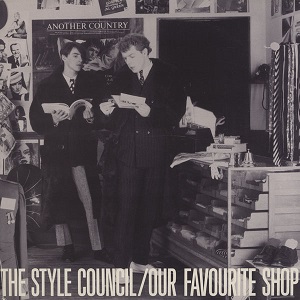
Album #110: The Style Council - Our Favourite Shop


The Style Council
Our Favourite Shop (1985)

After leaving seminal mod revival band The Jam in the early 80s, Paul Weller sought a new musical challenge. Eschewing the mod rock/punk sound of his previous group, Weller took on a brand new set of inspirations, namely soul, funk, jazz and synthy new wave. Pairing up with former Dexy's Midnight Runner, keyboardist Mick Talbot, Weller formed The Style Council, a new group with a new sound.

The band was also a vehicle for Weller's political viewpoints. Disgusted with the state of Thatcherite Britain, especially if you weren't in the elite upper class, Weller used The Style Council as a conduit for his most politically biting, occasionally savage, lyrics. 

Our Favourite Shop, the album Weller himself describes as the 'culmination' of the band's musical visions, is up there with any punk album (if not exceeding them) in terms of sheer 'fuck you'-ness, even if, musically, it is anything but punk.

The Album

There's quite a range of styles and sounds on Our Favourite Shop - a veritable council of styles, if you will (OH I CANNOT BELIEVE I WENT THERE.) The only common thread is that all the songs, even the not so good ones, are pure pop; there's nothing aggressive or harsh, it's all sweetly produced with lots of jangly guitar, Hammond organ and piano, with other instruments added for extra emphasis.

Featuring on the album are several jazz numbers (Homebreakers and the instrumental title track are straight up jazz, while Down By The Seine is French flavoured, right down to the French accordion, and With Everything To Lose takes a more Latin jazz turn), some new wave tunes (the synthy The Lodgers and the Simply Red new wave/funk/R&B hybrid Boy Who Cried Wolf), by the numbers pop (Luck and Shout To The Top), a touch of reggae (All Gone Away) and even a few sonic nods to Weller's past life (the rocking, uptempo Walls Come Tumbling Down, the Kinksish Come To Milton Keynes, resplendent with strings, harps and horns, and A Man Of Great Promise).

As if that wasn't enough, the band even fits in an Eleanor Rigby clone, right down to the arrangement of solo vocal over string section (A Stone's Throw Away).

As I said, covers a lot of territory.

It's lyrically where this album shines, however, and interestingly, the anger, bitterness, disillusionment, hopelessness, despair and rage that Weller's lyrics (and drummer Steve White's on one song) convey are rarely, if ever, matched by the music. Musically, it's all sweetness and light while Weller's words snarl underneath. Take, for example, the first three tracks. Homebreakers takes aim at the Conservative government of the time, snarling about taking revenge on "whoever came up with this economy plan" and pointing out the sheer detached snobbery of the Tories' dismissive "move if there's no jobs in your town" approach to rising unemployment of the working classes. Yet the music is smooth, smoky jazz pop that is quite easy listening. All Gone Away is jangly, jaunty reggae; the lyrics talk about the desolation of a northern mining town (assumed to be Bradford) when there's no work for the town's main industry. Come To Milton Keynes is all optimism and light, as are the lyrics for the most part; however the song's denouement unveils the satire behind the curtain, pointing out that the optimistic New Town schemes were, really, doomed to failure (or at the very least sorely detached from reality.)

The politically charged theme continues from there, though not quite as obviously contrasting with the music. Internationalists essentially acts as a detailing of the socialist manifesto, A Stone's Throw Away bemoans 80s Britain's decent into police and political violence against disgruntled citizens, The Stand Up Comic's Instructions (featuring an enthralling guest vocal from comedian Lenny Henry) chides the white 80s comic set for their casual racism, The Lodgers attacks the conservative exploitation of aspirationalism.....by the end of the album you're in no doubt where Weller's loyalties lie.

The undoubted highlight - the perfect maelstrom of supercharged lyrics with supercharged music - comes in the form of Walls Come Tumbling Down. From the outset, with Weller's growled "You don't have to take this crap" directed to the listener, we have the scene set. Weller produces a vocal performance worthy of the attack-dog lyrics, passionate and angry, while the song's tempo and horn section act as a rousing call to arms. It's a great tune and it comes right at the end of the album....the wait is worth it.

The Verdict

It won't set your ears alight musically, but for diversity of styles and for observing a lyrical master at work, Our Favourite Shop is a rather good album. As a perfect encapsulation of the time of its recording, it works beautifully, and given the current conservative political climate, some of the lyrics go to show that, even thirty years later, some leopards never change their spots.

However, there are other themes that are peculiarly British (a charge that Weller has always had laid at him, and may be part of the reason he's never been overly successful outside of Britain) which can make it tough to connect to some tunes, especially if you have no knowledge of the political and social climate surrounding the album.

Nevertheless, it's decent, and it contains some songs that are among Weller's finest efforts.

My rating: *** and a half

Standout Tracks

Walls Come Tumbling Down
Homebreakers
Internationalists

Sunday, 20 April 2014

Album #109: Dio - Holy Diver


Dio
Holy Diver (1983)

Few vocalists are as synonymous with metal culture as Ronnie James Dio, the little Italian from New York with the massive voice. The man credited with introducing the 'metal horns' to the world, he made his name as the frontman of Elf and Rainbow (the latter along with Deep Purple axe maestro Ritchie Blackmore), and his soaring, searing vocals were often a highlight of those recordings. However, most famously, Dio was one of (and easily the best of) the replacements for Ozzy Osbourne in Black Sabbath. Their album Heaven and Hell is still, in my view, one of the greatest Sabbath releases, partly because of the work of Dio.

In 1982, though, Dio left Sabbath and decided to form a band of his own with fellow ex-Sabbathite, drummer Vinny Appice. He recruited Irish guitar wizard Vivian Campbell (who would later go on to join Thin Lizzy and is currently the lead guitarist for Def Leppard) and Scottish bassist Jimmy Bain (Rainbow, Phil Lynott, Gary Moore) to join him in his eponymous metal band, Dio.

Their debut, 1983's Holy Diver, subsequently went on to become one of the most definitive metal albums of the 80s, and remains the band's most successful album to date. Why? Well, sit back and allow me to explain.

The Album

The two biggest reasons why Holy Diver is such a superb album are Ronnie James Dio and Vivian Campbell. Campbell's virtuosity on guitar, his squealing, ballsy guitar tone and his ear for a kickass metal riff are a highlight, and contribute to many of the album's most spine-tingling moments. As for Dio, there have been few vocalists in the history of rock and metal with his range, his power and his flexibility. Whether he is singing sweetly over an acoustic accompaniment, or belting out those trademark fantasy lyrics with a mindblowing half singing/half screaming approach, Dio makes it not only sound effortless but like he was put on this planet purely to sing metal. 

The rhythm section of Bain and Appice do more than their fair share of the heavy lifting also. Appice shows his chops on a number of occasions with tasteful, yet accentuating, fills and grooves, while Bain plays both bass and keys and is a vital component of many songs (Dio also contributed some keys to the album.)

The songs themselves are packed, wall to wall, with killer riffs, some of which have become legend in metal music. The most obvious of those are the two singles, and arguably the band's finest ever song releases, Holy Diver and Rainbow In The Dark. The former lures you in with its atmospheric opening, as the distant howl of the wind is accompanied by some subtle synth lines. Out of nowhere the song begins with a bang, cranking straight into that familiar, yet simple, riff, played by both Campbell and Bain in tandem. The lyrics might be Dio's fantasy nonsense but holy shit Dio absolutely fucking kills delivering them (though it's not his best performance on the album, believe it or not.) Campbell's solo progresses from careful bluesy progression to lightly shredded technical proficiency. 

The latter is the outstanding track on an album full of quality. Campbell's brutally superb riff is complemented by a hook played on the synthesiser, while Dio unleashes his highlight vocal of the album, a sublime display of powerful metal singing. Campbell also unleashes a shredfest of a solo, highlighting why he's such an underrated, highly talented axeman.

That's not all that makes the album a standout though. Opener Stand Up And Shout briefly calls to mind Neon Knights from Sabbath's Heaven and Hell, with its galloping riff and frenetic tempo, Gypsy features a catchy, cool little riff and more Dio gymnastics, Straight Through The Heart features one of the heaviest riffs from Campbell, some great work from Vinny Appice and continued Dio brilliance, and Invisible sounds like some Vol.4 era Sabbath, with a beefy, heavy, doomy plodding metal riff and a jawdropping guitar solo.

Also of note is the fantasy/progressive metal of Don't Talk To Strangers, featuring multilayered acoustic guitars in the introduction, and a sweet, lilting Dio vocal, before crashing through your speakers with a chuggy riff and some sharp drumwork, and the closing track Shame On The Night, which has a menacing, plodding tempo, bass and vocal-driven verses and several very different sections (an instrumental bridge where Campbell and Bain duet along with a church organ accompaniment then winds its way to an extended coda, featuring a ballsy riff pounding away relentlessly while Appice and Dio punctuate the guitars with their contributions.)

The Verdict

Holy Diver stands the test of time as one of metal's most essential and influential releases. Credited by some as inventing the genre of power metal (though I'd probably credit bands like Manowar with that moniker), it represents the fusion of four very talented musicians working in perfect synergy to create a masterwork. Even the album filler tracks are chock full of quality riffs, great musicianship...and, of course, Dio, who is admittedly one of my vocalist heroes. This album is Exhibit A in the case for Dio being one of the greatest vocalists of all time.

My rating: **** and a half

Standout Tracks

Rainbow In The Dark
Holy Diver
Invisible

Tuesday, 1 April 2014

Album #91 : Poison - Open Up And Say...Ahh!


Poison
Open Up and Say... Ahh! (1988)

80s glam metal/hard rock has a lot to answer for. For every Guns 'n' Roses there's a Warrant; for every Motley Crue there's a Slaughter; and for every Skid Row....well, there's another Skid Row.

Poison, generally speaking, probably slot in somewhere in the middle. They certainly produced their fair share of hits (most of which are on this album) but somewhere along the line, they (or, to be more precise, Bret Michaels) became one big monster joke, eventually reaching a point where they he was beyond parody. It probably also didn't help that they hit the big time right before glam rock was given the arse, in favour of the grittier, more "real" alternative/grunge sound. Their first two albums, though, are great examples of the 80s glam vibe.

Open Up and Say... Ahh! was their second album, and their biggest selling by some distance. Its popularity was down to the presence of some of the group's biggest singles. However, looking deeper, there's a little more to this album than just an acoustic power ballad....

The Album

Essentially, this album is a testament to some of the excesses of 80s rock - girls, sex, cash, living free and easy. It's packaged in an easy to listen to, hard rocking style, though without the harder edge of some of their contemporaries. By the band's own admission, it's a real stadium rock record...particularly some of the singles, which contain all the necessary ingredients of a stadium rock anthem (big singalong chorus, massive solos, instrumental breaks inviting handclaps from a massive audience). Speaking of solos, the absolute star of this record is guitarist CC DeVille...the man is a fair dinkum beast, melting his fretboard (and faces) with some sick solos and thumping out some rockin' riffs.

Needless to say the album's best songs are some of the singles. Leading from the front, the anthemic Nothin' But A Good Time, which has all of those ingredients in spades. Telling a story that most of the band's fans could probably relate to (not enough money to do anything, all you want to do is party), it does so in one hell of a catchy way. You can't help but pump your fists in the air, shouting, "DON'T NEED NOTHING BUT A GOOD TIME". Fallen Angel was unrecognisable until the chorus, at which point I had a lightbulb moment of realisation. More cool riffs and solos, and a few nice lyrical touches (describing the dream of getting big in LA as 'rolling the dice with (your) life' is a heartily accurate description), and the chorus is another arena singalong.

The song the band (and the album) are best known for, however, is the power ballad to end all power ballads, Every Rose Has Its Thorn. It's notable for its difference to the rest of the album (an entirely acoustic-driven composition), its deliberate decision to eschew fistpumping riffery for emotion and feeling, and Bret Michaels' vulnerable vocal performance. I'd go so far to say as it's the best thing Michaels has ever done. Additionally, CC DeVille elects to play a solo laced with wistful reflection and heartbreak. It shows that beneath all the makeup and hair, a sense of heart resided.

The album tracks contain no major surprises. The theme of 'rock hard, live hard' persists, and there's more fucking kickarse riffs and solos than you can shake a stick at, but the quality of the songs wavers somewhat. The band's cover of Your Mama Don't Dance is highly underrated. It's a sensational cover, keeping enough of the original's charm but being unmistakably Poison - a glam take on a straight blues/rock tune. There's also a stretch of three quality glam tunes in the middle of the album. Good Love was close to my favourite track, starting with a cool guitar lick and harmonica solo, which gives it a country/blues tinge. The main riff also features a bit of a nod to the Bo Diddley beat and 50s rock and roll. Tearin' Down The Walls and Look But You Can't Touch are both head-noddingly good; rollicking along at a good pace, they are both very hooky rock tunes with more DeVille guitar genius. 

There weren't any bad songs as such, but in Back on the Rocking Horse and Love On The Rocks, the band produce acceptable stock-standard glam tunes that just seem to lack a certain something (certainly compared to other tracks on the album). Again, if not for the riff/solo work of DeVille, they would be bog-standard tunes; he lifts them to the barely average. They are the very definition of filler, and perhaps prove that there really can be too much of a pretty good thing.

The Verdict

Open Up and Say... Ahh! rocks. Hard. 

Unbeknownst to the band at the time, it represents a certain style and sound that was on the way out (until The Darkness and Steel Panther were to resuscitate it). Interestingly, some hallmarks (like those stadium-rock friendly features) are still very much in evidence today.

There are better glam albums out there...but probably not many. This is one of the better ones you'll hear that is straight-up rock and roll, without orchestras and pianos and synths.

It's also worth listening to for CC DeVille alone.

My rating: *** and a half

Standout Tracks

Every Rose Has Its Thorn
Your Mama Don't Dance
Good Love
Nothin' But A Good Time

Tomorrow, we return to naff 80s soft rock/blues town!