Pages

Showing posts with label electronica. Show all posts

Wednesday, 19 March 2014

Album #77 : Kraftwerk - Autobahn


Kraftwerk
Autobahn (1974)

There are bands in every genre who transcend their genre labels, being considered by all and sundry to be legends and pioneers in music. Bands that, even though you hate a genre, you can't help but admire, or at the very least, respect for the immensity of their contribution to music.

German electronic geniuses Kraftwerk are such a band.

Even people who hate, or are generally ignorant of, electronic music in all its forms can tell you something about Kraftwerk. Whether it's "aren't they the weird German robot dudes" or "hey they're the guys that play their whole live show behind four laptops", they are themselves a pop culture icon. (I bet they hate that.)

Autobahn was not their first album. It was not even their first electronic album (that honour belonged to the little-known predecessor, Ralf und Florian, named, of course, after the band's visionaries, Ralf Hutter and Florian Schneider). However, the sheer technological wizardry and groundbreaking use of electronic effects on the title track, as well as the group's inventiveness (famously, the electronic drums used on the album were invented and built by Hutter and Schneider themselves) would see this album considered one of the most influential albums in electronic music.

The Album

Autobahn is the opener, and what an opener it is. Beginning with the roar of a car engine, and a horn played on a synthesiser, what follows is nothing short of a masterpiece; a 22 minute musical recreation of the sounds and experiences of driving on one of Germany's famous autobahns. The heavy use of phasing on the droning synth chords is meant to evoke the monotony of driving long distances, and every so often there's a synth line, simulating the Doppler effect of cars zooming past, that goes from one channel to another. There's also a more pleasant section, that features guitar and flute, seemingly describing driving through wonderful, peaceful scenery. At nine minutes, the track takes a more industrial tone, the Doppler droning becomes more prominent, as the song indicates that the driver is in the fast lane, flying past cars with ease, while the Moog bass line thumps away, steady, unflinching, immovable.

There's even a section that depicts the tuning of a radio, going through the different radio stations (which seem to all be contributing something to do with the Autobahn) complete with the squeal of the detuned radio. Genius.

It's also the only album on the track with lyrics; the repeated refrain Wir fahren fahren fahren auf der Autobahn (We drive drive drive on the Autobahn) is heard several times. There are also some heavily vocoded sections that sound positively evil. The chords change at about the sixteen minute mark, and while the intent is the same the tone shifts slightly, to be more akin to the feeling you get when you know that a long journey is almost at an end, that kind of hopeful relief.

Basically, it is an absolute masterpiece given it manages to convey an entire series of feelings and events using largely electronic instrumentation....in 1974. 

After that, the rest of the album is a bit of an anti-climax, though the remaining songs are also unified by a common theme - that of the night. The Kometenmelodies (Comet Melodies) were inspired by Comet Kohoutek, first sighted the year before. The first 'Melody' begins with a near-tuneless electronic melody, before a doom-laden, ominous section begins (complete with deep, rumbling electronic drum blasts, as if some giant monster is stomping through the forest). The second 'Melody' is much more formed; dense, pretty synthesiser chords are supported by a steady electronic beat and the occasional electronic chimes. It is a stark contrast to the moody, blackly depressing Melodie 1, and is a far better song. 

The last two tracks are Mitternacht (Midnight) and Morganspaziergang (Morning Walk). The former contains a quite ominous section where the electronic drums are used to play a slow rhythm, that's a cross between the drip of water in an empty, metallic basement and the clacking of heels on a tiled floor. Over that is played an even more ominous set of synth chords and the hellish whine of spooky electronics. As a mood piece it's bloody eerie and very effective. The latter starts with an amazingly creative recreation of birdsong, using only electronic instruments; there's a plaintive, hopeful flute line, then what (to me) sounds like the babbling of a stream, again played with electronic instruments. Finally, the song concludes with a piano, guitar and flute melody. It again is a contrast to the rest of the album.

The Verdict

A great album by a group of visionaries. The title track alone needs to be heard to be believed. This album showcases why Kraftwerk are the godfathers of electronic music. Inventive, tuneful, artistic; it has it all. There's some compositions that fall a bit flat, but on the whole it's a beacon of risktaking invention.

My rating: ****

Standout Tracks

Autobahn
Kometenmelodie 2

Tomorrow's album is a little known indie release from a Canadian band. It's another attempt by me to review a more recent album to keep things fresh. See you then!


Tuesday, 11 March 2014

Album #70 : David Bowie - Low


David Bowie
Low (1977)

Low, David Bowie's eleventh studio album, was recorded while the artist was in recovery from a rather serious cocaine addiction. While this addiction had resulted in Bowie's last great musical 'character', the Thin White Duke, it had eaten away at Bowie's physical and mental health to the point where Bowie himself would eventually concede that the Duke was no good for him, and he eventually moved himself away from his drug problem (Los Angeles) to the relative safety of Europe.

It was that backdrop, as well as the presence of keyboard wizard and ambient experimenter Brian Eno, that was to result in one of Bowie's most polarising and schizophrenic releases. However, time has also come to regard it as one of his grandest, most influential albums in his long and storied career.

The Album

Upon its release, Low was split into two parts - the more 'standard' rock side, featuring seven shorter, more fragmented songs, and an avant-garde ambient experimental electronic side, featuring four more complete 'portrait pieces' of locations that were immediately familiar to Bowie (as well as, consciously or otherwise, reflecting his own mental battles).

Side A (the 'rock' side) still contains some electronic experimentation, as Eno puts his Moog synthesiser and his EMS Synthi AKS 'suitcase synth' to good use. It's bookended by two fairly happy instrumentals (well, happy, comparatively speaking) in Speed of Life and A New Career In A New Town. The latter is the more musically complete, with a Bowie harmonica solo providing a soulful counterpoint to Eno's synth stylings. In between, there's ample evidence of Bowie's songwriting shift to fragmented, nonsensical ideas. Breaking Glass is half a song but quite a good half, with drug-addled lyrics set to a slow groove and mildly funk-based drumbeat. What In The World is this album's Side A in a three-minute nutshell, with a basic guitar riff completely overshadowed by chaotic synth noises, nonsensical free association poetry and reggae/Latin rhythmic touches. It gives the impression that it's not quite complete yet it probably is. Sound And Vision is another great tune, Bowie's contrasting high/low vocals (delivered in a withdrawn, secluded style to match the lyrics) are themselves set to a guitar motif that provides contrast, as it is quite upbeat. So is Eno's synth motif that later matches the vocal melody.

Elsewhere on Side A, Always Crashing In The Same Car features Bowie, a sea of complete detached calm, in a swirling mix of synthesiser and guitar; a solo from guitarist Ricky Gardiner is methodical and note-perfect, and Bowie's lyrics convey a sense of frustration in repeatedly making the same mistakes over and over again. Be My Wife features no synthesisers, according to the album's liner notes (however I'm sure I can hear some in the mix). It also features a ragtime piano intro for some reason, and despite the personal pleas in the lyrics, it left me a bit cold (though again, Gardiner's solo is methodical, careful and subtle.

That takes care of the 'rock' side. Now for Side B's ambient portrait pieces.

Side B is unlike anything Bowie recorded previously (though he had, in fairness, begun to experiment with electronic sounds and the 'motorik' beat on Station to Station). First track Warszawa is nothing short of spectacular. Written about Bowie's visit to the desolate city of Warsaw in 1973, the song conveys perfectly that bleak desolation, especially in the first minute when it established, through a particularly dark synthesiser motif, that feeling. The second section sees a key change and a mass of synthesised strings, adding wistful melancholy to the dank depression of the early synth lick. Its third section, however, is the sign of things to come on Side B; Bowie, singing lyrics that may be in Polish (research is not conclusive) warbles painfully above a choir of Bowies. There's another key change here, and then the song finally goes back into a reprise of the first section. It is hauntingly beautiful ambient music, yet at the same time, is stunning art.

Art Decade is Bowie's observation of West Berlin as a 'dying' city; its plodding, moody nature, driven slowly by discordant synth rhythms, succeeds in conveying this (though without as much inherent beauty as in Warszawa). Weeping Wall (yep, it's about the Berlin Wall) is the least effective 'portrait piece' as I'm not personally convinced that it conveys its message of the Wall's inherent despair quite as well as other tunes convey their messages. Nevertheless, it's of interest for two reasons; Bowie plays all instruments on the song, and uses insistent stabbing synthesiser notes to form the song's rhythm section. There's even some notes of guitar clearly heard here, and the vibraphone adds a nice touch. As a minimalist piece it's good, but as an art piece it doesn't click.

Final track Subterraneans was written about the residents of East Berlin and their personal misery, pining for a life left behind. This track was one of the most worked-on on the album, with most of the instrument tracks being reversed (the bass line and some prominent synth melodies in particular, multiple layers of synthesiser provided by Eno, and Bowie creating a crescendo of harmonies with his vocals at one point. It's lush for an ambient piece, but again, its melancholy feeling and use of jazz saxophone (to represent the 'old' life of the East Berliners) conveys its intended message to great effect. Bowie's vocals, wordless groans for most of the track (another musical motif designed to evoke the misery of the East) are later briefly replaced by complete nonsense lyrics. It's a suitable ending to Side B, and further stamps Bowie as one of music's greatest risktakers.

The Verdict

It's tough to listen to, but I found Low to be ultimately rewarding. Viewed through the lens of Bowie's personal struggles at the time, and with the reminder that Bowie has always been about pleasing himself, first and foremost, this is a wonderful, wonderful album despite its inaccessibility. It's the sound of a man far from being at ease with himself and trying to express his pain, his feelings and his thoughts not through lyrics (as most songwriters would do) but through music and texture.

Aided by Eno and long-time producer Tony Visconti, Bowie did just that....and his next album would take this avant-garde approach even further.

My rating: ****

Standout Tracks

What In The World
Warszawa
Sound And Vision

Tomorrow, a 90s grunge classic (no, not that one.....not that one either.....the other one by that band.)

Sunday, 2 March 2014

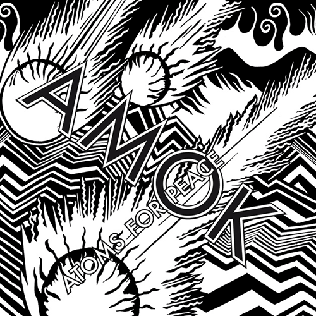
Album #61 : Atoms For Peace - Amok


Atoms For Peace
Amok (2013)

Thom Yorke has never struck me as the rock supergroup kinda bloke. Fearfully critical of the celebrity hype machine, he seemed more likely to just want to create music in his basement rather than recruit friends from other bands to play his non-Radiohead musings.

Yet in Atoms For Peace, that's exactly what he did. Joined by long-time Radiohead producer Nigel Godrich, REM and Beck session drummer Joey Waronker, Red Hot Chilli Peppers bass player Flea and another Chilli Peppers affiliate, percussionist Mauro Refosco, the Radiohead frontman formed a band, bonded by their "love of Afrobeat".

This is their first album (time will tell if there are others), Amok. By Yorke's admission, most of the album was 'conducted' by him, as he showed the others electronic music he'd made and they would copy it on their instruments. The question is, can this material stand up on its own, or does it suffer from the inevitable Radiohead comparisons that are sure to arise?

The Album

No. It can't. And no. It doesn't. Because it is nowhere near as good as Radiohead's material.

It comes off as largely a collection of either Radiohead B-sides or leftover songs from Yorke's sessions on solo album The Eraser. Fitting with the music that Yorke loves to make, it's largely minimalist (occasionally straying into the ambient) electronica with occasional flirtations with traditional rock features. 

Its biggest crime is that by and large it is horribly uninteresting to listen to. It's not terrible by any stretch of the imagination, just boring, devoid of life and and emotion.

A few tracks on the album are decent, though, and show flickers of the sort of sonic experimentation that has taken Radiohead to new heights of creativity. Dropped moves seamlessly from its early minimalist electronica to a more energetic vibe once the bass kicks in, establishing a deep groove. Yorke sings in that typical high register over a choir of Yorkes in the background, further proof that his voice gets better with age. Opening track Before Your Very Eyes demonstrates that 'shared love of Afrobeat' in its rhythms and percussion; the jangly guitar lines are pleasing, even if they are replaced by a buzzy, awesome sounding synth melody. The whole thing though still comes off as being diet Radiohead; some of the flavour, none of the awesome. Stuck Together Pieces isn't bad either, more buzzy, spacey synth while Yorke's vocal is unaffected by studio trickery, sounding pure and, dare I say it, rather poppy. Finally, there's Judge, Jury and Executioner, whose pleasant acoustic guitar licks act as an undercurrent to a simple, yet effective, bass line, and more vocal skills from Yorke. Again, though, it sounds like something not good enough to make a Radiohead album.

Elsewhere, the songs are, as I said earlier, largely dull. Unless could have been good with a bit of attention, and perhaps something to break up the song; it's a very chilled out, smooth ambient tune, but it's the same thing over and over again for four minutes or so. Reverse Running is notable for its jazztronica fusion; jazzy guitar and drums that may be sampled and spliced together supporting more electronica. Amok has an interesting start with its 8-bit Commodore 64 digitised piano sound, and then descends into more dull ambient electronica.

The only real positive is Yorke. Vocally he continues to develop and improve, while his high register vocal is as gorgeously haunting as anyone else in music today. 

The Verdict

Amok is only really of interest to Radiohead fans, or fans of experimental fusions of electronica and rock, though there isn't much of the latter to be found here. Yorke has often gone on record as saying he admires the work of noted techno pioneers like Autechre, Aphex Twin and DJ Shadow, and their influences can be seen in Yorke's work, both inside and outside of Radiohead, since Kid A.

What the album lacks, that Radiohead so frequently have in their music, is emotion. There simply isn't any here. That has nothing to do with the electronica; there is plenty of electronica that can be evocative of emotions; and has everything to do with the nature of this album. There's no bond, no shared experiences, no urgency to the recording; it's just five mates making an album because they can.

Not great, unfortunately, and to be honest if you want to explore Yorke's work in this field The Eraser is a much better album.

My rating: **

Standout Tracks

Dropped
Stuck Together Pieces
Judge, Jury and Executioner

Tomorrow, another request (this time, for my dad). I had no idea he even knew who this band was until he asked me to do an album of theirs.....

Friday, 3 January 2014

Album #3 : Lorde - Pure Heroine


Lorde
Pure Heroine (2013)

Lorde, Lorde, Lorde, fucking Lorde. She seems to be all anyone is talking about, especially if you are a frequent consumer of Triple J's radio and social media offerings. Lorde is THE cool artist to like, to the point where the J's are trying desperately to shoehorn her into anything (witness their attempt to say that the line, "Yeah", in the song Tennis Court, is one of the most memorable lyrics of the year. Either their expectations of lyrical quality are fucking low, or somebody's gone LOL GET LORDE IN THE ARTICLE SOMEHOW LOL.)

It's time to see whether this flavour of the month teen pop star from New Zealand is the real deal, or just another Melissa Tkautz (ask your parents, kids.)

The Album

It's safe to say that I am just not supposed to 'get' this album. Clearly I am too old/uncool/unhip/all of the above to understand and love Lorde's minimalist, echo-drenched electropop offerings, because quite frankly I found this album to be an extraordinarily boring experience. By about the sixth or seventh song, I really was at the point where I was listening because I had to for the purposes of the project, rather than because the music was engaging or exciting.

Part of the the problem for me is that when 99% of your soundscape is electronically generated noise courtesy of ProTools, a synthesiser and a Casio keyboard drum pattern, everything sounds the fucking same. The album is wall to wall Lorde singing with disaffected melancholia over sparse, electronic beats. If that's your thing, fine. It certainly isn't mine. 

There are some positives, though. Lorde (real name Ella Yelich-O'Connor) is a really, really good singer. On some tracks (such as 400 Lux, Royals and Ribs) her vocal ability really shines through; Royals in particular shows it, partly because of the very minimalist production. It's pretty much just Lorde and a drum machine, with sparse synthesiser and it works. I would go so far to say that Royals is definitely worth the hype - a wonderfully crafted and quite acerbic attack on the celebrity and bling obsessed modern pop artist. She is also a very talented lyricist, though has an tendency to be a bit "too clever by half", using a very contrived metaphor where sometimes simplicity would be better. The best musical moment, apart from Royals, was at the end of the otherwise quite boring White Teeth Teens; multi-tracked vocals creating a beautiful sonic experience, and no droning electronica in sight. 

Unfortunately the droning electronica ruined much of the album for me, and some songs are really just rather pointless. The opener Tennis Court commits two unforgivable sins - firstly, it's boring as batshit, and secondly it claims to be related to tennis YET THERE IS NOTHING ABOUT ACTUAL TENNIS. Seriously, Lorde, do you expect me to believe that people use tennis courts to talk? THEY ARE FOR TENNIS. Buzzcut Season and A World Alone are....just there. They're not crap, they're just....well, there. They don't stand out, they sound like everything else.....as I said, pointless.

The Verdict

So yesterday I said that I was keen to find out whether Lorde was worth all the hype. The answer is mixed. Is Lorde a talented performer and songwriter? Definitely. She's young and has a bright future. I can see her going down the Sia path and becoming a songwriter for others, as well as an accomplished artist in her own right.

Is this album worth the endless masturbatory platitudes handed out to it by the Triple J barons? No. No no no no. Unless you are saying that samey, depressing electropop is ALL THE AWESOME, in which case HYPE MACHINE ACTIVATED!

My rating: **

Standout Tracks

Royals
White Teeth Teens
Team

Tomorrow, it's time to take on one of the most polarising albums in history. Some hail it as a masterpiece, others think it's slightly overrated. It's also an album I haven't listened to in its entirety in some time.....