Pages

Showing posts with label folk. Show all posts

Sunday, 18 May 2014

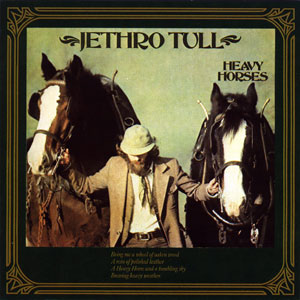
Album #136: Jethro Tull - Heavy Horses


Jethro Tull
Heavy Horses (1978)

Jethro Tull certainly cannot be accused of being boring or uncreative. Over their fortysomething year history, the band has recorded albums in a significant number of styles - blues, progressive rock, folk, AOR, jazz....hell, even metal (don't believe me? Go and find out how many Grammies Tull won.) Of course, they've probably had just as many lineup changes, though there have been two absolute mainstays - vocalist/flautist/multiotherinstrumentalist Ian Anderson and guitarist Martin Barre.

Throughout the 1970s, though, the band was creatively and commercially at their absolute peak. This decade had the band's 'classic' lineups, delineated only by who was in the rhythm section (besides Anderson and Barre, pianist/organist John Evan was the only other mainstay). By the mid 1970s, the band's rhythm section was the extraordinary Barriemore Barlow on drums, and John Glascock on bass - the latter described by Deep Purple's Ritchie Blackmore as 'the finest bass player in rock'. Despite all this technical mastery, Anderson (as songwriter) decided to embark on a trilogy of folk-based albums. 

1978's Heavy Horses was the second of these...and arguably, it's the last truly great Tull album.

The Album

The key to Heavy Horses' success is just how tight the band sounds throughout the entire album. Off-time rhythmic changes, unusual time signatures and seemingly unpredictable accents by Barlow are made to seem second nature by the band. It's the sound of a band incredibly familiar with one another. Adding to this synergy are some fine Anderson compositions, played by a collective of very, very talented musicians. The album is very folky in style - lots of mandolin, acoustic guitar, folk-style lyrics and strings - yet at times retains a harder, gutsier edge.

The title track is, simply, bloody fantastic. A snappy, tight intro leads to a first verse that is stunning - Anderson's deep, rumbling voice accompanied by a beautiful piano section, played by Evan. Later verses see acoustic guitars and strings take more prominence, and Evan's contributions are limited to background texture, but that first verse is the best one in my view. From there it's another six minutes of shifting dynamics (a rather jarring, fast tempo change midway through works fantastically, before shifting back again), super work from Barre and Barlow, and lyrics about big bloody horses. Similarly fantastic (personally I preferred it slightly) was No Lullaby, which is far removed from folk. Barre's heavy opening riff and solo signal that this is going to be a harder rock song, and then the rhythm section takes over. Glascock makes a simple repeated note sound positively marauding, creating a slow groove that Barlow does his best to fuck up completely by playing some brilliant fills. Strings and flute support each other in the verses, Barre whips out some more deft soloing, and Barlow later decides that sick fills are not enough, he's going to play his ride cymbal at 19000 hits per second.

Those two tracks are by far the longest at over seven minutes each; the rest of the album's material is of a more 'standard' pop length. Of those tracks, the pick of the bunch are the closer Weathercock, the opener ...And The Mouse Police Never Sleeps and the Glascock lead bass extravaganza Journeyman. Weathercock does feature some pretty dodgy lyrics (about a weathercock, would you believe) though they do fit the folky theme; fortunately, the musical arrangement is amazing; Anderson plays a brilliant flute solo, Barre tries to outdo him with a blistering lead break, Barlow loosens up with some ballsy drum fill work and Glascock goes along for the ride. The song basically ends with everyone trying to outdo each other. Mouse Police is tight (Barlow and Glascock especially are glued together) with a decent organ solo from Evan, and Journeyman is built around Glascock; his lead bassline provides the bedrock for the rest of the band to build on, and build they do. It's one of the better sets of lyrics (being rather descriptive of office slavery) and features more solid work from Barre and Anderson.

There aren't really weaknesses, as such. The remaining songs are solid, but not as good as their album compadres. Acres Wild is pure English folk, as is Moths; both are pleasant but hardly exciting. Rover has some decent moments, namely its whippy tempo, snappy guitar and flute work, but is little more than charming. One Brown Mouse is a good showcase for the keyboard work of David Palmer, and there's more great stuff from Glascock on this track, but despite some promise it just never quite seems to come together.

The Verdict

It may not be their finest album ever, but Heavy Horses represents the wider Jethro Tull sound well. Although it may be very folk-influenced, there are more than enough moments that are essentially classic Tull - Anderson's flute fluttering away, Barre providing deft flourishes, while the rhythm section provide a super backdrop.

It's a pity that circumstances dictated that this was the last full album of this lineup - Glascock died of a congenital heart defect in 1979, and Barlow left soon after, devastated at the loss of his friend. It does however serve as a fitting epitaph, even if it wasn't meant to be that way, because Jethro Tull were never quite the same after this.

My rating: 8.0/10

Standout Tracks

No Lullaby
Heavy Horses
Journeyman
Weathercock

Wednesday, 7 May 2014

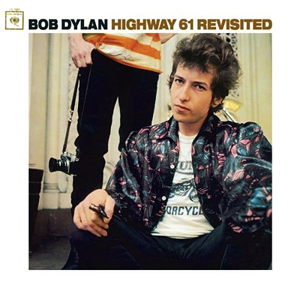
Album #125: Bob Dylan - Highway 61 Revisited

Bob Dylan
Highway 61 Revisited (1965)

The genus of this review today was the recent death of Rubin Carter, the man the authorities came to blame (sorry). He was the man who was the subject of Bob Dylan's rambling opus Hurricane, and one time he coulda been the champion of the woooooooooooooooorrrrrrrrrrrlllllllddddddddddd (sorry again).

Anyway, the passing of The Hurricane made my wife decide that her album for this month should be a Bob Dylan release, and let me choose the exact album. With that in mind I went with Dylan's second electric album, Highway 61 Revisited. Having already decided to issue a big 'fuck you' to the folk community with Positively 4th Street, Dylan kept on his electric backing musicians to record this album.

History records it as one of music's finest releases, but nearly fifty years on, does it still stack up? And can one album truly have too many harmonica solos?

The Album

Put simply: this is a fucking masterpiece.

From the opening snare crack of Like A Rolling Stone to the final moments of Desolation Row, Highway 61 Revisited steamrolls its way through blues, folk and even garage rock influences, all with Dylan's everpresent and much-parodied vocal drawl/whine crashing through the sound. His backing musos all shine at various stages, particularly Al Kooper on Hammond organ and Paul Griffin on piano, and as a whole the band are tight enough to keep the songs in check while remaining loose enough to encourage little showy instrumental flourishes.

This is to say nothing of Dylan's remarkable lyricism. It's stunningly brilliant poetry set to superb music, even if the odd song or two contain almost impenetrable metaphor; for the most part though, the tone Dylan wants to convey is conveyed with precision and clarity, leaving the listener in no doubt as to his feelings (anger, sadness, revenge, love).

To the songs themselves, and magnificence abounds here. Like A Rolling Stone is truly worth the hype, tumbling along thanks to Griffin's honky-tonk piano, Al Kooper's stunning Hammond organ improvisation and Dylan's vicious, vengeful attack lyric, spat with all the cynicism and venom he can muster. Guitarist Mike Broomfield also contributes welcome splashes of bluesy guitar throughout. I used to take the piss out of this song and its rambling vocal - may I now say that for doing so I am a complete idiot. 

When Dylan turns to the blues, it's with aplomb. It Takes A Lot To Laugh, It Takes A Train To Cry is a slow, crawling acoustic/electric blues track, elevated to great status by another splendid Griffin piano performance and a howling harmonica solo. Tombstone Blues is rollicking acoustic blues with a raw, unrefined aesthetic; Bloomfield contributes several short, but searing, blues solos and Dylan's lyrics, in true 60s counterculture style, take aim at authority without making it obvious. From a Buick 6 sees Dylan's vocal take the leash off, delivering an unrestrained, powerful effort. It's a decent 12-bar blues with a fantastic harmonica solo, even if the bass and Hammond organ are a little too loud. 

However, Dylan is/was a folk musician, first and foremost, and even his trips into electric blues don't dull his folk skills. The album's eleven minute closer Desolation Row is the quintessential folk tune, in my view; Dylan's acoustic melody is simple, supported by session muso Charlie McCoy's glorious Spanish-style acoustic lead guitar, while the lyrics are some of the most cryptic, yet wonderfully poetic, lyrics committed to acetate. My only qualm is that it probably didn't need to be so long, but Dylan had a message to communicate, and communicate it he does (even if that message is hard to fathom). Just Like Tom Thumb's Blues combines folk with blues to good effect, though the 'folk' influence is more in the storytelling nature of the lyrics, which chart one man's descent into a world of drugs, alcohol and sex (on reflection, maybe it's not a 'descent'.) Paul Griffin plays some splendid tack piano and Mike Bloomfield again does his thing. Queen Jane Approximately drives another nail in the 'folk must be acoustic only' coffin, with a rich soundscape, more doggedly vicious lyrics and an earthy vocal - it's every inch an electric folk winner. 

The only two songs that don't really fit into the folk or blues categories are close to the best cuts on the record (and that's saying something given how good everything else is). Ballad of a Thin Man stars the famous Dylan character Mr. Jones, who would be referred to in a number of tunes recorded by other artists (e.g. Yer Blues by The Beatles); jerky piano, a shuffling drum beat and an interesting chord progression call to mind some smoky lounge bar of the 50s, the artists in residence playing a jazzy tune of revenge. Lyrically and vocally it's bitter, dismissive and deeply cynical - Dylan again fires the guns at Mr. Jones, hitting all targets with aplomb. Finally, there's the title track, telling five unrelated stories that nonetheless all have a common theme - they are problems that are solved on Highway 61, a road that runs the north-south breadth of America and that ran through Dylan's boyhood town of Duluth, Minnesota. Once again Dylan's vocal is the star of the show - again I can't believe I take the piss out of him - while his supporting cast all seem to have been given carte blanche to experiment, freeform style. It's a gem of an untempo rocker.

The Verdict

Yes, it still stands up. It more than stands up, in fact. It's timeless music because so many of its themes are human ones; we can all substitute in our own Miss Lonely or our own Mr Jones. It mightn't sound as polished as a modern release, but it's got more heart, emotion, power and impact than most of the soulless pointless bullshit modern 'indie-folk' crap that people are force-fed nowadays, and that's why it's timeless.

Yes, you can have too many harmonica solos, but only when they're shit, which not a single one on this album is.

People say Bob Dylan pretty much turned to shit after 1970 (though 1975's Blood On The Tracks has plenty of fans, and he was also a Wilbury, to be fair). Even if that's true, his pre-1970 work is what made him a star, and this is the most shining example of all of that work.

Absolutely essential for any music fan to at least listen to this once.

My rating: 10/10

Standout Tracks

Like A Rolling Stone
Highway 61 Revisited
Ballad of a Thin Man
It Takes A Lot To Laugh, It Takes A Train To Cry

Monday, 24 February 2014

Album #55 : Simon and Garfunkel - Bridge Over Troubled Water


Simon and Garfunkel
Bridge Over Troubled Water (1970)

Regarded as one of folk rock's greatest partnerships, Paul Simon and Art Garfunkel have contributed some of rock's finest examples of songwriting and harmonising. All this was achieved in a career that spanned just five studio albums, and featured its fair share of fractious times; in fact, the pair split up on several occasions, although since the final separation in 1970 there have been a number of reunion tours.

The pair could not have had more divergent careers after their split; Simon continued in music, forging a fine reputation as one of America's great songsmiths and popularising a number of world music sounds, while Garfunkel combined an acting career with a string of minor hits, but musically never achieved the heights of the Simon and Garfunkel years.

This album, 1970's Bridge Over Troubled Water, was the pair's final studio album. There are hints in some of the lyrics about the fact that the partnership was reaching its termination, but there are also some of the band's highest regarded, and most remarkable, songs.

And, after about twenty years of wanting to listen to the whole album, today I'm reviewing it.

The Album

Loaded with wall to wall harmonies and sprawling backing vocals, Bridge Over Troubled Water is an album that any vocalist worth their salt should be listening to. Both Simon and Garfunkel are supremely gifted vocalists, equally comfortable and powerful at all ends of the vocal spectrum. They alternate between softer, lilting folk ballad vocals and a more rollicking rock and roll style throughout the album's eleven songs, though it's probably the former where they are at their finest; their skills in delivering dual harmonies almost without peer on the quieter tunes.

And what a set of songs they are, kicking off with the album's title track. The first two verses are piano and a solo Garfunkel (the piano arrangement, played with sublime skill and dexterity by Larry Knechtel, is almost the greatest musical moment of the whole album. It manages to evoke such a range of emotions in combination with the vocal). Garfunkel begins with a more withdrawn, quiet vocal, gradually increasing in intensity by the time he reaches the second 'chorus'. If it were to have a weak spot, it's that final verse; bombastic in sound, there's drums and strings that are simply too loud and drown out the piano. That however is a nitpick on what is one of the pair's finest songs.

Cecelia has the album's first example of a more uptempo sound. It's a real stomping tune with a rollicking dual vocal line and some interesting instrumentation through the mid-section. This more rock, less folk approach is also heard on the underrated Keep The Customer Satisfied, a mildly aggressive attack on the rigours of going on tour and with roots in rockabilly and Motown, the Beach Boys-lite rock and roll style of Baby Driver, and there's even a decent cover of the Everly Brothers classic Bye Bye Love.

However, in keeping with the duo's skill in combining their vocal talents in softer, more folk-style tunes, the real highlights come in the group's ballad-style tracks. Apart from the title track, the album also gave us career highlight The Boxer, a sprawling folk ballad that, through one of the great lyrical sets, tells the tale of a man (the titular boxer) dealing with poverty, unemployment and loneliness in a sprawling New York metropolis. Fingerpicked guitars from Simon and Fred Martin, Jr are the basis of the song's sound, while there is also a mournful, plaintive cry in the form of a soprano saxophone solo. It's got to be one of the greatest ballads ever written or recorded. There's also the two songs that are aimed squarely at Garfunkel; the parting farewell of So Long, Frank Lloyd Wright, which uses the famous architect as a metaphor for Simon's compadre, telling warm tales of their earlier years while saying a fond 'so long', and Simon's tale of isolation, The Only Living Boy In New York, written about Garfunkel's trip to Mexico to shoot a movie, leaving Simon alone to work on material for the album.

The album's bittersweet finish is also of interest; Song For The Asking is solo Simon, just him and his guitar (and more of those annoyingly too-loud strings that detract from the album). There's no Garfunkel, which is sad, as this serves as the last song ever released on a studio recording by the two.

The Verdict

The mild departures from their established folk sound on Bridge Over Troubled Water mark it as an album of interest. However, it's clear that the pair are at their best on those folky tunes, as this is, after all, where they made their name. It is a minor disappointment that the album's production is far too much of the Wall of Sound variety, as there are clear times when the songs should be allowed to breathe on their own, free of overbearing string arrangements.

There's plenty on here apart from the three singles of note, though, that make it a worthy recommendation. Put simply, today's "folk" scene owes a great debt to the work of Simon and Garfunkel, and in my view it still doesn't hold a candle to the duo at their finest.

This is a great album, and a fitting final release, managing to say goodbye while retaining all the hallmarks of what made them one of America's most popular artistic groups.

My rating: ****

Standout Tracks

Bridge Over Troubled Water
The Boxer
The Only Living Boy In New York

Tomorrow, the first of two classic Australian releases of the 80s.

Saturday, 15 February 2014

Album #46 : Midlake - The Trials of Van Occupanther


Midlake
The Trials of Van Occupanther (2006)

"I want to sound more like Jethro Tull, but I can't."

These are the words of former Midlake singer/primary songsmith Tim Smith. Dropping reverential words about Tull and Radiohead, as Smith has done in interviews, is more than enough to ensure I'm interested in your band of former jazz musicians who don't want to play jazz and are multi-instrumentalists.

Yet while I'm sure I've heard plenty of Midlake songs, I can't tell you whether that's true or not. I suspect from hearing about them from friends and reading about them that I'll quite like what they do, or I do like what they do, I'm just not aware of it.

With that in mind I decided to tackle a Midlake album so that I can become consciously aware of their work. I've chosen 2006's The Trials of Van Occupanther because according to critics, it seems to be where the band really established themselves in the indie scene.

So.....here we go. 

The Album

Throughout The Trials of Van Occupanther, many comparisons can be made to other preeminent musicians; there are moments where the band seem to be channeling the Steve Hackett acoustic sound popularised during his time in Genesis, moments where Tim Smith is like a modern-day second coming of Ray Davies, and moments where the comparisons with AOR of the 70s, like non-blues Fleetwood Mac and even the essence of Steely Dan, are obvious.

To that I would add a couple of other sonic reminders; the harmonious vocal work and folk (yes, I can definitely see where it comes from) sensitivities of Crosby, Stills, Nash and Young, as well as The Byrds.

I realise that makes Midlake sound like a bunch of ripoff merchants. The truth is, they're not. Far from it. There's a difference between ripping off bands and making music that is merely evocative of others' styles and sounds. Midlake here are doing the latter in my view, weaving together music that fits the occasionally soothing, usually emotional and always picturesque lyrics. It's just that the lyrics bear all the hallmarks of some of those folk-style storytellers, and you're not going to set those lyrics to Bloc Party's thumping modern rhythms, are you?

The first half of the album is all killer. Roscoe provides those Steely Dan/Fleetwood Mac comparisons in spades, although the abrasive guitar is far more contrasting than anything either of those bands produced. Lots of varied drumwork too, as well as providing the first glimpse at the quite stunning harmony vocal layers that frame the rest of the songs on the album. Bandits draws on CSNY and Hackett in its acoustic guitar intro, although it duels with a piano giving it more of a Genesis feel, and the flute is Smith playing Ian Anderson to a T. It's very laidback in sound and feel, but is simply a great listen. Head Home is a gorgeous ditty, mainly keys although there's a sweet guitar lead break in the last minute or so. Its only crime is the tiresome repetition of the 'head home' refrain. 

Van Occupanther is a great folk song that should serve as a notice to the Mumford and Sons of this world that this is how you do folk; a great set of lyrics (another common theme) about personal withdrawal and voluntary isolationism, it's got The Byrds written all over it. Young Bride is fine, though the weakest of the first six tracks; mournful violin sets the mood, while I dug the dry drum sound. Branches was close to my favourite track - beautifully poetic yet downcast and moody, the piano and acoustic guitar sounds are married in perfect unison while there's some nice touches of French horn to add to the song's general feeling of ennui. The whole thing just sounds so quintessentially English folk/baroque in style...I loved it.

From there though, the album starts to run out of steam. While In This Camp is not too bad, with its distorted guitar and sudden pickup of tempo in the midsection providing a welcome change of pace, the last four tunes are nice but ultimately indifferent. Yes, Chasing After Deer sounds like a late 60s/early 70s lost Kinks ballad, and again Smith's lyrics are gently poetic yet paint vivid pictures in the mind, but they end up being just songs, lacking a certain...vitality that is present in the opening half-dozen tracks. By no means are they bad, but they don't measure up to the rest of the album.

The Verdict

The Trials of Van Occupanther is certainly a good album. Perfect for either a chilled-out summer's day when you want to kick back and relax with a few beverages, or for a cold winter's night when you want to feel better about not living in a place where the winters are snowy and harsh, and you don't have to hunt your own food (because Smith for all his talents seems obsessed with travelling, boats and winter.....I'm thinking this was a concept album and I've missed the concept.)

What I didn't miss though was Midlake's undeniable talent for creating beautiful music. It may not always seize your attention, and there's times when it's merely pleasant background noise, but it still possesses beauty. And when it's good, it's very, very good.

My rating: *** and a half

Standout Tracks

Branches
Van Occupanther
Bandits

I'm still rebuilding my February schedule before doing my March one, so tomorrow's album is unknown at this stage, but I'm thinking it may be the LOAD Project's first trip into the 1950s...so stay tuned!