Pages

Showing posts with label 2000s. Show all posts

Tuesday, 3 June 2014

Album #151: Future of the Left - Curses


Future of the Left
Curses (2007)

Future of the Left were formed out of the ashes of two Welsh bands, Mclusky and Jarcrew, in 2005. Both groups had garnered passionate fanbases, albeit in a slightly underground way, and in the band's early days this proved a burden. In fact, their early gigs were played under code names, to ensure that hardcore Mclusky and Jarcrew fans didn't turn up expecting to hear the old tunes played the same way.

It took just shy of two years before FotL - at that time a threepiece consisting of Andy Falkous (guitar/keys/vocals), Jack Egglestone (drums) and Kelson Mathias (bass/vocals) - released their debut album, Curses. Anticipation was high amongst Welsh music fans for the first music from this supergroup, and apparently those fans were not disappointed.

Time for me to find out for myself.

The Album

It's a bloody firey album, that's for sure. Curses burns with energy, power, aggression and verve. At times it's hard to believe that the group are a three-piece, such is the raw power and thickness of their sound. To the band's credit, they adopt a real punk attitude to song length; keep them short, rock out as hard as you can, and get out before the audience gets bored or exhausted (or both). 

When it's good, it's really, really good, combining post-hardcore rhythmic elements and song structures with the 'fuck-you' attitude of punk rock and, at times, the more melodic approach of alternative rock. The lyrics are, for the most part, rather clever, sometimes dryly observant, while at other times they're quite funny.

Highlights of the album? There are a few. Adeadenemyalwayssmellsgood lulls you in with its pseudo-country music vocalised pastiche, before buzzsaw guitars, cavernous riffs and Falkous' high-pitched bark punch you in the gut and stomp on your face. Plague of Onces has much the same feeling, albeit with a structural callback to At the Drive-In, while the brilliant Fingers Become Thumbs packs more punch than Floyd Mayweather, sounding utterly filthy yet dynamically superb at the same time (never before have the lines "We're not alive, we're not alive/we're not at home for preg-er-nant callers" been so fucking chantable before).

The group also excel at the sudden musical sucker punch. On several occasions, they create a sense of comfort through repetition, before slotting in an unexpected section to jolt you out of your comfort zone. Opener The Lord Hates A Coward drives along with scuzzy guitars and energetic drumming, before kicking into a frenetically dynamic closing thirty seconds. Kept By Bees is almost entirely drums and vocals - cavernous, booming drums and vocals - except for a sizzling fifteen second blast of guitars. This also overlooks the pirates-chanting-like-Peter Gabriel sections...it's a very different, way-out-there tune. 

At other times, Future of the Left are content to pull whole musical surprises. The catchy Manchasm has no traces of guitars at all - instead it's left to Falkous' falsetto and some catchy keyboards to do the heavy lifting. It's the only time on the album that you get the feeling that the group have crafted a song to dance to. The mildly sarcastic Fuck The Countryside Alliance is an ode to minimalist simplicity - a plodding drumbeat, a repetitive two note guitar motif and dry vocals (though it contains another favourite lyric of mine - "Take a man to his nightmares in a Land Rover" - which describes the CA rather well). Finally, closing track The Contrarian is that in more ways than one - after thirteen tracks of pulsating scuzz rock, the album closes with a piano ballad (yep, you read that correctly). It comes out of nowhere and yet it's the perfect way to conclude an album that shows no end of experimental flair.

The Verdict

Curses is quite a decent debut album. It's not necessarily a style of music I love, but there's so many shifts in dynamics, so many little touches and surprises, that you can't help but enjoy the album. It's worth checking out, as are Future of the Left in general.

My rating: 7.6/10

Standout Tracks

Fuck the Countryside Alliance
Fingers Become Thumbs
Adeadenemyalwayssmellsgood

Monday, 26 May 2014

Album #146: Little Birdy - Bigbiglove


Little Birdy
Bigbiglove (2004)

There must have been something in the porridge in the Steele household twenty or so years ago. Luke Steele has carved out a name for himself in the Australian music scene, firstly as leader of The Sleepy Jackson, but more recently as the creative force behind dreamy popsters Empire Of The Sun. His little sister Katy also made a name for herself as the lead singer and chief songwriter of Perth band Little Birdy, who arrived on the scene in a big way with 2004's Bigbiglove. 

The album not only did well on the charts, but it also sent two songs to the Hottest 100 for 2004 and attracted decent critical approval. It's also the only album the band released that has a real 'old-school' feel, where the overall sound is that of melody, harmony and pop-tinged indie rock. Later albums saw the band go a bit more electronic and experimental, and in my view their sound suffered as a result, making Bigbiglove their best album.

Why is that, and what do you need to know about it? Well, read on, and find out.....

The Album 

Little Birdy never hit any major heights, though they did okay, chart wise. It's a parallel for the experience of listening to Bigbiglove. At no stage is there anything that blows you away, nor is there anything amazingly outstanding, but it's all quite okay, listenable indie rock with pop influences. It would be fair to say that if it wasn't for Katy Steele, the album would not be as pleasant as it is, because her vocals are a real highlight, showing a great range as well as an impressive depth of emotion. Added to that is her gift for writing a good hook, as well as a decent lyrical ability, and she makes the album what it is.

Disappointingly, some songs are ruined by what I can only describe as a loudness issue. At times, the production is amateurish, with vocal hooks completely drowned out by overly loud guitars. You can get away with that if you're a metal band, or guitars are a vital part of your sound, or if you don't really rely on hooks in your music. Unfortunately, Little Birdy do rely on hooks, and they're not a metal band, so where the music needs room to breathe, and the vocals need to be heard, this doesn't always happen. This means that songs like Come On Little Heartbreaker, Tonight's The Night and Losing You end up far harsher on the ears than was probably the band's intention.

Where the melodies and hooks are given room to come through, the songs show a good level of songcrafting. On opener Excited (the one song where you could forgive the producer for turning up the guitars) there's snarl and bite in the riffs, and a ballsy rocker is offset by Steele's high pitched birdsong. Beautiful To Me is a lovely pop track, helped by a softer production touch. All the instruments blend together gently, while Steele sails over the top with a great vocal...and there's even a nice slide guitar motif. The underrated Forever does have some incredibly annoying synth strings (though they are bright and breezy, as is Steele) but when they give way, the song proper is a good indie pop track that manages to steer clear of most pop cliches (especially with the inclusion of a slide guitar solo and a rather scratchy, staccato guitar riff in the second verse). Closing track Andy Warhol is also interesting, serving as the most 'underground indie rock' tune of the album, with its guitars calling to mind the 90s indie sound.

Counteracting that are a few tracks that struggle to justify their inclusion on the album. Close To You is moody, bleak navel gazing that refuses to engage on any real level, plodding along to an inevitable conclusion; It's A Rule For You All is painful crap, a piano waltz with a fucking calliope (A CALLIOPE) blaring away like it's Sunday night at the circus; and It's All My Fault tries to tackle pop balladry but comes off as an incredibly poor recreation of Jealous Guy, with none of the feeling and even less of the skill.

The Verdict

Bigbiglove is a middle of the road album from a middle of the road band. As a vehicle for the talents of Katy Steele, it does a decent job - she is, as I said earlier, the album's standout - but as an overall listen, it scarcely breaks though the barrier of mediocre. There are moments of fleeting promise, while others are sadly ruined by poor production.

My rating: 5.7/10

Standout Tracks

Beautiful To Me
Forever
Excited

Sunday, 18 May 2014

Album #135: The Roots - Rising Down


The Roots
Rising Down (2008)

The Roots have spent the better part of twenty years cultivating a reputation as one of the most fearsome hip hop outfits on the planet, yet they bear one remarkable difference from other hip hop groups - they are a band. Led by master vocalist Black Thought, and drumming maestro ?uestlove, part of their appeal is in their setup itself - hip hop with live instruments played by accomplished, talented musicians. It has given their music an edge that perhaps 'traditional' hip hop, with its focus on samples and beats, doesn't always have.

Rising Down is the band's eighth album. I've chosen it to review because of its supposed dark, 'incendiary' nature, and its contemporary, political themes. The Roots have been a band that I've wanted to explore far more than my limited knowledge, and I'm hoping this is the start.

(And yes, I know they are Jimmy Fallon's studio band. I think perhaps they deserve to be known for more than just that.)

The Album

It's certainly true that the word that comes to mind when looking to describe the sound of this album is dark. Many of the songs are brooding, foreboding pieces, thanks to the pairing of ?uestlove's dry, relentless drumming and Kamal Gray's buzzing, futuristic synthesisers. Deep, rumbling bass (provided by Owen Biddle) completes the mood setting - this is far from a happy album.

Then, of course, there's Black Thought, who spends most of the album proving why he's one of hip hop's most masterful performers. Zippy flow, dexterous rhymes and deep, insightful, biting lyrics abound throughout Rising Down, and there's barely a track that he doesn't manage to elevate to a higher plane. His matter-of-fact, realistically-observant style also contributes to the album's overall feeling.

As is to be expected for a hip hop album, there are also guest appearances - some from hip hop/R & B names like Talib Kweli, Mos Def and Chrissette Michele, while others are from fellow Philadelphians like DJ Jazzy Jeff, Dice Raw and former member Malik B. Such is the quality of Black Thought's work though that he is hardly outshone by others, even though (especially in the case of Malik B) their contributions are great.

Thematically, the album touches on several topics, some of which are common hip hop themes, while others deal with more modern issues. The album's bookends, Rising Down and Rising Up, fit into the latter category; surprisingly for such a brooding album, it's the more upbeat, bright-sounding Rising Up that stands out, its Afrobeat influences driving a heavily melodic tune, with the melody provided by a prominent piano track. ?uestlove's fluid, jazzy drumwork is also a real standout. Lyrically, it deals with (among other things) the depressing nature of modern commercial radio and its risk-averse playlists. Rising Down deals with themes of global warming, income disparity and the general shittiness of the world. The magnificent Singing Man pulls no punches; Black Thought rhymes about the life and times of an African child soldier with brutal honesty, while guests Greg Porn and Truck North (two Philly MCs) deliver great verses about high-school shooting perpetrators and Islamic terrorism respectively. Also pulling no punches is the brutally forthright track I Will Not Apologise. Dice Raw provides a brilliant verse about the irony of black rappers defining themselves as hoods, gangsters and ho-obsessed dudes to suit a white audience that draws on, and accepts as gospel truth, this stereotype; the verse also points out that black rappers are not to blame for this, and that the blame should go to an America where, historically, black men have been expected to behave 'like monkeys' in order to be successful entertainers. Black Thought also follows up with a verse about struggling to survive in everyday life. The theme of the song is to tell an uncensored tale about real life, and no apologies will be given to those who do not understand. Musically, the track has a keyboard riff that reminds me of some of Rick Wakeman's work with Yes, and ?uestlove contributes an off-beat rhythm.

Speaking of ?uestlove, his work on the track 75 Bars demonstrates his abilities for all to see - sharp, jazzy, whippy, rhythmic, he's like a metronome on speed. Yet for all this jazzy speed, he also lays down one of the funkiest drumbeats you'll ever hear. Black Thought adds a masterful vocal contribution to the song, making it one of the album's standouts. The solid Get Busy is a fairly straightforward boast track, though DJ Jazzy Jeff's scratching contributions are a testament to his skills on the deck (he's not just Will Smith's friend, you know). Criminal is also a great tune - even if the three verses all deal with typical themes of crime and cash and murder and jail time, there are some interesting lyrical takes (the hook, for example, compares street crime to the financial world and observes that perhaps the wrong people are being called criminals) and musically, the song is intriguing. Indie-rock style guitar lines drift over a rumbling bass line. Additionally, this song provides one of the few moments where Black Thought is matched, as Saigon contributes a wonderful guest verse. 

The Verdict

Rising Down is a really, really good album, full of superb MCs doing their thing over tight, rhythmic beats and dark, moody keyboards. Eight albums in, and it's obvious that The Roots know what the fuck they're doing, and know how to change shit up and keep it working. It also helps that in Black Thought and ?uestlove, they have two of the most creative, talented minds in music.

It may not be the best place to start, coming twenty or so years into their career, but nevertheless it's a terrific listen from start to finish.

My rating: 8.8/10

Standout Tracks

Rising Up
Singing Man
I Will Not Apologise
75 Bars

Friday, 16 May 2014

Album #134: Rammstein - Mutter


Rammstein
Mutter (2001)

Angry German industrial metallers Rammstein are famous for several things:

a) being angry
b) being German
c) playing a brand of industrial metal fused with progressive rock fused with techno fused with you get the picture here
d) their FUCKING INSANE live show
e) their FUCKING INSANE lead singer Till Lindemann
f) that song Pussy and its X rated music video

I don't mind admitting that some of their stuff (ok, ok, Du hast on Rock Band 3) has been a guilty pleasure. There's something cathartic about evil German lyrics being growled at you by a rather scary German dude, even though, for all I know, Till is singing about puppies and rainbows and healing the fuckin' world.

Mutter, the band's third album, is apparently a good bridge between the band's early sound and their later, more melodic/symphonic, sound. To be fair I could have picked just about any of their first four albums and I would have found familiar songs and the Rammstein sound, but Mutter it is. Ich freue mich auf zu hören Rammstein arbeit!

Das Album

Gotta be said - it's bloody good.

Driving industrial metal is the overarching theme of Mutter. Guitarists Paul H Landers and Richard Z Kruspe create a ballsy, dense and glorious crunch to their dual metal riffage, and it can be found on almost every tune, supported by Ollie Riedel's thick bass lines. Keyboard player Flake adds deft touches of organ, keyboard and synth strings for extra texture, and provides a good contrast to all that dark Teutonic ballsiness....and then there's Till Lindemann, and what a voice! He's no sweet crooner, that's for sure (on the one song where he actually tries to sing, it doesn't really work) but he has a throaty growl from the depths of East Germany, and matched with German lyrics it sounds fucking insanely good.

Yet there are plenty of times where that industrial metal aesthetic is supported by other musical styles. Opener Mein Herz brennt is pure symphonic metal, with the metal brutality supported by breezy string arrangements, and it's a kickass track; the album's title track also takes a symphonic route, with a gentler arrangement (particularly more melodic guitar lines) and an attempted non-throaty growl vocal from Lindemann to go with the prominent strings. Nebel forgoes the metal approach for a more progressive sound - clean picked guitar lines, synthesisers and strings - supported by Lindemann's vocal, which threatens to get fiery but never quite does. Nevertheless, it succeeds in being quite an atmospheric, grand tune.

Yet it's heavy industrial metal that the band are famous for, and its these tunes that are the centrepoint of the album (though even then, there are two distinct metal approaches present on Mutter). The band's industrial style (aka Neue Deutsche Harte, or New German Hardness) is found on songs like Ich will, Rein raus, Speiluhr, Links 2-3-4 and Sonne. The picks of those are Ich will, Links 2-3-4 and Sonne (though the other two are still pretty good tunes). Ich will is heavy as fuck - thick, crunchy guitars, a thunderous rhythm section and, of course, Lindemann's 'evil' vocal (yet amongst the heaviness, there's a light synth melody that bubbles away). Links 2-3-4 was written as a response to critics of the band who said they were fascists and Nazis - it in fact outs Rammstein as being incredibly left wing, politically, and draws on the work of Bertolt Brecht (though ironically, the drumming is very military march in style). Sonne is a rather brutal, fearsome tune - which makes sense when you learn it was originally written as an entrance song for heavyweight boxer Vitali Klitschko. It mixes up the brutal with the melodic really well.

The second distinct approach is that of thrash metal. A few tracks see Rammstein ratchet up the tempo and create an aesthetic that melds their Neue Deutsche Harte style with the old school 80s thrash approach. Feuer frei! is the best example here; not only are the riffs powerful, but Lindemann gives one of his best vocals on the album, and there's a calm breakdown in the middle of the song that acts as a welcome, but brief, breather from the metal frenzy. Zwitter is an underrated gem too, possessing a fistpumping, glorious chorus and some of the album's fiercest metal riffs - it's a total assault on the senses and absolutely wonderful, as is Adios, which, much like Feuer frei!, features some calmer sections to balance out the brutality. 

Das Urteil

Mutter is the sound of a band at the top of their game, yet with plenty of room to grow. Even though their lyrics are almost entirely in German, Rammstein are a band who are fucking amazing to listen to, generally. Apart from the fact that they create a great sense of mood and atmosphere in their music, there's also a great deal of theatricality mixed in - it seems that, above all else, Rammstein are about putting on a damn good show, even on a recorded album.

I'll definitely be checking out more of the band's material.

My rating: 8.4/10

Herausragende Songs

Zwitter
Ich will
Feuer frei!
Sonne

Monday, 12 May 2014

Album #130: Coldplay - A Rush of Blood To The Head

Coldplay
A Rush of Blood To The Head (2002)

MUSIC PRESS IN 2002 OR SO: "Hey wow everyone, here's the next Radiohead, set to TOTALLY BLOW MUSIC APART, they're this band called Coldplay and they're like HEAPS GONNA BE THE NEXT RADIOHEAD or at the very least, the next Starsailor or Keane or Train or Travis or......"

ME: "..........................righto....................I guess I'll check it out........

<minutes later>

ME: "BAHAHAHAHAHAHAHAHAHAHAHAHAHAHA 'THE NEXT RADIOHEAD' BAHAHAHAHAHAHAHAHA"

Yep, it's true, I've never liked Coldplay. A more banal, uninspiring band there has never been; they have always seemed to me to be the biggest nanna stadium band in the world. It is a constant source of bemusement to me that they are as popular as they are. I can only assume that they are prescribed by psychologists as a natural form of Prozac, so little energy do they often convey.

Sure, every so often they somehow manage to get it right (hi there, Fix You) but considering they've managed to release, what, seven albums of Muzak, there's gotta be something about them, right? There must be something I'm not getting?

Let's find out with their second album, A Rush of Blood To The Head, which Wikipedia rushes to tell me received 'immense acclaim from contemporary critics' except for Pitchfork, which said it was, well, boring and middle of the road. 

The Album

Actually, I think I get it entirely now.

Modern popular rock music is devoid of personality, of difference, of edge. Foo Fighters, Kings of Leon, the Black Keys, Coldplay.....it lives comfortably in the world of safety, of the tried-and-true (though at least the Fooeys know how to fucking rock every so often). Bands like Coldplay offer people for whom music is little more than a nice thing to listen to a chance to feel like they are really knowledgeable, or on the cutting edge - 'listen to these guys, they used to be indie you know, I really like them, maybe you've heard of them?' 

The truth is, Coldplay is anthemic AOR for people who don't want to actually invest energy and thought into their music - simple, pleasant soundbites are all they want. That challenging stuff is for nerds and hipsters. And yeah, I'm aware that first line totally marks me as a music snob...yes, I am, but I say it here with all the objectivity I can muster. There's not much on A Rush Of Blood To The Head that is abject shite. There's not much (if anything) that's complex, emotionally draining, affecting, ballsy, energetic....it's all just so bland and inoffensive that it requires no actual thinking outside of OOH THAT IS NICE.

You want proof? Two of the three biggest, most successful singles on this album - In My Place, Clocks and The Scientist - manage to be good enough songs but totally, utterly inoffensive. Yeah, I get the hype about Clocks - that piano riff is heavily sampled for a reason, so good does it sound, and it hits all the right notes as an anthem track by creating an actual atmosphere through its soundscape - but to label it 'one of the finest songs of the decade' does nobody any favours, and suggests that the person hasn't listened to much music. I also want to defend The Scientist, because it is, again, actually quite a good song. A beautiful, evocative piano ballad with a tender vocal from Martin, it also uses electric guitar in a clever, tasteful way, adding extra texture at the song's close. In My Place though is bogstandard, boring adult contemporary. While it starts with some rather booming drums, any energy in the song is quickly pissed away when the boring, meandering guitars and vocals enter. 

Yet the album's least successful (by far) single, God Put A Smile Upon Your Face, actually possesses some fucking personality. The acoustic chords are darkly melodic (there's none of that 'beautiful anthem' feeling here, other than in the chorus where it's obvious the band just can't help themselves), guitarist Jonny Buckland thinks he's The Edge with all his jangly noodling, and there's a cool bassline. It manages to at least convey something interesting. All this suggested to me was that people like Coldplay when they're not interesting AT ALL.

This was further confirmed by a couple of quite decent album tracks. Daylight is the only song on the entire album that could possibly lead anyone to conclude that the band were 'the next Radiohead', using a bassline that does remind one of Colin Greenwood's work (of playing a bassline that seems to float above everything else in the mix) and featuring a string section that plays a discordant, jarring chord progression. Politik was also okay as an opener, starting with some decent verve....but then that was, just like in In My Place, completely lost; while Amsterdam, with its combination of piano and booming organ chords is like a precursor to Fix You, only with none of the latter's emotion, power and shifting dynamics. Beyond that are a series of ballads and soft rock tunes that do nothing to excite or engage.

I also feel the need to point out something that emerged during my listening. While reading some of the Wiki entries, I noticed that whoever had written them was either a complete music illiterate or in the Coldplay entourage somewhere (NB. these are not mutually exclusive events). Comments describing the composition of songs were overblown to the point of parody (maybe they were actually parodies). Observe some of these choice comments made on the page for God Put A Smile Upon Your Face:

"The song starts with a hushed acoustic ballad...(then) builds into a roar of electric guitar and soaring with vocals...(it) also includes an uptempo metronomic drumming rhythm."

Righto, Captain Fuckwit, let's clear some things up shall we?

a) I'll pay the 'hushed acoustic ballad', though that does nothing to describe the fact that the chords actually create a sense of darkness, about the only time on the album everything isn't saccharine bullshit
b) A ROAR OF ELECTRIC GUITAR. A ROAR. A FUCKING ROAR. Have you ever heard of Iron Maiden? Judas Priest? Megadeth? Deep Purple? Manowar? Dream Theater? Slayer? Pantera? Black Sabbath? THEY HAVE GUITARS THAT ROAR, FUCKSTAIN. If you genuinely, GENUINELY, think that Coldplay's electric guitars 'roar' then might I suggest you not listen to anything harder, like Yanni or John Denver, because FUCK ME YOUR EARS MIGHT ACTUALLY EXPLODE
c) I doubt I'd call what Martin does here 'soaring', it's more like 'singing normally, oh maybe slightly louder but that's most likely achieved through the mastering of the album'
d) Writing the phrase 'uptempo metronomic drumming rhythm' shows you to be so completely devoid of any musical understanding that Coldplay probably is the perfect band for you. Even the biggest Pitchfork wankers wouldn't use a phrase like that. Fuck, I'm a drummer, and not once have I ever turned to my bandmates and said, "shit guys, what this song needs is an uptempo metronomic drumming rhythm". All you have done is taken a thesaurus so that you can make the phrase, "simplistic boring risk-free timekeeping that an untrained monkey could do", sound like the musician is some sort of percussion genius. YOU ARE A FUCKWIT OF THE HIGHEST ORDER, or to put it in terms you might understand, "uneducated opinionated observer of percussive compositional elements".

The Verdict

If this album were a person, it'd be described by its friends as 'nice but boring', 'a real wallflower' and 'afraid to take risks in case people don't like them anymore'. A Rush Of Blood To The Head might not be the most painful album I've heard (hell, it's far from it, if I'm honest) but for OMGWTFBBQEMOTIONPOWER music it sure as shit fucking struggles to evoke any feelings whatsoever...even hatred seems like too much effort for this.

Still, good luck to them. They've sold zillions of albums and are a massive musical deal, and that can't be denied. It also can't be denied that they do what they do well - most of those bands I mentioned at the start (except for Radiohead who manage to be extremely popular AS WELL AS genre-bending and artistically adventurous) amounted to little more than piano-based bland blips on the landscape, while the Coldplay juggernaut marched on - so there's clearly some quality there.

For mine though, despite occasionally showing its wares, A Rush Of Blood To The Head is like a stripper who refuses to remove her thick raincoat, or her pants, or her jacket, or her blouse....potential is there but it's all one big tease.

My rating: 6.0/10

Standout Tracks

The Scientist
God Put A Smile Upon Your Face
Daylight

Tuesday, 6 May 2014

Album #124: The Streets - A Grand Don't Come For Free


The Streets
 A Grand Don't Come For Free (2004)

There's something about Mike Skinner that makes one want to break out their finest 'geezerspeak' - all that "orright bruv yerright eh sorted for nowt" business. Skinner's relaxed approach to the English language can be explained by the fact that he's from Birmingham, a place long acknowledged as a shithole full of uneducated smelly types (it's like the Collingwood of the Midlands).

Okay, maybe that's just my Coventry bias showing through. The truth is, Skinner (in his guise as The Streets) was responsible for putting out some really different takes on the UK garage and hip hop sound. While Skinner should not be called a pure hip hop MC, he nonetheless achieved success in his home country with his first three album releases, the second of which was the rather progressive A Grand Don't Come For Free.

The Album

Why progressive? Well, because A Grand Don't Come For Free is a hip hopera about a slice of life experienced by the protagonist (played by Skinner himself), framed by the loss of, and subsequent reacquisition of, a thousand pounds (the eponymous 'grand' of the title). What follows is a tale of lust, love, betrayal, drugs, holiday adventures and, ultimately, friendship and reconciliation, all told through the medium of song.

The story itself is rather well formed. Skinner's protagonist (a fictional version of himself) finds one day that a thousand pounds has gone missing, and his TV isn't working. He meets a girl called Simone, a workmate of his friend Dan from JD Sports. Despite a drug-fuelled night at a nightclub where he thinks he sees Dan and Simone snogging, he nonetheless falls in love. After trying to win his money back through football gambling (and narrowly avoiding losing it all), the protagonist moves in with Simone, only to get kicked out for being a lazy, good for nothing drug-addled loser. After trying to pull a bird while on holiday, he realises that he's a twat and tries to get Simone back, only to finally discover that she and Dan are an item. Distraught and fragile, he almost ends up getting into a fight with a TV repairman....only to experience a happy ending, whereby he makes amends with some of his mates and discovers that his TV isn't working because the thousand pounds is stuck down the back of it.

(Phew.)

Musically, there's club-ready beats and heavy bass lines all over the place here. Skinner's unique conversational vocal style (where everything sounds exactly like a recorded conversation and is delivered as such, with no regard to the beats) works rather well, though it's a far cry from the smooth flow of other, better, hip hop vocalists. The album's very English phrases and words are a welcome touch, helping the listener enter the world of the protagonist. 

Fit But You Know It really is the best track here; highly singable, extremely catchy and structured around a simple guitar sample. The hook's not mindblowingly musical, and the warbled vocal is weak, but holy crap what an earworm! Wouldn't Have It Any Other Way does feature a good hook, and it seeks to establish a more chilled out, reggae-inflected vibe. Its heavy bass and basic piano sample still peg it as late-night club fodder. Dry Your Eyes, despite its rather lame hook, manages to be quite an emotionally affecting song. Using a rather beautiful string sample and a plaintive acoustic guitar line, the mood is one of despondency and reflection. What Is He Thinking? is one of the album's standouts, though; being the song where the protagonist discovers Simone and Dan's affair, it's suitably dark, angry and brooding thanks to both Skinner's venom-laced vocal and the string/synth sample.

The Verdict

I was genuinely surprised at how good A Grand Don't Come For Free was. Any shortcomings or bland parts of the music are covered well by the scale of the project and the detail in the story. Make no mistake, it is a story, first and foremost, told very well through the music.

Worth a listen.

My rating: 8.6/10

Monday, 5 May 2014

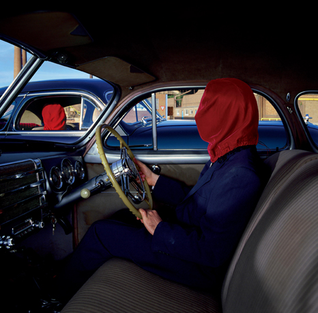
Album #123: The Mars Volta - Frances The Mute


The Mars Volta
Frances The Mute (2005)

The music press have always been quick to label The Mars Volta as pretentious musical wankers, more interested in disappearing up their own backsides than appealing to the popular music masses. Some of these people were probably still bitter that Cedric Bixler-Zavala and Omar Rodriguez-Lopez left At The Drive-In, thinking that their angry post-hardcore energy was TEH SHIZZZ, and that all this Latin/ambient/prog was all just musical flotsam, an unwelcome throwback to a bygone era of long songs, weird time signatures and multiple musical movements.

Basically the music press can get fucked.

I make no apologies for loving the Volta - for mine, they've taken the great parts of progressive rock and fused it with their own backgrounds. However, some of their music does require a great deal of concentration. Nowhere is this more evident than on their second album, Frances The Mute. Whereas their first album was about a fictional protagonist's week long coma, this one was based on a diary found by former Volta member, the late Jeremy Ward, written by someone who, like Ward, was adopted - the diary was a tale of the writer's search for his biological parents. Each song on the album is named for a person in the diary.

Yeah alright, so it's a little pretentious in theme, but how about the music?

The Album


I hope that answers your question.

"BUT DANIEL THAT IS NOT A REVIEW LOL WHERE IS YOUR EVIDENCE ON WHAT BASIS DO YOU POST THIS EXPLODING HEAD GIF"

I'm glad you asked.

Musically, the album covers a monstrous range of territory. Whether it's the warped Latin influence of L'Via L'Viaquez (resplendent with a twisted version of a slowed-down mariachi breakdown), the tender balladry of The Widow or the majestic ambience of Miranda That Ghost Just Isn't Holy Anymore, the album displays more than just a straight rock aesthetic. They're all great but it's probably the end of Miranda that has the most impact; when the drums enter, it's like all of the emotion that builds up is released. It's catharsis on record. The latter two also feature Flea of the Red Hot Chilli Peppers prominently, playing trumpet solos on each; the turn on Miranda in particular is absolutely chilling, managing to convey a real sense of melancholia. 

And then, there's the bookends. Cygnus....Vismund Cygnus is scintillating from start to finish, burning along at a furious pace for the most part thanks to...well, everyone. Drummer Jon Theodore and new bass player Juan Alderete de la Pena create a stunning groove which is supplemented by a plucky riff from Rodriguez-Lopez. Bixler-Zavala's vocal on top of that is like a cherry on top of a sundae, if that sundae were made of BrewDog Hardcore IPA and the cherry was a bomb of pure BrewDog Hardcore IPA.

Yet it's the album closer, the thirty-two minute (YES YOU READ THAT CORRECTLY) long Cassandra Gemini that serves as the band's most experimental, grandiose and extraordinary composition ever. It doesn't deserve to be considered a rock song - in the tradition of songs like Genesis's Supper's Ready, it's more like a series of songs all interconnected to create one glorious piece of music, and to try and describe the whole thing is extremely difficult. It simply needs to be heard to be believed. Every member of the band contributes some piece of genius, and even if it might be longer than some full-length albums, it's the perfect end to such a mind-bending album.

There are minor (VERY MINOR) faults; there are a couple of moments where the ambient noise that either acts as a link between songs, or as part of some songs themselves, gets a little grating. However, much like on predecessor album De-Loused in the Comatorium, the fact that it serves some artistic purpose (giving the whole album an interconnected feel) means that it can be overlooked somewhat.

Additionally, the album's interconnected feel means it can't be listened to piecemeal - you need 77 spare minutes to listen to the whole thing, otherwise it just doesn't work. Though with that in mind, it could be argued that it's the album that best encapsulates this whole LOAD Project, which was born out of a desire to stop listening to music piecemeal and start listening to whole albums.

The Verdict

If I were to select one album from the last ten years that I would keep at the expense of all others, it's Frances The Mute. As a major fan of progressive music I rate it the best prog album I've ever heard, bar none. It is the culmination of thirty years of progressive development, and I love the whole damn thing from start to finish. 

My rating: 9.99999999999/10

Standout Tracks

Start at Cygnus....Vismund Cygnus, and listen to everything until the very end of Cassandra Gemini

Tuesday, 29 April 2014

Album #118: Rogue Traders - Here Come The Drums

Rogue Traders
Here Come The Drums (2005)

Rogue Traders are that dance/electro/rock/synth/whateverthefuckelsewecansqueezein/pop band that were nobodies until they recruited Natalie Bassingthwaite from Neighbours on lead vocals. Suddenly, with a bit of extra public exposure, and armed with an array of radio-friendly dancepop singles, Rogue Traders went BOOM, and it was this album that did it. 

It has been requested a number of times (by the same person, mind you) so it's time to get it out of the way and remind myself just how many of the songs I actually know because television was saturated with them (radio was too but I don't listen to shit radio stations).

The Album

Turns out I know quite a few of them because of the saturation. Perhaps that's also credit to the chief songwriter, James Appleby/Ash/whatever, who certainly knows how to write a hook or two.

At least, he would, if he WASN'T RIPPING MOST OF THE BLOODY HOOKS OFF FROM OTHER, BETTER, MUSICIANS AND SONGS.

Allow me to explain. Voodoo Child would be bad enough because of its banal, shitty lyrics that bleat on while saying sweet fuck all of interest or importance. However, you decided to set those banal, shitty lyrics to the main riff from Elvis Costello's Pump It Up. YOU DESTROYED ELVIS COSTELLO WITH YOUR SHITHOUSE 'TALENT'. FUCK YOU, ROGUE TRADERS. But it gets worse - Watching You takes the lyrical quality of Voodoo Child and wipes its diarrhoea-stained arse with it, somehow providing a set of lyrics that are worse, and again decides to destroy the riff from The Knack's My Sharona. Those are two of the album's singles. Neither particularly original.

But then.

THEN.

There's In Love Again.

I can forgive the lousy synthpop that's trying to be all anthemic and emotional.

I can overlook the fact that the song is as boring as an episode of Love Child and that Bassingthwaite sounds disinterested.

What I can't overlook, or forgive, is that you devote the last two minutes to a nasty thieving of the la-la-la-la part of Tears For Fears' sublime, anthemic tune, Head Over Heels.

Now I must be honest, my reaction (as typed in my listening notes) to this unexpected development was this:

·         WHAT THE FUCK
·         WHAT THE ACTUAL FUCK
·         YOU FUCKING COCKHEADS
·         THIS IS HEAD OVER HEELS
·         BY TEARS FOR FEARS
·         AN ACTUAL BAND
·         YOU HAVE GONE TOO FAR YOU UNTALENTED THIEVING DISEASED PROLAPSED ANUSES
·        SULLYING THE FINE WORK OF ROLAND ORZABAL AND CURT SMITH FOR YOUR FUCKING VOMITOUS SYNTHPOP
·        DIE IN A FIRE
      
      I think that just about says it all, really.

      Elsewhere, it's more of the same. Twelfth-rate lyrics to 'edgy' 'rocky' 'dancepop' (evidenced by the songs Believer and World Go Round), while the utterly deplorable Fashion makes twelfth-rate lyrics seem like fucking Bob Dylan ("Get rich/stay kitsch/give me another hit" perfectly sums up this collection of vacuous, self-obsessed wankbadger lyrics). And as for We're Coming Home, I'm pretty sure if you play the song's backwards samples forwards, it's a recording of somebody saying "CLICHE CLICHE CLICHE" because this song is chock full of them.
      
      Yet would you believe that in this sea of retarded poetry and airheaded cultural fuckheadedness there are actually two songs that aren't complete and utter rhinoceros shit. Way To Go! (one of the many singles) is the only one of the dancepop songs where the bounce and energy of the band (and the vocalist) doesn't sound forced; it genuinely comes off as an enjoyable, club-ready party song, and the guitar riff has a pleasant ballsy chug. There's also Rescue Me, which appears to be the obligatory ballad of the album. Even though it starts with what sounds like an interpretation of whalesong played by an out of tune $20 guitar made by a blind/deaf luthier in Mauritania, and even if it might sound like the bastard child of Roxette and Aqua, it's a welcome change to hear a different aesthetic to fucking cringeworthy 'dancepop'. The beats are gentler, the guitars are subtle and melodic, and it's a great showcase for Bassingthwaite who proves that she has a sweet, pure vocal in her armoury. It's songwriting with nuance and I can't actually believe that it was written by the same people who wrote all the other crap on this record.

The Verdict

No.

My rating: half a star

Standout Tracks

BAHAHAHAHAHAHAAAAAAAAAAAHHHH no seriously:

Way to Go!
Rescue Me

Wednesday, 23 April 2014

Album #112: Sambo - Jack In The Box


Sambo
Jack In The Box (2002)

In 2004, three friends and I ventured to Tasmania for a week to...well, basically sightsee, eat and drink our way around the state, enjoying fine Boags beverages and stuffing our faces with seafood. On one particular evening, we ventured to the Royal Oak Hotel in Launceston for a meal and a beer or nineteen. That night, we were treated to the solo acoustic sounds of Sambo (aka Tasmanian roots musician Samuel Bester, who is today a long-time fixture of the Tasmanian music scene). All of us rather enjoyed his work (as well as his use of the wah pedal with an acoustic guitar) and were sufficiently impressed enough to purchase a copy of his first album, Jack In The Box. 

It also helped that Sambo was a hell of a nice bloke.

Today I pulled it out for the first time in about five years and decided to give it a spin, so that I could listen to it with a more critical ear.

All I can say is, I must have been really drunk ten years ago.

The Album

Okay, maybe that's slightly unfair. For while Jack In The Box is not without its moments, and not without its charm, it's plagued by inexperience, from the rather trite lyrical content to the occasionally barely average vocals. At other times, though, I can see what we enjoyed; some tracks have an overflowing feeling of heart and warmth. There's certainly potential, and Sambo certainly has a fairly distinctive, rootsy voice (and he's a competent guitarist as well), but some of the tracks on the album just don't quite cut the mustard for a variety of reasons.

Waiting For The Plane is a perfect example of the album's issues. A rather catchy wah-guitar riff that had a strong whiff of funk on it is ruined somewhat by some rather questionable lyrics and a puzzlingly annoying vocal section later in the song. This pattern is repeated on songs such as Come On My Friend (which is in desperate need of a comma) and the wholly annoying hippie rock of Blue Sky Radio. This is not to mention the baffling jazzy showtune feel of Trouble, with its doowop backing vocals and a scat section that simply doesn't work, or 

Yet the songs that demonstrate Sambo's potential as a performer and songwriter are far more pleasant to listen to, and demonstrate either a more developed lyrical skill or utilise his talents as a soulful, skillful acoustic troubadour. The rootsy semi-ballad Come Sunshine is one of his best here, with a decent lyric, a great plaintive, yet hopeful, vocal and a sweet lilting melody created by his guitar and a piano. The pretty Came Here With Nothing evokes hints of Cat Stevens with its gently strummed guitar lines and Sambo's vocal stylings, a touch of Bob Dylan with the tasteful harmonica solo, and yet more decent folksy lyrics. Great Escape is at least an attempt to do something decent - a classic rock style tune, from the distorted riff to the Hammond style organ, although his vocal doesn't suit this sort of heavy tune. Sapphire is a fairly moody acoustic instrumental, the sort of thing people like Steve Howe and Steve Hackett used to chuck on Yes and Genesis albums (though nowhere near as technically good as those two). Nevertheless, there's a haunting beauty in the simplicity.

The irony of the whole thing is that this album was probably four or five years too early. Had it been released later, the stripped back, simple roots approach would have been rather popular. Instead, Sambo missed the boat slightly (though, having found some of his more recent material on the Triple J Unearthed website, I can report that his songwriting, and his voice, has acquired a very pleasing maturity, and I'm sorely tempted to explore his later recordings to see if he does this more consistently.)

The Verdict

Jack In The Box is a pleasant Sunday afternoon background noise album. It's not great, and at times it's downright annoying, but for an album written and recorded by an independent Tasmanian musician just trying to do what he loves, it shows a talent for soulful roots music and demonstrates that there are good musos who don't ever get the recognition they are striving for.

Despite my really drunk quip, I don't regret buying it, and you know what, if he played a gig in Victoria, I'd go see him. If only to remind him of a night in the Royal Oak Hotel in Launceston, when four drunken Victorians (well, three, actually, Richie was the designated driver) had a beer with him, told him he was really good, bought his albums and told him that he should totally play some gigs in Victoria.

And Sambo, should you ever read this, we're still waiting for those gigs.

My rating: ** and a half

Standout Tracks

Come Sunshine
Came Here With Nothing
Sapphire

Thursday, 17 April 2014

Album #105: Opeth - Deliverance


Opeth
Deliverance (2002)

Scandinavia has long been a massive scene in the world of metal, arguably dominating the more abrasively extreme subgenres (death, black etc etc.) Swedish metallers Opeth, led by the indomitable Mikael Akerfeldt, have long been one of Sweden's finest metal exponents, combining elements of death metal with a more progressive bent.

In 2002, the group recorded two simultaneous albums, Damnation and Deliverance. The former (released second) focused more on the band's softer progressive side, while the latter was heavier and more in keeping with the band's aggressive progressive death style. Opeth are a band I have heard great things about, so grabbing an album that best represents their style as a starting point made sense.

I wasn't prepared for what lay within though.

The Album

Deliverance is dynamic, fluctuating, moody, ethereal, heavy, demonic, exciting and sorrowful all at once. As a collective, the strength of Opeth is in creating long, sprawling pieces of music that explore many peaks and troughs; shifts between aggressive death metal sections and acoustically-driven 'prog' sections are plentiful, and when the band shifts they shift everything...even the vocals.

As musicians, all four members are highly skilled. Akerfeldt is an extraordinary songwriter, vocalist and guitarist, shifting seamlessly from deathly growls to a clean, sweet vocal; he shares lead guitar duties here with Peter Lindgren, and because it's hard to tell who is playing which solo, it's easier just to say that they're both damn good. Drummer Martin Lopez plays double kick passages that sound terrific but are, to be fair, the minimum technical expectation for a death metal drummer...but he's clean, crisp and dynamic around the kit.

As for the songs on the album, well there's only six in its hour-long running time...and one of those, the beautiful, jazzy acoustic/electric only tune For Absent Friends contributes all of 2.40 of those sixty minutes. The other tracks are all in excess of ten minutes, and not a single one of them could possibly be boring. They all feature those elements described in the first paragraph; some fucking insane death metal passages (though even they are combined with more melodic guitar riffs and the very progressive keyboard flourishes, provided by prog maestro Steven Wilson of Porcupine Tree), some gentle, ethereal acoustic passages and a shitload of switches inbetween. 

While I thought all the tracks were great, the standouts for mine were Master's Apprentices and A Fair Judgment, and both for different reasons. Master's Apprentices spends most of the first five or six minutes being heavy as shit, possibly the heaviest track on the album. Akerfeldt sounds like he is being spawned in Hell itself, the riffs and drums are so heavy you feel them in the pit of your stomach....on an album with many heavy moments it takes something special to stand out as the heaviest moment. Then, suddenly, it switches; lush, rich vocal harmonies, acoustic guitars and gentle keys signal a purely progressive rock approach. This lures you in for a few minutes until Akerfeldt returns with his THROAT OF SATAN, and then somehow the riffs become even heavier and faster. It's just so enthralling.

A Fair Judgment, on the other hand, is mostly those purer prog rock passages. A solo piano plays a beautiful, yet mournful, piece for close to two minutes, before giving way to the group's standard prog metal massiveness. We then move to a picked acoustic guitar solo, which continues while being joined by the rest of the band (more amazing vocal harmonies here, and a guitar solo that's Knopfleresque), but then, not content with you being comfortable, Opeth destroy all that with a deliberate, slowly crawling metal riff section, which plays the song out. Again, there's so much going on, that you just can't stop listening...which pretty much sums up why the album is so interesting to listen to.

The Verdict

Deliverance is a damn fine metal album by a damn fine metal band. I have a funny feeling that Opeth will be one group I look more into - they combine progressive rock, which I love, with the savagery and technical prowess of metal, which I am slowly growing to love. Although the Cookie Monster vocals put me off occasionally, I was at the point here where the music was so fantastic that I found myself not caring.

Definitely worth a listen.

My rating: **** 

Standout Tracks

Master's Apprentices
A Fair Judgment
By The Pain I See In Others

Tomorrow, an album by a band called Slint. They play math rock. I don't know what that is, but I'm gonna find out.