Pages

Showing posts with label progressive. Show all posts

Sunday, 18 May 2014

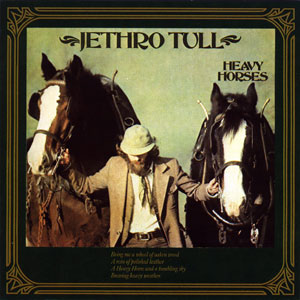
Album #136: Jethro Tull - Heavy Horses


Jethro Tull
Heavy Horses (1978)

Jethro Tull certainly cannot be accused of being boring or uncreative. Over their fortysomething year history, the band has recorded albums in a significant number of styles - blues, progressive rock, folk, AOR, jazz....hell, even metal (don't believe me? Go and find out how many Grammies Tull won.) Of course, they've probably had just as many lineup changes, though there have been two absolute mainstays - vocalist/flautist/multiotherinstrumentalist Ian Anderson and guitarist Martin Barre.

Throughout the 1970s, though, the band was creatively and commercially at their absolute peak. This decade had the band's 'classic' lineups, delineated only by who was in the rhythm section (besides Anderson and Barre, pianist/organist John Evan was the only other mainstay). By the mid 1970s, the band's rhythm section was the extraordinary Barriemore Barlow on drums, and John Glascock on bass - the latter described by Deep Purple's Ritchie Blackmore as 'the finest bass player in rock'. Despite all this technical mastery, Anderson (as songwriter) decided to embark on a trilogy of folk-based albums. 

1978's Heavy Horses was the second of these...and arguably, it's the last truly great Tull album.

The Album

The key to Heavy Horses' success is just how tight the band sounds throughout the entire album. Off-time rhythmic changes, unusual time signatures and seemingly unpredictable accents by Barlow are made to seem second nature by the band. It's the sound of a band incredibly familiar with one another. Adding to this synergy are some fine Anderson compositions, played by a collective of very, very talented musicians. The album is very folky in style - lots of mandolin, acoustic guitar, folk-style lyrics and strings - yet at times retains a harder, gutsier edge.

The title track is, simply, bloody fantastic. A snappy, tight intro leads to a first verse that is stunning - Anderson's deep, rumbling voice accompanied by a beautiful piano section, played by Evan. Later verses see acoustic guitars and strings take more prominence, and Evan's contributions are limited to background texture, but that first verse is the best one in my view. From there it's another six minutes of shifting dynamics (a rather jarring, fast tempo change midway through works fantastically, before shifting back again), super work from Barre and Barlow, and lyrics about big bloody horses. Similarly fantastic (personally I preferred it slightly) was No Lullaby, which is far removed from folk. Barre's heavy opening riff and solo signal that this is going to be a harder rock song, and then the rhythm section takes over. Glascock makes a simple repeated note sound positively marauding, creating a slow groove that Barlow does his best to fuck up completely by playing some brilliant fills. Strings and flute support each other in the verses, Barre whips out some more deft soloing, and Barlow later decides that sick fills are not enough, he's going to play his ride cymbal at 19000 hits per second.

Those two tracks are by far the longest at over seven minutes each; the rest of the album's material is of a more 'standard' pop length. Of those tracks, the pick of the bunch are the closer Weathercock, the opener ...And The Mouse Police Never Sleeps and the Glascock lead bass extravaganza Journeyman. Weathercock does feature some pretty dodgy lyrics (about a weathercock, would you believe) though they do fit the folky theme; fortunately, the musical arrangement is amazing; Anderson plays a brilliant flute solo, Barre tries to outdo him with a blistering lead break, Barlow loosens up with some ballsy drum fill work and Glascock goes along for the ride. The song basically ends with everyone trying to outdo each other. Mouse Police is tight (Barlow and Glascock especially are glued together) with a decent organ solo from Evan, and Journeyman is built around Glascock; his lead bassline provides the bedrock for the rest of the band to build on, and build they do. It's one of the better sets of lyrics (being rather descriptive of office slavery) and features more solid work from Barre and Anderson.

There aren't really weaknesses, as such. The remaining songs are solid, but not as good as their album compadres. Acres Wild is pure English folk, as is Moths; both are pleasant but hardly exciting. Rover has some decent moments, namely its whippy tempo, snappy guitar and flute work, but is little more than charming. One Brown Mouse is a good showcase for the keyboard work of David Palmer, and there's more great stuff from Glascock on this track, but despite some promise it just never quite seems to come together.

The Verdict

It may not be their finest album ever, but Heavy Horses represents the wider Jethro Tull sound well. Although it may be very folk-influenced, there are more than enough moments that are essentially classic Tull - Anderson's flute fluttering away, Barre providing deft flourishes, while the rhythm section provide a super backdrop.

It's a pity that circumstances dictated that this was the last full album of this lineup - Glascock died of a congenital heart defect in 1979, and Barlow left soon after, devastated at the loss of his friend. It does however serve as a fitting epitaph, even if it wasn't meant to be that way, because Jethro Tull were never quite the same after this.

My rating: 8.0/10

Standout Tracks

No Lullaby
Heavy Horses
Journeyman
Weathercock

Friday, 9 May 2014

Album #127: Yes - Fragile


Yes
Fragile (1971)

Prog progenitors Yes have been a guilty pleasure for some time, ever since the music sharing service Audiogalaxy opened my ears to worlds of music that were previously inaccessible. To most people, Yes are the band who did Owner of a Lonely Heart in the 80s, although to the punk rockers of the 70s they were key players in the 'boring dinosaur' set. It's certainly true that Yes did themselves no favours by producing truly fucking wanky efforts (take, as Exhibit A, the bloated, full of itself Tales from Topographic Oceans, its four songs clocking in at an 84 minute running time. 21 minutes PER SONG.)

Yet for all the bloated prog wankery, earlier releases, such as 1971's Fragile, contain songs that are essentially elongated pop tunes and only have hints of the self-indulgent tripe that would plague some of their other 70s work. I haven't listened to the album for ages, and it seemed like a good time to get it back out and give it a spin.

The Album

Fragile's nine tracks consist of four full band efforts, and five tracks written and driven by each of the band members. Various interviews give a number of reasons for this - from a need to reduce studio time and costs, to desiring a chance for each member to put across their musical philosophy - whatever the reason, it does result in Fragile being a slightly disjointed album. The decision to space the four 'full band' tracks throughout the album at least means that there's always something decent around the corner; loading them all up at the start would have made the last five tracks essentially meaningless. There's also the fact that all five band members are virtuosos on their instruments, meaning technical wizardry abounds on the album.

Part of the album's success and appeal stems from the fact that the four 'full band' efforts are among Yes's finest releases. Roundabout is glorious, beginning with a delicate acoustic break from Steve Howe, before the song proper begins. Led by the thunderous dexterity of bassist Chris Squire (who surely is one of the most underrated bassists in rock), and the dual riffwork of Howe and keyboard maestro Rick Wakeman, the song's main section is both hooky and atmospheric; however the song's most interesting part comes in the mid-section, when drummer Bill Bruford gets his chance to shine letting his jazz background come to the fore. There's more solos from Wakeman and Howe, before the song closes with some great vocal harmonies and one more sweet acoustic break. South Side of The Sky is haunting, sparse and, as befitting the lyrics, evokes a wintry feel. Jon Anderson's soaring vocal, Howe's electric riffing and a beautiful piano solo from Wakeman are the standout moments.

Long Distance Runaround is a Yes pop tune at three and a half minutes - simple in composition with Howe and Squire playing a staccato riff (while Bruford plays an extremely unique drum part, moving through each four-bar measure using the snare to accent one extra beat in each bar, before leaving each fifth bar snare free - 1-2-3-4-1-2-3-4-1-2-3-4-1-2-3-4-1-2-3-4). Anderson chimes in with a trademark high vocal, supported by Squire's vocal harmonies. Heart of the Sunrise closes the album with a dynamic, shifting track, that alternates between a rapid-fire riff structure played by Howe, Squire, Wakeman and Bruford, and a quieter, soulful vocal section, highlighted by Anderson's quiet/loud/quiet/loud intensity shift and some gentle licks from Howe. It's a wonderful closer and a great example of the Yes sound.

Then we come to the five 'individual' tunes. Inconsistent is kind - substandard is probably more accurate. Sure, Howe's acoustic solo Mood For A Day is pleasant, while Anderson's multiple vocal looped track We Have Heaven nails the Tibetan mysticism vibe he was probably going for to perfection. Squire's bass solo The Fish (Schindleria Praematurus) is also pretty good considering pretty much all the 'guitar' work is played by Squire....on bass. That's undone by the fucking crap Cans and Brahms from Wakeman and the tuneless, rhythmless Five Per Cent Of Nothing. I'm sure they had their reasons (Wakeman allegedly wasn't allowed to contribute anything himself) but really, they add nothing whatsoever to the album.

The Verdict

Four magnificent tunes, three not so bad ones, two utterly shit ones - Fragile is a mixed bag that leans toward the good side of the ledger. What's more, it's quite accessible - probably, apart from The Yes Album, the band's most accessible 70s release (well, maybe Going For The One is up there also). 

Consequently it's probably worth tracking down for the four magnificent tunes only.

My rating: 7.4/10

Standout Tracks

Roundabout
Heart Of The Sunrise
Long Distance Runaround

Monday, 5 May 2014

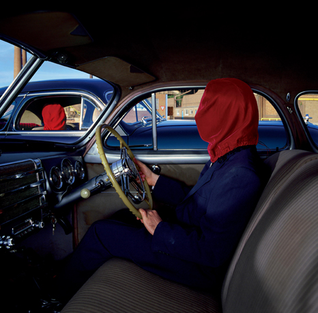
Album #123: The Mars Volta - Frances The Mute


The Mars Volta
Frances The Mute (2005)

The music press have always been quick to label The Mars Volta as pretentious musical wankers, more interested in disappearing up their own backsides than appealing to the popular music masses. Some of these people were probably still bitter that Cedric Bixler-Zavala and Omar Rodriguez-Lopez left At The Drive-In, thinking that their angry post-hardcore energy was TEH SHIZZZ, and that all this Latin/ambient/prog was all just musical flotsam, an unwelcome throwback to a bygone era of long songs, weird time signatures and multiple musical movements.

Basically the music press can get fucked.

I make no apologies for loving the Volta - for mine, they've taken the great parts of progressive rock and fused it with their own backgrounds. However, some of their music does require a great deal of concentration. Nowhere is this more evident than on their second album, Frances The Mute. Whereas their first album was about a fictional protagonist's week long coma, this one was based on a diary found by former Volta member, the late Jeremy Ward, written by someone who, like Ward, was adopted - the diary was a tale of the writer's search for his biological parents. Each song on the album is named for a person in the diary.

Yeah alright, so it's a little pretentious in theme, but how about the music?

The Album


I hope that answers your question.

"BUT DANIEL THAT IS NOT A REVIEW LOL WHERE IS YOUR EVIDENCE ON WHAT BASIS DO YOU POST THIS EXPLODING HEAD GIF"

I'm glad you asked.

Musically, the album covers a monstrous range of territory. Whether it's the warped Latin influence of L'Via L'Viaquez (resplendent with a twisted version of a slowed-down mariachi breakdown), the tender balladry of The Widow or the majestic ambience of Miranda That Ghost Just Isn't Holy Anymore, the album displays more than just a straight rock aesthetic. They're all great but it's probably the end of Miranda that has the most impact; when the drums enter, it's like all of the emotion that builds up is released. It's catharsis on record. The latter two also feature Flea of the Red Hot Chilli Peppers prominently, playing trumpet solos on each; the turn on Miranda in particular is absolutely chilling, managing to convey a real sense of melancholia. 

And then, there's the bookends. Cygnus....Vismund Cygnus is scintillating from start to finish, burning along at a furious pace for the most part thanks to...well, everyone. Drummer Jon Theodore and new bass player Juan Alderete de la Pena create a stunning groove which is supplemented by a plucky riff from Rodriguez-Lopez. Bixler-Zavala's vocal on top of that is like a cherry on top of a sundae, if that sundae were made of BrewDog Hardcore IPA and the cherry was a bomb of pure BrewDog Hardcore IPA.

Yet it's the album closer, the thirty-two minute (YES YOU READ THAT CORRECTLY) long Cassandra Gemini that serves as the band's most experimental, grandiose and extraordinary composition ever. It doesn't deserve to be considered a rock song - in the tradition of songs like Genesis's Supper's Ready, it's more like a series of songs all interconnected to create one glorious piece of music, and to try and describe the whole thing is extremely difficult. It simply needs to be heard to be believed. Every member of the band contributes some piece of genius, and even if it might be longer than some full-length albums, it's the perfect end to such a mind-bending album.

There are minor (VERY MINOR) faults; there are a couple of moments where the ambient noise that either acts as a link between songs, or as part of some songs themselves, gets a little grating. However, much like on predecessor album De-Loused in the Comatorium, the fact that it serves some artistic purpose (giving the whole album an interconnected feel) means that it can be overlooked somewhat.

Additionally, the album's interconnected feel means it can't be listened to piecemeal - you need 77 spare minutes to listen to the whole thing, otherwise it just doesn't work. Though with that in mind, it could be argued that it's the album that best encapsulates this whole LOAD Project, which was born out of a desire to stop listening to music piecemeal and start listening to whole albums.

The Verdict

If I were to select one album from the last ten years that I would keep at the expense of all others, it's Frances The Mute. As a major fan of progressive music I rate it the best prog album I've ever heard, bar none. It is the culmination of thirty years of progressive development, and I love the whole damn thing from start to finish. 

My rating: 9.99999999999/10

Standout Tracks

Start at Cygnus....Vismund Cygnus, and listen to everything until the very end of Cassandra Gemini

Saturday, 26 April 2014

Album #114: The Move - Message From The Country


The Move
Message From The Country (1971)

By 1970, The Move were essentially finished as a band. A number of lineup changes had seen the group left as a three piece, with only multi-instrumentalist Roy Wood and drummer Bev Bevan left from the original lineup; they had been joined by former Idle Race guitarist Jeff Lynne on the band's previous album Looking On. It wasn't the lineup changes that ensured The Move were a dead band walking; it was Wood and Lynne's exploration of the sounds and concepts that would result in the birth of Electric Light Orchestra. They were keen to leave The Move behind and explore this new direction.

Message From The Country was to be the band's final album. Recorded at the same time as some of the tracks that would end up on ELO's debut album, the group differentiated between the two by keeping any songs with cellos on the ELO side of the ledger, while songs featuring Roy Wood's array of saxophones would end up on the Move side. Nevertheless, some of the compositions and touches on this album are extremely similar to ELO's early work (both with and without Wood).

The Album

The album hits the ground running with the somewhat psychedelic, rumbling rocker Message From The Country. The extremely loud and heavy bass is highly prominent, and turns out to be an overarching theme of the whole album, though unlike other songs the drums don't match the bass and are a bit hollow. Lynne's lead vocal is supported by the heavily overdubbed vocal harmonies that would later become an ELO trademark. Ella James has more in common with the earlier Move sound - a harder edged, pop rock sound with a ferocious vocal from Wood, as does the thoroughly decent Until Your Mama's Gone, which combines throughout its five minutes a bluesy feel, created by buzzing guitars and saxophones and driven by the rhythm section, with a ragtime piano solo and an extended guitar solo.

However, the progressive direction that Wood had largely shifted the band towards a few years earlier is the dominant musical paradigm here. Though surprisingly, the album's most 'pop' moments come from Lynne, not Wood, whose solo contributions are fairly traditional. From Lynne, there's the solid No Time, an acoustic ballad with a complex arrangement featuring slide guitar, flutes and a double-tracked harmony vocal; The Minister, a sublime rock tune with a driving rhythm, a riff that could have been stolen via time machine from the 80s New Wave movement and brilliant vocal work from Lynne and Wood; and the proggy, ELO-lite The Words of Aaron, the highlight of which has to be Wood's brilliant bassline.

Wood's only radically different song is the disappointing It Wasn't My Idea To Dance, where his choir of different saxophones dominates the soundscape and the last two minutes are a freeform jam, where it seems all three musicians decided to play whatever they felt like. He and Lynne also cowrote the album closer My Marge, a tribute to the musical sound of the 30s and 40s; it's a vaudeville tune (just listen to Lynne's ye olde vocal stylings) and it's comfortably the shittiest song on the record, if not on any Move record.

As for Bevan, he may never have had a songwriting credit after this ever again, and he certainly was no singer, but he contributes to two of the most interesting tracks on the album - one as songwriter, the other as vocalist. As songwriter, he penned the Elvis Presley pastiche Don't Mess Me Up, which is an incredibly accurate likeness - it has everything that characterised Presley's music (a multitracked Wood and Lynne acting as Presley's backing singers The Jordanaires, a good Elvis impersonation from Wood and Lynne's shuffling, simple guitar solo). As vocalist, he takes the lead on Wood's superb Ben Crawley Steel Company, which is a pure country song, made all the more obvious by Bevan's incredibly deep, Johnny Cash-like vocal and Wood's lyrics which tell a typical country music tale of struggle, heartache and brutal revenge.

Interestingly, the five songs that later accompanied the re-release of the album (all singles and B-sides) are better than a lot of material that made it onto Message From The Country. Even to the end, The Move were quality popsters, even if they didn't want to be.

The Verdict

Perhaps it's my love of ELO, but I happen to believe that The Move are one of England's most underrated 60s/70s bands. Message From The Country is a good album that acts as a reminder of where the band had been, where they were at the time and where the members would be in the future. While Wood and ELO didn't really fit (he left during the recording sessions for the band's second album) his influence on the ELO sound is undeniable, and it's here on this album that the blueprint was firmly laid down.

I freely admit this album isn't for everyone but people who appreciate the classic British early prog sound will like it.

My rating: *** and a half

Standout Tracks

Message From The Country
The Minister
Ben Crawley Steel Company

Thursday, 17 April 2014

Album #105: Opeth - Deliverance


Opeth
Deliverance (2002)

Scandinavia has long been a massive scene in the world of metal, arguably dominating the more abrasively extreme subgenres (death, black etc etc.) Swedish metallers Opeth, led by the indomitable Mikael Akerfeldt, have long been one of Sweden's finest metal exponents, combining elements of death metal with a more progressive bent.

In 2002, the group recorded two simultaneous albums, Damnation and Deliverance. The former (released second) focused more on the band's softer progressive side, while the latter was heavier and more in keeping with the band's aggressive progressive death style. Opeth are a band I have heard great things about, so grabbing an album that best represents their style as a starting point made sense.

I wasn't prepared for what lay within though.

The Album

Deliverance is dynamic, fluctuating, moody, ethereal, heavy, demonic, exciting and sorrowful all at once. As a collective, the strength of Opeth is in creating long, sprawling pieces of music that explore many peaks and troughs; shifts between aggressive death metal sections and acoustically-driven 'prog' sections are plentiful, and when the band shifts they shift everything...even the vocals.

As musicians, all four members are highly skilled. Akerfeldt is an extraordinary songwriter, vocalist and guitarist, shifting seamlessly from deathly growls to a clean, sweet vocal; he shares lead guitar duties here with Peter Lindgren, and because it's hard to tell who is playing which solo, it's easier just to say that they're both damn good. Drummer Martin Lopez plays double kick passages that sound terrific but are, to be fair, the minimum technical expectation for a death metal drummer...but he's clean, crisp and dynamic around the kit.

As for the songs on the album, well there's only six in its hour-long running time...and one of those, the beautiful, jazzy acoustic/electric only tune For Absent Friends contributes all of 2.40 of those sixty minutes. The other tracks are all in excess of ten minutes, and not a single one of them could possibly be boring. They all feature those elements described in the first paragraph; some fucking insane death metal passages (though even they are combined with more melodic guitar riffs and the very progressive keyboard flourishes, provided by prog maestro Steven Wilson of Porcupine Tree), some gentle, ethereal acoustic passages and a shitload of switches inbetween. 

While I thought all the tracks were great, the standouts for mine were Master's Apprentices and A Fair Judgment, and both for different reasons. Master's Apprentices spends most of the first five or six minutes being heavy as shit, possibly the heaviest track on the album. Akerfeldt sounds like he is being spawned in Hell itself, the riffs and drums are so heavy you feel them in the pit of your stomach....on an album with many heavy moments it takes something special to stand out as the heaviest moment. Then, suddenly, it switches; lush, rich vocal harmonies, acoustic guitars and gentle keys signal a purely progressive rock approach. This lures you in for a few minutes until Akerfeldt returns with his THROAT OF SATAN, and then somehow the riffs become even heavier and faster. It's just so enthralling.

A Fair Judgment, on the other hand, is mostly those purer prog rock passages. A solo piano plays a beautiful, yet mournful, piece for close to two minutes, before giving way to the group's standard prog metal massiveness. We then move to a picked acoustic guitar solo, which continues while being joined by the rest of the band (more amazing vocal harmonies here, and a guitar solo that's Knopfleresque), but then, not content with you being comfortable, Opeth destroy all that with a deliberate, slowly crawling metal riff section, which plays the song out. Again, there's so much going on, that you just can't stop listening...which pretty much sums up why the album is so interesting to listen to.

The Verdict

Deliverance is a damn fine metal album by a damn fine metal band. I have a funny feeling that Opeth will be one group I look more into - they combine progressive rock, which I love, with the savagery and technical prowess of metal, which I am slowly growing to love. Although the Cookie Monster vocals put me off occasionally, I was at the point here where the music was so fantastic that I found myself not caring.

Definitely worth a listen.

My rating: **** 

Standout Tracks

Master's Apprentices
A Fair Judgment
By The Pain I See In Others

Tomorrow, an album by a band called Slint. They play math rock. I don't know what that is, but I'm gonna find out.

Wednesday, 9 April 2014

Album #98 : Steve Vai - Sex & Religion


Steve Vai
Sex & Religion (1993)

Steve Vai, for those unfamiliar with his work, has made a name for himself as one of the most incredible guitarists in the world. He has compiled an incredible body of work, mostly either in other bands (most famously, as a guitarist for Frank Zappa and as part of the David Lee Roth Band) or by guesting on the work of others. He, along with his one-time teacher and fellow axe genius Joe Satriani, also frequently goes on the G3 circuit, which basically consists of guitar geniuses being guitar geniuses.

In thirty years, though, Vai has also released eight studio albums. This one, his third album, saw him gather up several very impressive musos - drummer Terry Bozzio, bassist T.M. Stevens and vocalist Devin Townsend (in his pre-SYL days). However, as Vai later observed, his obsessive control over writing and recording meant that dealing with a star-studded lineup was fraught with difficulty, and consequently they never recorded again.

Which makes this album all the more interesting.

The Album

It's a tough album to genre-label. While the Wiki page is happy to call it 'progressive metal', I don't know whether it has all that many metal moments. It's definitely prog/symphonic rock, that's for sure, but the 'metal' aspect only really comes to the fore a few times. What I can say about the music is that it's no surprise, given the technical musical ability on display, that the musicianship is first class. Vai (as I'm sure I'll say many times in the next few paragraphs) is an absolute beast who makes everything sound ridiculously easy, yet despite all the facemelting wizardry (and there's plenty) there's also moments where he displays a welcome ability to let solos breathe. Bozzio and Stevens are as rock-solid a rhythm section as you could hope to hear, although Bozzio only lets fly with some virtuosity of his own on a few occasions.

And then there's Townsend. If not for Vai he'd be the star of this album. Displaying all of the vocal range and styles he would later incorporate into his myriad solo/band projects, he shows that, vocally, he's one of the most versatile musicians in metal. Everything from a pure melodic voice to a Gillanesque high scream is here (and a few other things inbetween.)

To the songs then, and there's some real quality to be found here. Here and Now is the album's first proper song, and it's a cool ride - more hard rock than prog, it's got a ballsy dual vocal from Townsend (one low, throaty croon; one unbelievably high wail) and the first of many jaw-dropping Vai solos. Still My Bleeding Heart flirts dangerously with power ballad territory, given its acoustic guitar and synth based arrangement. Townsend's passionate cries don't really suit what is a fairly low-key tune, but sound great nonetheless. Vai's solo here ditches the technical wizardry for a careful, soulful break - it's this solo which highlights his guitar's sound, and it's such a crisp, clean sound that it's impossible not to enjoy.

The pick of the album for mine though was Dirty Black Hole. Featuring a kickass guitar riff, some booming drum work and a classic Townsend screaming vocal, it's one of the most metal tracks on the record. There's a rumbling call and response section between a choir of MANLY MEN and Townsend, plus Vai contributes little licks throughout the track before unleashing his full armory later on. It follows another metal track, the title track, which is symphonic metal in style. The steady tempo, the crunching riffs married to synth strings, more Vai magic and another trademark Townsend metal vocal....it's all there. Keeping the metal coming is the track Down Deep Into The Pain, which runs for eight minutes...but only the first five or so are worth listening to. This is pumping, ballsy, uptempo metal, with some savage riffs and a flying Vai solo before the vocals (which alternate, along with the arrangement, between melodic sweetness and aggressive fury) kick in. The contrast between the aggressive sections and the melodic, synth-driven sections works beautifully. Unfortunately, it's all ruined somewhat by the frankly bollocks spoken word section in the last few minutes.

There are also flirtations with different styles of music on Sex & Religion. There's a full-on power ballad, resplendent with multi-tracked vocals, heavy use of synths and minimal guitar solo action (In My Dreams With You), a track with commercial hard rock elements (Survive, which has a catchy wah-heavy riff and some great bass playing), a discordant, experimental metal tune (Pig, co-written by Townsend, and it shows; its odd melodic progression, occasional shifts in time and growly vocal give it away. It's also got more stunning work from Vai on it, especially the opening riff and the pulsating solo), and shades of Indian music (Touching Tongues and State of Grace).

Its only weak spots are the baffling The Road to Mt. Calvary, featuring some very angelic choral sections interspersed with people screaming in agony - I assume this is part of the 'religion' angle - and the utterly boring Rescue Me and Bury Me, which would be a complete writeoff if not for the sublime Vai solo, which almost does rescue the song (LOL SEE WHAT I DID THERE.)

The Verdict

Fans of Hevy Devy who aren't familiar with this should check it out for his vocal work - he really is a terrific metal/hard rock vocalist. Fans of guitar playing in general should check it out for Vai, because if you've never really heard his work, and you love guitarists, this album gives you a taste of his ability. It's not a great album, but it certainly is an enjoyable one to listen to, and it does contain moments suitably fitting for such a lineup.

My rating: *** and a half

Standout Tracks

Dirty Black Hole
Here And Now
Down Deep Into The Pain

Up next: Andre Rieu. That's right, The LOAD Project goes classical, and picks every grandma's favourite violinist.

Monday, 31 March 2014

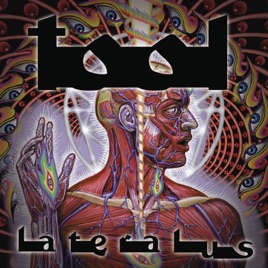
Album #90 : Tool - Lateralus


Tool
Lateralus (2001)

I make no secret of the fact that Tool are one of my favourite bands, not just of the last 20 years, but of all time. The reason for this is because they have taken an "archaic" musical form - progressive rock - and somehow made it more relevant to the modern world. Additionally, in Danny Carey, they boast one of music's most sublime drummers, a man who, along with Mike Portnoy, is one of my few modern drumming heroes.

Lateralus has quite an interesting origin story. Released five years after Aenima (they've never really been about pumping out material, given that in 21 years they've released...um...four studio albums), the album was released after the band pulled a shifty, announcing an album and tracklisting (that subsequently found its way onto Napster) that was fake. It took a month before the group announced the real details.

Clocking in at just a few seconds shy of 80 minutes (just long enough to fit onto a single disc), it's arguably the band's finest, most cohesive work.

The Album

Something Tool have always done well, certainly as well as most other bands, is craft songs that shift between light and dark, between grand heaviness and quiet reflection, yet have this shift be akin to travelling on a rather inconsistent rollercoaster. To avoid this analogy being further tortured, let me explain. One of Tool's great strengths is going from loud to quiet (or vice versa) a number of times within a single song. Sometimes this is immediate, sometimes this is through a gradual buildup, and though you know it's coming, when the change arrives it is like a kick in the guts (in a good way).

On Lateralus they take this strength and pump it full of musical steroids. Compared to their previous releases, the quiet, mellow parts are even quieter, and the monstrous grand explosions of all four members are even grander and more spine-tingling. Additionally, compared to Aenima, there's less of those suite-style link pieces that, frankly, could be quite annoying.

Reviewing most of the songs would result in the same comments, so I'm just going to put them here in a single paragraph. The drumming is typical Carey, all headscratching polyrhythms and a far greater reliance on toms, rototoms and other percussion than is shown by 99.9% of modern drummers. Some of his fill work and general 'timekeeping' is simply mindblowing. Maynard James Keenan goes through every conceivable part of his vocal range, from stage whisper to melodic tone to frightfully painful and evil scream. Adam Jones' guitar doesn't emanate flashy solos, instead content to be a lead instrument sometimes, while taking a back seat at other times. Justin Chancellor proves his stature as an underrated bass player, doing a similar job to Jones, in that for the most part, he's there providing the skeleton for the songs, while at others his bass positively rumbles and thunders.

All four have shining moments throughout. For Carey, it's almost every song, though in particular there's the whirlwind insanity of Ticks and Leeches and the constant, steady tom work of Reflection. For Keenan, he also makes Ticks and Leeches his own, spewing forth a savagely vindictive lyric and vocal, reminiscent of Hooker With A Penis (and revisited five years later with Vicarious), while on Parabol he sings with an almost placid, calm air. He manages to combine both approaches superbly on The Grudge, Schism, Parabola and Lateralus. Jones contributes something brilliant to every track, whether through a "solo" or, more commonly, a chunky, powerful riff that forms the basis of the song. Chancellor's biggest moment is, of course, the bass intro and bassline to Schism.

That, however, is breaking up each member's contribution, and that's not what Tool's about. They are at their finest when all four combine to create something magnificent, which on this album, is often. I struggle to single out highlight tracks because, if I'm honest, I think almost all of them are stunning. I only exclude Mantra (aka the slowed-down sound of Keenan's cat) and Faaip de Oiad (which is an utter mindfuck); even Eon Blue Apocalypse, Adam Jones' touching tribute to his dog, is a pleasant 'link track'. Outside of those three, everywhere you look, you are confronted with genius.

The Verdict

I feel as though I haven't done a very good job conveying just why I love Lateralus so much. On a purely visceral level, it evokes so many feelings, and has such magnificently grand musical highs, that it's hard not to like. On the other hand, from a technical perspective, it is composed and recorded brilliantly. It has its wanky moments (the title track, despite its unadulterated brilliance, is based on the Fibonacci sequence right down to the shifting time signatures)...but then again, that's progressive rock to a T.

What makes this the band's best album in my view is that attention to detail, however; a great deal of thought and effort has gone into crafting these songs, and it shows.

It is simply remarkable.

My rating: *****

Standout Tracks

I struggle to pick only three or four, but....

Lateralus
Disposition/Reflection/Triad (heh heh)
Parabol/Parabola (double heh heh)

Tomorrow, the March recap, and the first album of April. I'm going to avoid pulling some sort of April Fools stunt because that would be predictable, and I'm all about unpredictability.


Saturday, 8 March 2014

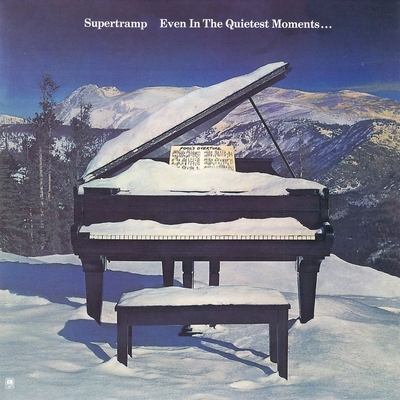
Album #66 : Supertramp - Even In The Quietest Moments


Supertramp
Even In The Quietest Moments (1977)

Confession time, everyone.

Firstly, I quite like the music of Supertramp, especially everything from Crime of the Century through to the commercially successful Breakfast In America. 

Secondly, when I was younger I used to get quite confused by photos of the band. Where's the chick, I used to ask myself. There's clearly a chick singing on this album. Why are there five dudes?

Turns out singer/guitarist/keyboard player/co-songwriter Roger Hodgson is in fact not a chick, he is just a dude with a really high voice. So....there you go.

Even In The Quietest Moments was released in 1977, and showcases the band's not-quite-prog, not-quite-rock and not-quite-pop style. Despite never really receiving massive critical praise, it's been a guilty pleasure of mine for a long time. So, today, I felt I should explore it with a more critical eye and see what I think of it today.

The Album

The album opens with the fairly successful hit, Give A Little Bit. This delightful slice of tuneful acoustic guitar-driven pop is a pleasant way to start, even if it bears no resemblance to the rest of the album. It demonstrates Hodgson's pop crafting skills to perfection as he creates a hooky melody. After that, though, there's some remarkably different tunes. 

Lover Boy is intriguing from a structural standpoint. The quite poppy, upbeat piano and vocal verse sections are almost whimsical about the titular character, a man who has ordered a book that guarantees him luck with the ladies. It's the swirling, foreboding long middle section though, punctuated only by a whimsical verse and a pick-up in tempo, that are really appealing, giving the impression that the 'lover boy' is somewhat nefarious. There's also some decent guitar work here, which adds a nice touch to a fine tune. Even In The Quietest Moments is shiny and shimmering, if that makes sense; the guitar sound is bright and summery, even though the melody it plays isn't; Hodgson's vocal is at its finest as well. The only negative part is the slightly too long middle section, though the clarinet is nice and prevents the song from being boring. Downstream is a really classy song; it's just Rick Davies (also a piano/vocal/co-writer) on piano and vocals, and his deeper, bluesier voice is in fine fettle, delivering a passionate vocal about just getting away from it all.

Babaji is a pleasant enough song (fantastically sung by Hodgson too), but a bit like Even In The Quietest Moments, I find it just goes a touch too long. The opening is, however, very beautiful music. It could have been a tremendously gorgeous pop song with just a little bit of focus. Next is the great (but a touch too long....are you seeing a pattern here yet?) From Now On. A great piano riff/melody from Davies is matched by an equally gritty vocal; Davies was always at his best when singing about a man battling the odds. But although the band goes for the choral vocal at the end a la Hey Jude, and it sounds alright, by the time you get there you are just a touch sick of hearing Davies sing that 'that's the way it's got to be/from now on'.

Closing track Fool's Overture is pure progressive rock. The opening few minutes (bar the strange horns, bells and playing of a famous Winston Churchill speech) are played entirely on string synthesisers and the melody is strangely appealing. The piano/bass/drums section, when it kicks in, is supported by a wistful synth melody and equally wistful saxophone solo. The Hodgson solo piano/vocal sections are goosebump-providing; magnificent vocals and that part sorrowful, part foreboding piano section combine beautifully. 

Whether the song needed the long section with the wind and choir (and snippet from a previous Supertramp tune...) that gradually reintroduces that opening synth string riff is debatable; personally I think the song can live without it; but it is more proof of the purely progressive nature of the track. I really like the song from a personal opinion standpoint, but again, some of it is either ridiculously pretentious or, worse, completely pointless.

The Verdict

Yeah, you know what? I still like Even In The Quietest Moments. Some moments on the album are absolutely beautiful and show that Supertramp, for all their naffness, could produce wonderful pop/prog/rock music. Putting that critical hat on though shows that this album, like most of their releases, was inconsistently outstanding; generally very good but occasionally pointless.

This may explain why they were successful, but not massively so; the singles could be very, very good, but sometimes the album tracks were lacking a certain urgency.

Still, it's a decent album with a few rather good songs.

Most pleasingly, even at the age of 33, it still makes me feel like I did listening to it when I was 10.

My rating: ***

Standout Tracks

Give A Little Bit
Lover Boy
Downstream

Tomorrow, I welcome you to a place where we've got fun and games. I'm on the road tomorrow too, so my bulk reviews will be posted again on Monday...possibly with guest comments! See you soon!

Friday, 17 January 2014

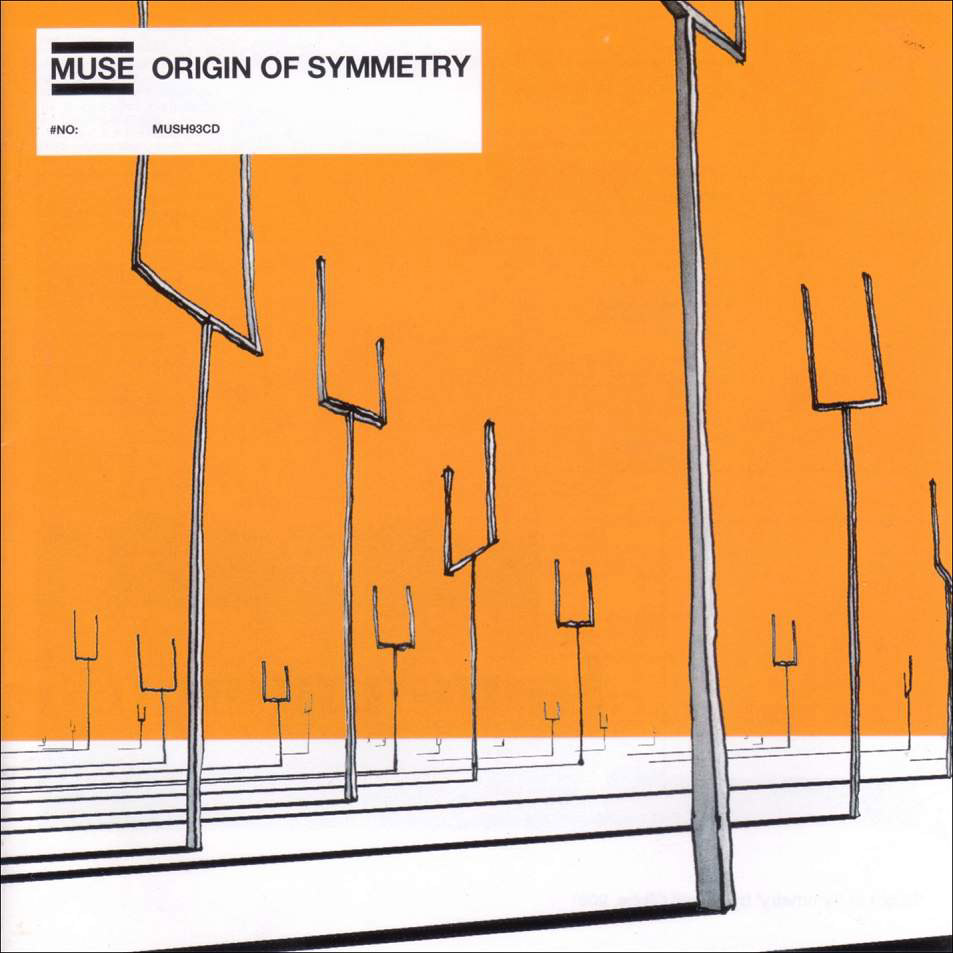
Album #17 : Muse - Origin of Symmetry


Muse
Origin of Symmetry (2001)

Muse. Currently one of the contenders for Biggest Band In The World. Frequently cited by many in the music business as the worthy successors to Queen. Experimental, bombastic, freakishly talented musicians; progressive rock is just not supposed to be as cool as Muse currently are.

Part of this rise to power has come at a price, however. The unfortunate set of circumstances that saw them forever linked to a poorly written set of pulp romance novels now means that they gain fans as much because they're "hip" rather than because of their music. It also means that many people swanning around screaming OMG MUSE aren't familiar with anything pre-Black Holes (witness the many blank looks that accompanied the tracks from their first few albums at their live show a couple of years ago). This is a real pity, because their first few albums (and you'll forgive my hipster moment here) are far more cohesive works than their more recent releases (I'm looking at you, The 2nd Law, with all your crap filler and your dubstep).

Origin of Symmetry was the band's second album. It saw them adopting a much harder rock sound while incorporating more synthesisers and electronic sounds into their work. It contains some songs that are live staples of the band and amongst their finest compositions. 

In my opinion, it is their best album by some distance. Allow me to walk you through the album and explain why.

The Album

We start with the sensational New Born, a song based around a scuzzy guitar riff and a hypnotic bass line, courtesy of the sensational Chris Wolstenholme. Matt Bellamy's vocals cover everything from a breathy whisper to some frankly worshippable falsetto work. However, everything comes back to the guitar riff and that bass line. It's one of the best album openers you'll ever hear. Bliss features synthesiser arpeggios and yet another thumping bass line. Bellamy's vocals in the choruses again alternate between an aggressive manliness and that angelic falsetto. It's a song that would be a standout on many other albums but is overshadowed on this one, because it's sandwiched between New Born and the frankly underrated Space Dementia. Despite the naff CHEER UP EMO KID lyrics (a fairly common complaint of this album), it features the multi-talented Bellamy playing a wonderfully complex piano melody throughout. It also flips the standard quiet verse/loud chorus concept on its head - the verses are in your face, while the choruses more laid back with synthesiser lines providing the base track, and Bellamy's dreamy phased vocals floating around....in space.

(I'm sorry, it had to be done).

Hyper Music is next, and it's nothing special, just another driving bass line and some fairly crap lyrics. It's followed by Plug In Baby, a really high energy rocker featuring a sweet guitar motif, booming choruses and some more of that falsetto magic. It's a great tune with very few weaknesses.

After that comes the album's highlight, and arguably the band's best song, Citizen Erased. The screaming guitar introduction indicates what you're about to hear, as it's followed by five minutes of pulsating, furious synth and guitar driven progressive hard rock. It just sounds so BIG - there is no minimalism here, just balls-out bombast and it's glorious. However, it's broken up by the second verse, which is serene; the eye of the hurricane, as it were. Bellamy's vocal becomes sweeter, less urgent than the first verse, while underneath his guitar noodles away providing texture. After that though it's back to BIG SYNTH ROCK.....except for the last two minutes which are again slower; the synths are turned down, Bellamy plays a calm lead break, the piano kicks in and we are treated to some absolutely beautiful music. 

Micro Cuts is okay as a song; there's more tremendous bass lines from Wolstenholme that drive the song, but the most interesting thing is Bellamy's vocal - the entire song is delivered in an over-the-top operatic style. What's truly amazing is that he hits every note magnificently. It truly is testament to just how good Matt Bellamy is as a singer. Late on the operatic vocal disappears and the song finishes with a pumping slice of hard rock - just guitar, bass and drums working together in harmony to sound monstrous. The fairly forgettable Screenager comes next, and other than the Spanish-influenced guitar it's not an interesting song at all.

The last three songs though cap the album off nicely. Darkshines has enough about it to be interesting - some nice guitar licks from Bellamy, yet more pumping bass and an intriguing guitar melody that sounds like it was lifted from a mariachi song about a man walking to his death. Feeling Good is indeed a cover of the famous croony song that people like Michael Buble (!) have recorded. Trust me when I say that this may be the definitive cover; it retains enough of its original character and charm that it still sounds like the original, yet it is unmistakably Muse - synth heavy with those booming drums. The final track of the album, Megalomania, is dominated by a church organ (yes, a real church organ, recorded in a REAL CHURCH!) It's a truly amazing sounding instrument, especially on this song, as it adds a sense of grandeur to proceedings. It's pure stadium rock in both scope and sound.

The Verdict

Origin of Symmetry is an absolute belter. There's barely a weak spot on the album, the musicianship is first class and the songs are amongst Muse's best. The lyrics are a bit average, though this is something that, it transpired, wouldn't get much better. Hindsight tells us that the album's title was somewhat prophetic (apart from the symmetry bit) as it's this album that is the origin of what is considered the Muse 'sound' - that blend of synthesiser and guitar, thumping, dominant bass lines and booming cannon-like drums. There are also hints of other things that were to come - increasing use of electronic instrumentation and writing songs with several different 'movements - that the band started to build on in later years.

Anyone new to Muse should, in my opinion, start with this album, then work through the rest, because this album is the band at their best. Undisclosed Desires and Supremacy might have gotten truckloads of airplay in the last few years, but they are pale imitations of what Muse truly is (was?) capable of.

My rating: ****

Standout Tracks

Citizen Erased
New Born
Space Dementia

Tomorrow, Arcade Fire, or How I Learned To Stop Wondering Why Everybody Keeps Crapping On About Arcade Fire And Telling Me "Oh, You Like David Bowie, Right? Well He Likes Arcade Fire So You Should Too".

Saturday, 4 January 2014

Album #4 : Pink Floyd - The Wall


Pink Floyd
The Wall (1979)

In July, 1977, Pink Floyd were playing their final date of the In the Flesh tour at Montreal's Olympic Stadium. It was a long stadium tour of which the band - particularly bassist Roger Waters and guitarist David Gilmour - had grown weary of long before. On that night, while playing, Waters took exception to a group of noisy fans near the front of the stage. Out of frustration, irritation and irrational anger, he spat at one of them. Gilmour was to later leave the stage without playing the band's encores, and an experience best described as torturous was at an end.

On reflection of this experience, Waters began to conceive of an idea. As a response to his feelings of alienation from both bandmates and audience, he conceived of a wall that separated artist from fan, built across the entire stage. From this idea was born The Wall, which is considered by many to be Waters' magnum opus.

As a long time Floydian, I was very keen to review this album because of its polarising nature. As you'll see, its very nature saw it warmly received by most while others didn't enjoy it quite so much. I myself find it hard to listen to at times. So....here we go.

The Album

The Wall tells the story of Pink (an analogy of Waters himself, with elements of band founder Syd Barrett), a disaffected rock star whose father died in World War II before he was born. The product of an overbearing, overprotective mother and a cynical, brutal school system, Pink becomes a superstar. He enjoys all the trappings of modern fame (groupies, drugs, adoring fans) while maintaining a wife at home. Somewhere - about the time he finds out about his wife's own affair - Pink snaps, and the wall he has been constructing all his life to block out all that is negative about his life is completed. Pink tucks himself away behind the safety of his wall.

While in there, though, he descends further into madness, eventually hallucinating that he is some sort of fascist dictator whose concerts descend into racist rallies, his fans merely his obedient followers....until finally it all becomes too much, and he is forced to confront his mental state, and finally destroy his own wall.

Heavy stuff. The music tells the story, both through instrumentation and the wonderful, wonderful lyrics. Consequently, The Wall cannot be listened to piecemeal if you really want to understand it. Unfortunately, this leads to problems, because there are some tracks on the album that are nothing more than story filler - that is, they are there for the story, and they are important to the story, but as pieces of music they offer very little.

The Good Stuff

The album opener In The Flesh?, which is later repeated without the question mark, is a bombastic piece of music. The version that is later in the album contains the first evidence of Pink's fascist turn, while the opener is exactly that, introducing us to the album while also introducing us to Pink. Everybody knows Another Brick In The Wall Part 2, so I won't write too much about it, except to say that a choir of schoolchildren singing that they need no education still makes my heart smile. Mother is one of the best tracks on the album, with Waters and Gilmour trading vocals and some sharp soloing from Gilmour's axe. It also acts as a counterpoint to all the preceding songs which are menacing and cynical, even if Pink's mum is a nutbag. Young Lust is exactly about what you think it is - Pink's on the shag and he wants some HOT GROUPIE ACTION. Another great Gilmour solo caps off a heavier Floyd piece. 

We then move onto what is Disc Two. Hey You is absolutely brilliant. Gilmour sings at first, but Waters gradually moves in as the song progresses. The acoustic arpeggios are pretty, the bass break is well played (by Gilmour) and the solo is searing. Run Like Hell is the last really good track on the album, an insistent bass line rumbling underneath a jangly chord sequence, and it features a nice little synth solo.

And then there's Comfortably Numb. Pink Floyd's last truly amazing piece of music. There is absolutely nothing wrong anywhere with this song and anyone who says otherwise is wrong. The second guitar solo.....it just doesn't get much better. Musical perfection. The juxtaposition between the harsher Waters sections and the dreamy, post-drugged up hazy Gilmour sections is wonderful.

The Rest

There are some other okay songs on The Wall that aren't as good as the above, but still pretty good tunes nonetheless. Goodbye Blue Sky is a pretty acoustic ditty that contains a foreboding note, The Thin Ice has a cool lead break from Gilmour and a nice set of lyrics, while One of My Turns takes a while to get going, but once it does serves up a nice lick of goodness. The Show Must Go On features some Beach Boys-esque harmonies and is well sung by Gilmour and Nobody Home is a gorgeous piece of music with real meaning to Floyd fans, given all the references to Syd Barrett.

There is also the album's penultimate track, The Trial, which I make special note of because it is so un-Floydian it's not funny. It's musical theatre, operetta, call it what you will....remarkably theatrical in execution and sound. However, it also features Waters' crowning vocal moment, as he manages to vocalise six different characters and make them all distinctive. 

Then...there's the story filler. Vera, Don't Leave Me Now, Bring The Boys Back Home, Stop, Is There Anybody Out There.....they serve a purpose in the narrative of The Wall. As pieces of music though, they are forgettable at best.

Therein lies the problem of reviewing The Wall, and why there were some reviewers who openly admitted that they didn't get it. It is not a traditional rock album. It is a concept album, possibly one of the purest concept albums ever because it never deviates from its themes. Because it is not purely a story and not purely a piece of music, it can't really be treated as such; however, I am endeavouring to provide people with as good an idea of what the music on each album is like with my reviews. As a result, I need to be quite harsh on some of the songs on the album, because even if they drive the story, they are terrible songs.

The (rather convoluted) Verdict

Pretentious it may be, but The Wall takes an idea borne out of the actual frustrations of being a touring musician and turns it into a deeply affecting story. Through arrangements, compositions, performances and lyrics, Pink Floyd (well, Roger Waters and his backing band, which is what they largely were by this time) bring that story to life. Some of the songs are amongst the finest in Floyd's canon and deserve to be hailed as classics. Others have a narrative purpose, but as pieces of music, they suck.

The Wall is not like other albums. It is an experience. But, it is not an experience that I can recommend to everybody, because if you don't care about the story, you'll find yourself skipping half the songs....and I wouldn't blame you. It is the Floyd's last great work; but it's quite possibly also their most difficult to listen to. Its rating from me will therefore reflect its nature - some genius, some crap, mostly average.

(Edit on 5/1/14)

Upon reflection, three stars is extremely unfair on this album. A good friend pointed out that I should consider the artistic merit of a work as well as the music. Consequently, in light of The Wall's vision, scope and artistic ideals, I have revised my rating. Bear in mind though, I stand by my belief that it is far from their best album musically.

My rating: ****

Standout Tracks

Hey You
Mother
Comfortably Numb

Tomorrow, I bring you an album from a genre that we probably all wish had never been invented. However, this is a request from my wife, so I have promised to be nice!