Pages

Showing posts with label psychedelia. Show all posts

Monday, 2 June 2014

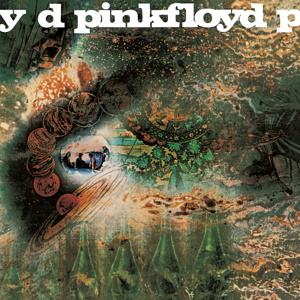
Album #150: Pink Floyd - A Saucerful of Secrets


Pink Floyd
A Saucerful of Secrets (1968)

Recorded in a period of great flux and transition, A Saucerful of Secrets has a reputation amongst even some diehard Pink Floyd fans as the band's worst pre-Waters departure album (I only say that because many diehard fans absolutely loathe both of the Gilmour-led creations). There's a number of reasons for this. Firstly, founding member, songwriter and early creative genius Syd Barrett was on the way out, mainly because of his rapidly deteriorating mental state, which had contributed to his severe lack of input to the band's live performances and studio work. Secondly, guitar whiz David Gilmour had only just joined the band, and even that was as a backup to the increasingly erratic Barrett, just in case he decided in the middle of a gig to detune his guitar until the strings fell off, or worse, just stop playing altogether. Thirdly, the group were shifting somewhat uncomfortably and blindly away from the childish psychedelic pop/space rock adventures of their debut album, Piper at the Gates of Dawn, and heading towards the expansive, experimental, spacey psychedelic full-blown progressive rock that would be their trademark for the next five years.

So it's far from their best work.....but I still think there's some work of merit here. Today I'll take a critical look at this album, the second Floyd release of The LOAD Project.

The Album

Spacier and more eclectic than Piper, A Saucerful of Secrets is where the yoke of Syd Barrett's songwriting was cast aside, meaning the rest of the group had to pick up the slack. This job fell to keyboardist Rick Wright and bassist Roger Waters. It's notable that their contributions reflected their sensibilities - Wright's tunes being melodic, yet melancholy, while the Waters tracks are either weird mindfucks or songs about war. The latter theme would resurface sporadically throughout the band's history. Barrett's sole contribution is....well, more on that shortly.

Opening with the nonsensical Let There Be More Light, the die is cast - random lyrics about ancient English historical figures, references to Beatles tunes and RAF bases are barked by Gilmour, interspersed with unsettling Waters/Wright passages. Musically it's a continuation of the Interstellar Overdrive ethos; meandering guitars, Wright's Farfisa organ swirls and messy, cacophonous percussion from Nick Mason. The reflective Remember A Day shines, as Wright's maudlin piano and wistful lyrics create a sombre mood, while engineer Norman Smith turns in a sparkling guest spot on drums (as Mason couldn't play the song). Set The Controls For The Heart Of The Sun is the only time that all five members of this temporary lineup appeared on the same recording (Barrett and Gilmour both contributed guitar). The lyrics are ripped straight from Chinese poetry, while Waters' vaguely Middle Eastern bassline, Mason's timpani-struck drums and Wright's distinctive Farfisa create an eerie, yet strangely appealing, soundscape. Side A (VINYL REFERENCES FOR THE WIN) closes with the anti-war ditty Corporal Clegg, notable for being one of the rare lead vocal performances from Mason, while all other members of the band also contribute vocals. There's also a chorus of kazoos just to provide a bit of Pythonesque silliness to all the serious lyrics about the futility of war.

The album's title track comes next, and for all the Floyd's space rock epics of their early days, this is the first time where the psychedelic went decidedly avant-garde; Waters and Wright used their architectural backgrounds to 'design' the song's structure, with some interviews from Waters claiming that the whole song tells the story of a battle, from the pre-fight anticipation to the closing mournful choirs of the dead. For the most part, it's a tribute to tape loops, pandemonium and experimentation, though the last two minutes are worth hanging out for. Wright's organ and mellotron work creates an ethereal atmosphere, and he joins Gilmour in some heavenly vocal chorus work. The album's worst song, See-Saw, comes next, and it says everything that when this song was recorded, the band referred to it as 'The Most Boring Song I've Ever Heard Bar Two'. While it's not THAT boring, being another Wright-penned maudlin piano/Farfisa tune, there's not much going on and it's probably lucky that it made the record. 

Closing the album is the last ever appearance on a Floyd release (and the sole songwriting contribution on this album) by Syd Barrett, Jugband Blues. By this time Barrett's mental state was fragmented, and while it's somewhat de rigueur to blame the drugs (and I'm sure they were a catalyst) it's probably accurate to say that the pressures of success were also contributory. At any rate, Jugband Blues is the observation of one man's mental state, written by the man himself. It serves as Barrett's own commentary on his fragmented mind, the fact that his own band were steadily squeezing him out, and an inability to cope with everything that was happening to him. In true Barrett fashion though, there's enough musical meat to make it listenable; the Salvation Army brass band add a nice touch, the "I don't care if the sun don't shine" section contains a flicker of Piper's psychedelic pop edge, while the song's closing notes, Barrett on an acoustic guitar singing, in a maudlin key, "And the sea isn't green/and I love the Queen/and what exactly is a dream?/And what exactly is a joke?" haunts you long after the song has closed.

The Verdict

I don't think it's Pink Floyd's worst album (step forward The Final Cut and A Momentary Lapse of Reason for that dubious honour) but A Saucerful Of Secrets' biggest problem is that it rarely achieves the musical heights of so many other Floyd releases. It's solid, but unspectacular; the sound of a group trying to find their feet as songwriters now that their main creative force was basically a vegetable. The lofty genius of the 70s was still a few years (and albums) away, though there are flickering moments on here that foreshadow what was to come.

Not one for casual fans, more for the purists like myself.

My rating: 6.3/10

Standout Tracks

Corporal Clegg
Jugband Blues
Remember A Day

Wednesday, 21 May 2014

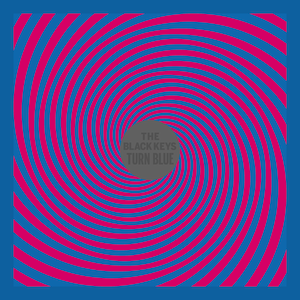
Album #139: The Black Keys - Turn Blue


The Black Keys
Turn Blue (2014)

When Ohioans The Black Keys first came out in 2002, they garnered cult attention because of their stripped back, lo-fi, raw bluesy sound (created by just a drummer and a guitarist/vocalist). For the majority of their first four studio albums, this was the band's blueprint - gutsy, edgy, ballsy blues rock, with a seriously dirty aesthetic....but there was something undeniably real about The Black Keys' music. Its rawness gave it an imperfect quality that was part of its charm.

Well, that and it fucking rocked.

The writing was on the wall though with Brothers; the band's sound was ever so slowly changing to include heavy keyboards and more lavish production values, thanks to their collaboration with producer Danger Mouse. This continued (combined with a decision to write hooky hit singles) on the allegedly quite critically popular El Camino. 

The band's latest release, Turn Blue, keeps this lavish production going, again thanks to Danger Mouse's obsession with keyboards. Though this time, the hooks and sharpness of El Camino have been replaced with moody introspection and psychedelia. Does this represent the next stage of The Black Keys' 'evolution', or are there signs that the magic of old is on the wane?

The Album

The magic isn't on the wane, it's on fucking life support. Those early hallmarks are all but dead; where once the music burned with ballsy blues, today it simpers with snotty synthesised pop. Where once guitarist Dan Auerbach's axe sounded like a series of tuned chainsaws scything their way through a forest of rock and roll, today it is reduced to jangly chords buried under layers of keyboard, only briefly peeping out to show its stuff. There's no dry, lo-fi feel anymore, because The Black Keys have joined the ranks of the slickly-produced, commercially appealing. It probably doesn't help either that Auerbach's marriage was disintegrating during recording, because that too contributes to the sad, moroseness enveloping the album's sound.

And I for one think that's a fucking shame, because anything from Thickfreakness, Rubber Factory or even Attack & Release is more interesting, entertaining and dynamic than the entirety of Turn Blue. For that we must blame Danger Mouse; rather than letting the essence of The Black Keys be at the forefront of the songs, it must instead be buried under layers of keyboard. At times (Turn Blue, Fever and 10 Lovers especially) the band are less earthy blues rock and more synth/dancepop band and that is an absolute travesty against music; to reduce two men with a gift for filthy, muscular blues to little more than the 21st Century version of Roxette with guitars is fucking disgusting. Other times, like on the potentially good but not quite there In Time, the songs are crying out for production restraint, to let the sombre, introspective guitar tone tell the story and carry the song...except Danger Mouse has to RUIN EVERYONE'S SHIT with his fucked up 80s pop keyboards. And when they're not playing synthpop, they're playing fairly predictable, safe guitar pop (Gotta Get Away, the Flaming Lipsesque Waiting On Words and Year In Review), though even these tunes are decent; Gotta Get Away in particular is the only uptempo, rollicking moment on the album, with a decent little solo from Auerbach, while Year In Review features a great introspective lyric.

The album's three shining moments occur almost by accident. Two of them are remarkably psychedelic space rock in nature, while the third (It's Up To You Now) is one of only two non-Danger Mouse produced tracks (the other, unsurprisingly, is the rollicking keys-free Gotta Get Away.) Opening track Weight Of Love sounds eerily like early to mid 70s Pink Floyd, and that's not just because The Black Keys have basically stolen the chord progression from the Floyd's Breathe, but the acoustic guitars, simplistic Roger Waters-style bass, wailing guitar work and drummer Patrick Carney's Nick Mason impressions on the kit essentially make this a pure copy of the Floydian psychedelic sound. Nevertheless it's a great song, with two superb solos from Auerbach. Bullet In The Brain is also terrific psychedelic pop/rock, with spooky space rock keyboards, more Mason-style adventures from Carney and some haunting, hollow reverb-drenched vocals. It's Up To You Now is the only song that calls to mind the earlier sounds of the band; rumbling rhythms from Carney's toms, buzzy guitar (and supporting keyboard - SUPPORTING, Mr Danger Mouse, not DOMINATING THE GODDAMNED MIX PISSING EVERYONE OFF YOU ARSEHAT), some thick, chunky blues riffs and an equally meaty Auerbach solo. It was the only time in 45 minutes that I felt like I was actually listening to the same Black Keys who recorded songs like Have Love, Will Travel and I Got Mine.

The Verdict

No doubt Triple M are fucking falling over themselves to fellate the latest singles from The Black Keys. Additionally, I'm sure critics are falling over themselves to laud this as a 'masterpiece' and 'nuanced' and 'evidence of their continued evolution as a band to a more mainstream aesthetic'.

FUCK. ALL. THAT. BULLSHIT.

Turn Blue is decidedly poor, the sound of a band being ruined by a combination of wanktastic production and some sort of sick desire to become the new Duran Duran or something. There's very little here to recommend to anyone - old school lovers of the Black Keys (like me) will find that the fucking raucous edge that made them so appealing has been dulled completely, while people who thought that El Camino was their first album won't find any simple rocking hooks here.
I'm sure you wanted to make a moody, introspective album about your heartbreak, Dan......if only there were a style of music perfectly suited to tales of heartbreak, revenge, love and loss....perhaps with the name of a colour in it.....blues maybe.......

My rating: 4.8/10

Standout Tracks

Gotta Get Away
Weight of Love
It's Up To You Now

Tuesday, 29 April 2014

Album #117: Cream - Disraeli Gears


Cream
Disraeli Gears (1967)

Cream may very well be the most famous musical accident of all time. A band formed because of a combination of Ginger Baker's dissatisfaction with the Graham Bond Organisation, as well as admiration of Eric Clapton's guitar skills witnessed at a Bluesbreakers gig, it was only a lift home given to Clapton by Baker that resulted in the two hooking up musically to form a new band. At Clapton's insistence, Graham Bond bassist Jack Bruce was asked to join on bass and vocals (which prompted Baker to almost crash his car, apparently, such was the level of hatred he had for his former bandmate). 

However, the two managed to set their differences aside long enough for Cream to form and release several albums. Starting (unsurprisingly) as a blues band, with 1967's Disraeli Gears Cream joined many of their contemporaries in the psychedelic set, departing significantly from the blues sound. It ended up being considered the group's masterwork.

And can you believe, growing up in a Clapton-worshipping household, that I've never heard it. So I remedied that.

The Album

It's no surprise that Disraeli Gears sounds like three extraordinarily talented musicians at the height of their youthful powers. Almost every track cracks and sizzles with the whippy power of Baker's drumming, the groove-laden fluidity of Bruce's bass playing, and, of course, the effortless blues of Clapton's guitar. It's also a testament to the band's abilities that while the safe harbour of the blues tracks are outstanding, those psychedelia-meets-proto hard rock songs, where the group were stepping out of their comfort zone, are every bit their equal.

The first two songs are easily in Cream's top five tunes. Strange Brew is every inch a blues song, despite Clapton's faraway near-falsetto vocal; his bluesy riffs and licks fill every empty space in the music, and his solo calls to mind the work of many of the legendary blues guitarists of the 50s and early 60s. But it's the following tune, Sunshine Of Your Love, that has become both Cream signature and cover band staple because of its sheer majesty. That well-known riff (written by Jack Bruce on a double bass) is matched by Clapton's wailing guitar and a half-shuffle/half-African drumbeat from Baker. Its brilliance is all the more remarkable for its sheer simplicity; it's just guitar, drums and bass throughout, with only Clapton's wonderful solo being overdubbed (and thank goodness because it is a FUCKING BRILLIANT piece of blues guitar playing.)

From there the album turns down the psychedelic path, though mixed with the sort of early hard rock stylings that The Who and Jimi Hendrix would popularise. World Of Pain features a wah-heavy riff from Clapton and some aurally wobbly harmonies from Bruce and Clapton to give that psychedelic feel, while on Dance The Night Away, Clapton's guitar is inspired by the surf guitar sound while Baker turns into a lead drummer, carrying the song with his manic drumwork. Tales of Brave Ulysses features rather stream-of-consciousness lyrics written by the album's cover designer, Martin Sharp, based on Homer's Odyssey, and the riff is rather similar to the band's own track White Room. SWLABR is the finest 'psychedelic rock' tune here and a real hidden gem. Lyrically, it's rather clever, using metaphors to describe the flaws of a girl who is otherwise amazing, but musically the song kills; the rumbling groove of Bruce's bass matched perfectly by Baker's sharp drumming, while Clapton does his thing, riffing and soloing with melody and dexterity.

Towards the album's close, Cream return to the blues with one fantastic track (Clapton's arrangement of an old blues standard Outside Woman Blues) and one decent track (Take It Back). The former, sung by Clapton in proper American blues style, features a nifty, catchy little blues lick for a riff, but the real star is Bruce, producing a bassline that merely confirms his status amongst the bass greats. The latter, written by Bruce with regular collaborator Pete Brown, is a mild variation on the 12-bar structure with a pleasant harmonica solo from Bruce....but not much else, really.

Only three tracks here don't really justify their inclusion in my view - Blue Condition, penned by Baker, tends to confirm the uniquely 60s truism that drummers shouldn't write songs other than drum solos because they're awful (Baker's weak, bland lead vocal does nothing to help this); We're Going Wrong is pure psychedelia with a Middle Eastern feel (created by Clapton's riff), and given the power and energy of the other songs here it comes across as being rather quite listless; and Mother's Lament is tacked onto the end, the three band members mucking about with an old folk song to seemingly fill in time.

The Verdict

Disraeli Gears justifies the hype, for the most part. Cream are the most powerful of the great power trios, in my view, and this album manages to convey all the things that made Cream burn so brightly, albeit for a very short period of time (the band were only together for about three years).

Lovers of Clapton, or of guitar/bass players in general, would definitely enjoy this album if they haven't heard it already.

My rating: ****

Standout Tracks

SWLABR
Strange Brew
Sunshine Of Your Love

Saturday, 26 April 2014

Album #114: The Move - Message From The Country


The Move
Message From The Country (1971)

By 1970, The Move were essentially finished as a band. A number of lineup changes had seen the group left as a three piece, with only multi-instrumentalist Roy Wood and drummer Bev Bevan left from the original lineup; they had been joined by former Idle Race guitarist Jeff Lynne on the band's previous album Looking On. It wasn't the lineup changes that ensured The Move were a dead band walking; it was Wood and Lynne's exploration of the sounds and concepts that would result in the birth of Electric Light Orchestra. They were keen to leave The Move behind and explore this new direction.

Message From The Country was to be the band's final album. Recorded at the same time as some of the tracks that would end up on ELO's debut album, the group differentiated between the two by keeping any songs with cellos on the ELO side of the ledger, while songs featuring Roy Wood's array of saxophones would end up on the Move side. Nevertheless, some of the compositions and touches on this album are extremely similar to ELO's early work (both with and without Wood).

The Album

The album hits the ground running with the somewhat psychedelic, rumbling rocker Message From The Country. The extremely loud and heavy bass is highly prominent, and turns out to be an overarching theme of the whole album, though unlike other songs the drums don't match the bass and are a bit hollow. Lynne's lead vocal is supported by the heavily overdubbed vocal harmonies that would later become an ELO trademark. Ella James has more in common with the earlier Move sound - a harder edged, pop rock sound with a ferocious vocal from Wood, as does the thoroughly decent Until Your Mama's Gone, which combines throughout its five minutes a bluesy feel, created by buzzing guitars and saxophones and driven by the rhythm section, with a ragtime piano solo and an extended guitar solo.

However, the progressive direction that Wood had largely shifted the band towards a few years earlier is the dominant musical paradigm here. Though surprisingly, the album's most 'pop' moments come from Lynne, not Wood, whose solo contributions are fairly traditional. From Lynne, there's the solid No Time, an acoustic ballad with a complex arrangement featuring slide guitar, flutes and a double-tracked harmony vocal; The Minister, a sublime rock tune with a driving rhythm, a riff that could have been stolen via time machine from the 80s New Wave movement and brilliant vocal work from Lynne and Wood; and the proggy, ELO-lite The Words of Aaron, the highlight of which has to be Wood's brilliant bassline.

Wood's only radically different song is the disappointing It Wasn't My Idea To Dance, where his choir of different saxophones dominates the soundscape and the last two minutes are a freeform jam, where it seems all three musicians decided to play whatever they felt like. He and Lynne also cowrote the album closer My Marge, a tribute to the musical sound of the 30s and 40s; it's a vaudeville tune (just listen to Lynne's ye olde vocal stylings) and it's comfortably the shittiest song on the record, if not on any Move record.

As for Bevan, he may never have had a songwriting credit after this ever again, and he certainly was no singer, but he contributes to two of the most interesting tracks on the album - one as songwriter, the other as vocalist. As songwriter, he penned the Elvis Presley pastiche Don't Mess Me Up, which is an incredibly accurate likeness - it has everything that characterised Presley's music (a multitracked Wood and Lynne acting as Presley's backing singers The Jordanaires, a good Elvis impersonation from Wood and Lynne's shuffling, simple guitar solo). As vocalist, he takes the lead on Wood's superb Ben Crawley Steel Company, which is a pure country song, made all the more obvious by Bevan's incredibly deep, Johnny Cash-like vocal and Wood's lyrics which tell a typical country music tale of struggle, heartache and brutal revenge.

Interestingly, the five songs that later accompanied the re-release of the album (all singles and B-sides) are better than a lot of material that made it onto Message From The Country. Even to the end, The Move were quality popsters, even if they didn't want to be.

The Verdict

Perhaps it's my love of ELO, but I happen to believe that The Move are one of England's most underrated 60s/70s bands. Message From The Country is a good album that acts as a reminder of where the band had been, where they were at the time and where the members would be in the future. While Wood and ELO didn't really fit (he left during the recording sessions for the band's second album) his influence on the ELO sound is undeniable, and it's here on this album that the blueprint was firmly laid down.

I freely admit this album isn't for everyone but people who appreciate the classic British early prog sound will like it.

My rating: *** and a half

Standout Tracks

Message From The Country
The Minister
Ben Crawley Steel Company

Thursday, 3 April 2014

Album #93 : The Beach Boys - Pet Sounds


The Beach Boys
Pet Sounds (1966)

The Beach Boys found fame in the 1960s composing and producing songs about surf, sand, cars and babes....and nothing else. Their brand of surf rock, featuring multi-layered vocal harmonies and rocking arrangements found a home in America, the land of surf, sand, cars and babes (and nothing else).

By the mid 1960s, though, and with his mental state growing more fragile, the group's talismanic genius, Brian Wilson, had grown tired of churning out album after album of surf rock. On the verge of burnout, he began to become not only more introspective of his mental demons, but also sought to push the boundaries of musical production. Inspired by The Beatles' Rubber Soul, which he saw as the perfect album, Wilson set out to create something better. The result was Pet Sounds, incredibly the band's eleventh studio album in five years.

It was to play a part in the redefinition of pop and rock music. It was also the beginning of the end for the Beach Boys as a chart-topping force.

The Album

Drawing largely on baroque influences and instruments, Pet Sounds is far removed from the early surf rock sound. Guitars and drums are at a minimum, replaced by horns, strings, harpsichords, flutes and percussion. However, those famous vocal harmonies are turned up several notches, and were never better at any time in the band's career than right here (save for Good Vibrations, perhaps). Additionally, Wilson's growing experimentation with LSD meant the songs also took on a psychedelic edge, with a heavy use of reverb on instruments and vocals (one example being I Know There's An Answer, which was written during Wilson's second acid trip). The result is the most experimental, boundary-pushing Beach Boys album in their entire catalogue.

The songs themselves are a testament to Brian Wilson's abilities as a songwriter (though he was ably supported with lyrics by Tony Asher). Wilson's gift for creating melody and weaving intricacy into a song's arrangement is all over the album. Leading the way is a song that deserves consideration as one of the finest ever written, God Only Knows. One of the few tracks not sung by Wilson (his brother Carl takes the lead vocal), it is utterly gorgeous. French horns and harpsichords play us in, before Carl Wilson's lead vocal takes us to a higher plane - haunting, beautiful, crisp. Baroque influences abound due to the ever-present harpsichord, and at the song's denouement, C Wilson, B Wilson and Mike Love's vocals swirl around each other creating a kind of vocal Shepard note. 

It simply must be heard.

That's not all though. Wouldn't It Be Nice is one song closer to the 'old' Beach Boys sound, featuring a more traditional rock percussion track, though the instrumentation is gloriously lush with horns, accordions and guitars. It takes an optimistic tone musically, and this is supported by a set of hopeful lyrics. Sloop John B, based on an old West Indian folk song, is a highly underrated tune. More great vocal harmonies (there's a brief moment near the end where it's just the vocals alone, and it's stunning) and a simple folky chord structure make the song such a great listen. Also of an upbeat mood is I'm Waiting For The Day, with its BIG choruses (featuring booming drums and strings, as well as vocal harmonies) and even bigger coda.

Most of the album's tracks, however, would be classed as 'baroque pop', and there's some variety in these baroque tunes (which, to be frank, there needs to be; I find baroque pop to be good as something different, but it shouldn't be an album's dominant musical landscape.) They range from the dreamy yet doleful You Still Believe In Me and the short, yet pretty instrumental Let's Go Away For Awhile, to the downbeat yet beautiful Caroline, No and Don't Talk (Put Your Head On My Shoulder). The latter two are almost as good as any of the 'big' songs on Pet Sounds; the former with a downbeat melody, accentuated by Brian Wilson's double tracked lament and the soft tones of a vibraphone, and the latter featuring sombre, yet creative, chord progressions and the gentle emotion-generating string arrangement.

There are also signs of the demons that were beginning to plague Wilson, encapsulated partly in the song That's Not Me (which, interestingly, was actually sung by Mike Love). Wilson himself thought the song related perfectly to him, although when it was written by he and Asher that wasn't the intention. However, the track I Just Wasn't Made For These Times entirely sums up Wilson's mental state, as he began to believe that his musical visions were far outstripping the technological capabilities of the time, as well as dealing with people who thought that Pet Sounds was too ambitious. 

Which, in fairness, it probably was.

The Verdict

We, however, should be thankful for Wilson's ambition. History records that Pet Sounds became the catalyst for so many bands to reinvent their sounds; upon hearing the album, Paul McCartney was inspired to continue the musical arms race, leading The Beatles to compose and record Sgt. Pepper's Lonely Hearts Club Band, which also helped change the face of music. A massively diverse range of musicians, from Elvis Costello to somebody called Biffy Clyro, have cited the album as inspirational.

In terms of songwriting and production, it truly is one of the great albums. It helps that it's also just so damned beautiful to listen to. It's not quite perfect though - for mine, it lacks those electrifying goosebump moments that elevate great albums to another level (although, I'll grant that God Only Knows is one great big electrifying goosebump moment) and it goes back to the baroque/psychedelia well a little too often. 

As far as that Rubber Soul comparison? Well, Pet Sounds has higher highs, but Rubber Soul is more consistently good. So it's not quite a five star album because it doesn't quite have that consistency of quality....but it is, nonetheless, an album that you must listen to if you've never heard it. The Beach Boys (and rock music) would never be the same again because of Pet Sounds.

My rating: **** and a half

Standout Tracks

God Only Knows
I Just Wasn't Made For These Times
Sloop John B
Caroline, No

Tomorrow, another request album!

Friday, 14 March 2014

Album #72: The Jimi Hendrix Experience - Electric Ladyland


The Jimi Hendrix Experience
Electric Ladyland (1968)

History records that Electric Ladyland is the final album released by The Jimi Hendrix Experience, one of a number of elite power trios in 60s music. Hendrix had, by this time, firmly established himself as one of the most influential guitarists in the world, combining an incredible flair for invention with an ear for blues/soul music. 

However, when it came to the recording of this album, the Experience (Hendrix, drummer extraordinaire Mitch Mitchell and bassist Noel Redding) were already destined for the scrapheap. Redding had formed his own band, and had limited time to contribute to the recording. Additionally, Hendrix's perfectionism cost him the services of his producer and engineers. Consequently, Hendrix himself plays bass on a number of tracks here, and there's even a handful of tunes where Hendrix plays with a completely different band.

This album is arguably Hendrix's most experimental. It may also be the greatest work the Experience put out. Let's find out more. 

The Album

Electric Ladyland is, in many ways, a microcosm of mainstream English pop/rock in 1968. There's blues, soul-tinged pop, classic English pop rock, experimental spacey psychedelia and straight rock. The album's heart and soul is blues, though, and it's no surprise that many of the album's killer moments come through the blues tracks. The biggest standouts share a similar name. Everybody familiar with the Hendrix oeuvre knows Voodoo Child (Slight Return), a five minute opus that displays Hendrix's genius for all to see. Beginning with a sweet wah-laden riff, we are then treated to Hendrix making some unholy sounds with his guitar; the solo after the final verse is savage and untamed, and also very fucking cool. It deserves to be considered one of the greatest solos of all time. Voodoo Chile is a different song. Clocking in at fifteen minutes, and featuring English keyboard star Steve Winwood, it is a pure blues track, with typical supernatural lyrics and a slow, steady blues groove. There are glorious instrumental moments for Hendrix, Winwood and Mitchell here, and they make this song a compelling listen.

Other blues songs on the album are the underrated, rocking tunes House Burning Down and Gypsy Eyes, and the duo of Rainy Day, Dream Away and Still Raining, Still Dreaming. There's also a cover of Come On (Let The Good Times Roll), which is more R & B than pure blues, but still a rollicking little cover with some sharp work from Mitchell.

Beyond that, there's some sprawling musical territory covered here. Crosstown Traffic and the brilliant All Along The Watchtower are more traditional rock songs in sound. The former is an uptempo rocker with a classic riff and some solid metaphorical lyrical work. The latter features several Hendrix solos, all with their typical invention and feel, while there's even a slide guitar break as well. Interestingly, it doesn't have choruses; credit that to Bob Dylan, who originally penned and recorded the tune (though with about 0.2% of the style and panache of this infinitely superior cover). Have You Ever Been (To Electric Ladyland) takes some of the sounds of soul music, with a major emphasis on backing vocals, and produces something akin to psychedelic soul, while the stunning (and also extremely underrated) Burning of the Midnight Lamp ditches the soul for absolute Floydian psychedelia. It's the first time Hendrix used a wah pedal on an album, which marks it as fairly important; it's also a killer tune, and the chord progressions throughout are goosebumps-inducing.

But that's not all in terms of psychedelic jams. 1983... (A Merman I Should Turn To Be) is the sort of track I would consider polarising. Apocalyptic lyrics tell of Hendrix's desire to return to the sea, and these are set to a soundscape of flutes, jazz drums (there's a couple of drum solo sections that are superb) and a haunting guitar riff. As a sonic adventure, it's almost without peer. However, to others, it could be quite dragging (unlike Voodoo Chile, which never lets up on its assault on the senses, this song goes through the occasional period where nothing is happening). Personally, I find it enthralling, and a testament to Hendrix's perfectionism and composing abilities.

Finally, there's Little Miss Strange, a song penned and sung by Noel Redding. As was the case with Redding's previous contribution to an Experience album (She's So Fine on Axis: Bold As Love), it's a fairly typical English pop/rock song; limited guitar heroics, and more of an emphasis on structure and vocal harmonies. It's not too bad, to be fair; I quite enjoy it; but on an album full of experimentation and virtuosity, it sticks out like a sore thumb.

The Verdict

Call me biased, but every Hendrix Experience album would have to get at least four stars, if not more. This is no different. For sheer musical wizardry, this album is a must listen. For diversity in style and sound, it's a must listen. For anyone who loves guitar and guitar players, it's a must listen.

It's the Experience's most complete album, and that's why I think it's their best. If I ever wanted to prove why Hendrix was a man ahead of his time, Electric Ladyland is the album I'd play.

My rating: *****

Standout Tracks

Voodoo Chile
Voodoo Child (Slight Return)
Burning Of The Midnight Lamp
All Along The Watchtower

My next album, assuming I can track it down, is another request - it's a British band's 1997 debut album......