Pages

Saturday, 10 May 2014

Album #128: Pseudo Echo - Love An Adventure


Pseudo Echo
Love An Adventure (1985)

Pseudo Echo sprung up in the mid 1980s in the midst of the synth-pop New Wave explosion, acting as Australia's answer to Duran Duran, Ultravox and The Human League. Bearing more hair than a Tina Turner lookalike contest, and sporting cool fashions of the time (just look at that album cover for proof), they were rather popular with the young, hip musical set, and not just because of their look; but also because of their easily accessible, inoffensive, club-ready synthpop.

Love An Adventure was the band's second album, released in 1985. In terms of the commercial success of the songs on the album, it's probably Pseudo Echo's best, sporting several Top 20 singles, and the international smash Funky Town. Today I bring a review of it to you.

The Album

The sound of the album can best be summed up like this:

SYNTH SYNTH SYNTH SYNTH
GATED REVERB HEXAGONAL DRUMS
SYNTH SYNTH SYNTH SYNTH
guitar
SYNTH SYNTH GATED REVERB HEXAGONAL DRUMS SYNTH SYNTH

It's wall to wall synthesiser lines that harmonise, duel and cross over each other, with groove-setting bass and the occasional flecks of guitar for texture. Actually, that's slightly unfair - there are a couple of cracking guitar solos on the album that are both welcome and energetic. Vocalwise, Brian Canham is no star, merely serviceable. In fact, that probably sums up the band and pretty much all of their material - serviceable.

The only times that Pseudo Echo lift themselves above the banal are where the songs either have an extra bit of verve, or where there's an undeniable hook. Funky Town was an international smash for a reason - it takes a fairly placid, lame disco track and reinvents it as a rocking, synth-heavy party tune. In fact, it's far more grooveable than the original disco track, which is funny given that disco was supposed to be the ultimate dancing music. Its cracking guitar solo is the icing on the cake. Listening is synthpop done right - verses that utilise a darker chord progression, a chorus hook that's easily singable and some pulsating bass work - as is Destination Unknown, which has a good tempo and some pleasing synth and guitar licks.

There are also attempts to try something different. Lonely Without You tries to be a tender love ballad, and it's not a bad attempt, but somewhere, somebody forgot to tell the band that tender love ballads don't often have grating SYNTH SYNTH lines all over the place that kinda ruin the tender mood you're creating, distracting you from all that introspective sadness (though in fairness, the saxophone solo at the end rescues the song). Love an Adventure tries to be all moody and atmospheric, and combine this feeling with some groove-laden, uptempo pop....and again it's not bad, except for the GATED REVERB HEXAGONAL DRUMS destroying the atmosphere with all the GATED REVERBverbverbverbverb.....

Everything else is pretty much just bog-standard synthpop, except for the truly tedious I Will Be You, which is five minutes (FIVE FUCKING MINUTES) of the blandest synthpop you've ever heard.

The Verdict

Love An Adventure is a relic of the 80s, encapsulating many of the sounds, production techniques and instruments that were a key component of the 80s synthpop sound.

The 1980s is probably where they should stay. Albums like this simply sound extraordinarily dated - even the good tracks, while they're still good, sound a little out of place nowadays.

Get Funkytown and Listening, maybe Destination Unknown and Lonely Without You, don't worry about the rest because you're not missing much.

My rating: 4.8/10

Standout Tracks

Funkytown
Listening
Destination Unknown

Friday, 9 May 2014

Album #127: Yes - Fragile


Yes
Fragile (1971)

Prog progenitors Yes have been a guilty pleasure for some time, ever since the music sharing service Audiogalaxy opened my ears to worlds of music that were previously inaccessible. To most people, Yes are the band who did Owner of a Lonely Heart in the 80s, although to the punk rockers of the 70s they were key players in the 'boring dinosaur' set. It's certainly true that Yes did themselves no favours by producing truly fucking wanky efforts (take, as Exhibit A, the bloated, full of itself Tales from Topographic Oceans, its four songs clocking in at an 84 minute running time. 21 minutes PER SONG.)

Yet for all the bloated prog wankery, earlier releases, such as 1971's Fragile, contain songs that are essentially elongated pop tunes and only have hints of the self-indulgent tripe that would plague some of their other 70s work. I haven't listened to the album for ages, and it seemed like a good time to get it back out and give it a spin.

The Album

Fragile's nine tracks consist of four full band efforts, and five tracks written and driven by each of the band members. Various interviews give a number of reasons for this - from a need to reduce studio time and costs, to desiring a chance for each member to put across their musical philosophy - whatever the reason, it does result in Fragile being a slightly disjointed album. The decision to space the four 'full band' tracks throughout the album at least means that there's always something decent around the corner; loading them all up at the start would have made the last five tracks essentially meaningless. There's also the fact that all five band members are virtuosos on their instruments, meaning technical wizardry abounds on the album.

Part of the album's success and appeal stems from the fact that the four 'full band' efforts are among Yes's finest releases. Roundabout is glorious, beginning with a delicate acoustic break from Steve Howe, before the song proper begins. Led by the thunderous dexterity of bassist Chris Squire (who surely is one of the most underrated bassists in rock), and the dual riffwork of Howe and keyboard maestro Rick Wakeman, the song's main section is both hooky and atmospheric; however the song's most interesting part comes in the mid-section, when drummer Bill Bruford gets his chance to shine letting his jazz background come to the fore. There's more solos from Wakeman and Howe, before the song closes with some great vocal harmonies and one more sweet acoustic break. South Side of The Sky is haunting, sparse and, as befitting the lyrics, evokes a wintry feel. Jon Anderson's soaring vocal, Howe's electric riffing and a beautiful piano solo from Wakeman are the standout moments.

Long Distance Runaround is a Yes pop tune at three and a half minutes - simple in composition with Howe and Squire playing a staccato riff (while Bruford plays an extremely unique drum part, moving through each four-bar measure using the snare to accent one extra beat in each bar, before leaving each fifth bar snare free - 1-2-3-4-1-2-3-4-1-2-3-4-1-2-3-4-1-2-3-4). Anderson chimes in with a trademark high vocal, supported by Squire's vocal harmonies. Heart of the Sunrise closes the album with a dynamic, shifting track, that alternates between a rapid-fire riff structure played by Howe, Squire, Wakeman and Bruford, and a quieter, soulful vocal section, highlighted by Anderson's quiet/loud/quiet/loud intensity shift and some gentle licks from Howe. It's a wonderful closer and a great example of the Yes sound.

Then we come to the five 'individual' tunes. Inconsistent is kind - substandard is probably more accurate. Sure, Howe's acoustic solo Mood For A Day is pleasant, while Anderson's multiple vocal looped track We Have Heaven nails the Tibetan mysticism vibe he was probably going for to perfection. Squire's bass solo The Fish (Schindleria Praematurus) is also pretty good considering pretty much all the 'guitar' work is played by Squire....on bass. That's undone by the fucking crap Cans and Brahms from Wakeman and the tuneless, rhythmless Five Per Cent Of Nothing. I'm sure they had their reasons (Wakeman allegedly wasn't allowed to contribute anything himself) but really, they add nothing whatsoever to the album.

The Verdict

Four magnificent tunes, three not so bad ones, two utterly shit ones - Fragile is a mixed bag that leans toward the good side of the ledger. What's more, it's quite accessible - probably, apart from The Yes Album, the band's most accessible 70s release (well, maybe Going For The One is up there also). 

Consequently it's probably worth tracking down for the four magnificent tunes only.

My rating: 7.4/10

Standout Tracks

Roundabout
Heart Of The Sunrise
Long Distance Runaround

Thursday, 8 May 2014

Album #126: Smashing Pumpkins - Siamese Dream


Smashing Pumpkins
Siamese Dream (1993)

Few musicians in the last twenty years have divided public opinion quite like Billy Corgan. For every person who extols his guitar playing skills or his virtuosity as a songwriter, there are people who will point out that his whiny vocals are like nails on a blackboard, or that he's an utterly arrogant fuckwit whose head is so far up his own arse that he's able to watch himself digest his own lunch. With Corgan, the truth is that all of these things are correct - his desire for perfection has pissed off many a bandmate, his control freak ways have driven others to depart projects in a huff, but they've also produced some fine, fine musical works.

Given Corgan's twattish behaviour towards his bandmates, it's a wonder Siamese Dream was recorded at all. This becomes more obvious when you research the album's background - significantly overdue and overbudget, plagued by arguments and tension, and recorded while Corgan was seeing a therapist after a nervous breakdown (and drummer Jimmy Chamberlin was bouncing in and out of a serious drug dependency).

That the album is actually pretty bloody good is nothing short of a modern music miracle.

The Album

I said when I reviewed Oasis' Be Here Now that too many overdubs can be a really, really bad thing, especially when it comes off as being self-indulgent bloated crap. It was remarked by a couple of good, also musically knowledgeable mates, that some albums can use a wall of guitar overdub sound for good, not evil, and that Siamese Dream was an example of this (the other example given, Loveless by My Bloody Valentine, will feature on a later edition).

I can confirm that yes indeed, Siamese Dream is an example of how you can overdub guitars to create a wall of buzzsaw distortion, but rather than being a testament to excess, it's gritty, it's necessary, it's heavy....it's good. Most of the album's tracks take the massive guitar sound approach, providing a cutting edge while the songs (for the most part) have radio-ready hooks. It's abrasive music that's ideally suited to rock radio without sacrificing a ballsy edge. 

Corgan's guitar playing is a standout, contributing a number of screeching, sizzling solos throughout, and he ended up playing most of the guitar and bass parts on the album anyway, meaning most of what you hear is him. However, I still cannot (and probably will never) handle that vocal, even if there are songs here where it's actually perfect, and (dare I say it) he does produce a few superb vocal performances. The underrated star of the album though is Chamberlin, who turns in some devastatingly powerful and whippy efforts, especially on Geek U.S.A and Silverfuck.

The album is loaded with some properly fantastic tunes. Opener Cherub Rock is essentially the album's blueprint song, with its buzzsaw guitars, constantly shifting dynamics in the vocals and a general production value that screams 'anthem'. It doesn't hurt that the riff sticks in your head and the song is crunchy and heavy (Corgan's squealy solo adds to its wickedness). Today also uses the shift from quiet to LOUD LOUD LOUD to great effect, and manages to incorporate a decent hook - it's easy to see why it continues to attract significant radio attention. Hummer, Mayonaise and Quiet also follow the major blueprint of buzzing wall of guitar sound tied to a mid-tempo plod.

For mine though, the album's true gems occur when they go more progressive than alternative. Disarm is a wonderfully emotional ballad, thanks largely to the atmospheric strings, timpani/bell percussion and a vocal performance that is straight-up the best thing Billy Corgan has ever done, end of argument, all you Pumpkins fans who are going to write to me saying OH BUT WHAT ABOUT SOME UNKNOWN TRACK OFF MACHINA LOL can save your effort because you are wrong. His tortured, painful cries suit the theme of the song, and the lyrics, perfectly, and there's enough emotion in those cries to fill a whole album. Soma is a supreme tune; half the track is very 'prog', with clean guitar, ride cymbals and a piano accompaniment played by REM's Mike Mills. The other half is a return to the buzzy alt-rock, but Corgan destroys everything with a scintillating solo, managing to squeeze in noise rock, shredding and slower 'feel' sections all in one. Its followup Geek U.S.A is no less brilliant, using (for the most part) a ballsy, energetic riff paired with the buzzsaw guitar sound; Chamberlin delivers a great drum performance also. Out of nowhere though the band smashes you in the balls with a change in dynamic - moody, plodding, gloomy clean guitar - before briefly returning to the original ballsy buzz. Then, there's a final change to a metal section that lays down a wicked groove.

Special mention must also be made of the beautifully touching Spaceboy - made more touching by the fact that it's about Corgan's mildly disabled brother Jesse - and Silverfuck, if only for Chamberlin's performance that is easily as good as anything produced by his bigger name contemporaries, because while the first few minutes are wonderfully cacophonous alt-rock, when the song goes all creepy and moody it loses you as a listener.

The Verdict

I might be twenty years late, but Siamese Dream is a rather fine album. Though I knew the band were more than just angsty rockers (they are still that, mind you) it's reaffirming to discover that they were capable of more than just ANGRY ALTERNATIVE RAGE ROCK.

Thoroughly enjoyable.

(Though Corgan's still a fucking cock.)

My rating: 8.7/10

Standout Tracks

Soma
Geek U.S.A.
Disarm
Cherub Rock

Wednesday, 7 May 2014

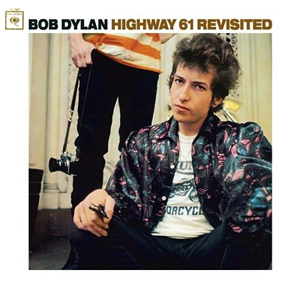
Album #125: Bob Dylan - Highway 61 Revisited

Bob Dylan
Highway 61 Revisited (1965)

The genus of this review today was the recent death of Rubin Carter, the man the authorities came to blame (sorry). He was the man who was the subject of Bob Dylan's rambling opus Hurricane, and one time he coulda been the champion of the woooooooooooooooorrrrrrrrrrrlllllllddddddddddd (sorry again).

Anyway, the passing of The Hurricane made my wife decide that her album for this month should be a Bob Dylan release, and let me choose the exact album. With that in mind I went with Dylan's second electric album, Highway 61 Revisited. Having already decided to issue a big 'fuck you' to the folk community with Positively 4th Street, Dylan kept on his electric backing musicians to record this album.

History records it as one of music's finest releases, but nearly fifty years on, does it still stack up? And can one album truly have too many harmonica solos?

The Album

Put simply: this is a fucking masterpiece.

From the opening snare crack of Like A Rolling Stone to the final moments of Desolation Row, Highway 61 Revisited steamrolls its way through blues, folk and even garage rock influences, all with Dylan's everpresent and much-parodied vocal drawl/whine crashing through the sound. His backing musos all shine at various stages, particularly Al Kooper on Hammond organ and Paul Griffin on piano, and as a whole the band are tight enough to keep the songs in check while remaining loose enough to encourage little showy instrumental flourishes.

This is to say nothing of Dylan's remarkable lyricism. It's stunningly brilliant poetry set to superb music, even if the odd song or two contain almost impenetrable metaphor; for the most part though, the tone Dylan wants to convey is conveyed with precision and clarity, leaving the listener in no doubt as to his feelings (anger, sadness, revenge, love).

To the songs themselves, and magnificence abounds here. Like A Rolling Stone is truly worth the hype, tumbling along thanks to Griffin's honky-tonk piano, Al Kooper's stunning Hammond organ improvisation and Dylan's vicious, vengeful attack lyric, spat with all the cynicism and venom he can muster. Guitarist Mike Broomfield also contributes welcome splashes of bluesy guitar throughout. I used to take the piss out of this song and its rambling vocal - may I now say that for doing so I am a complete idiot. 

When Dylan turns to the blues, it's with aplomb. It Takes A Lot To Laugh, It Takes A Train To Cry is a slow, crawling acoustic/electric blues track, elevated to great status by another splendid Griffin piano performance and a howling harmonica solo. Tombstone Blues is rollicking acoustic blues with a raw, unrefined aesthetic; Bloomfield contributes several short, but searing, blues solos and Dylan's lyrics, in true 60s counterculture style, take aim at authority without making it obvious. From a Buick 6 sees Dylan's vocal take the leash off, delivering an unrestrained, powerful effort. It's a decent 12-bar blues with a fantastic harmonica solo, even if the bass and Hammond organ are a little too loud. 

However, Dylan is/was a folk musician, first and foremost, and even his trips into electric blues don't dull his folk skills. The album's eleven minute closer Desolation Row is the quintessential folk tune, in my view; Dylan's acoustic melody is simple, supported by session muso Charlie McCoy's glorious Spanish-style acoustic lead guitar, while the lyrics are some of the most cryptic, yet wonderfully poetic, lyrics committed to acetate. My only qualm is that it probably didn't need to be so long, but Dylan had a message to communicate, and communicate it he does (even if that message is hard to fathom). Just Like Tom Thumb's Blues combines folk with blues to good effect, though the 'folk' influence is more in the storytelling nature of the lyrics, which chart one man's descent into a world of drugs, alcohol and sex (on reflection, maybe it's not a 'descent'.) Paul Griffin plays some splendid tack piano and Mike Bloomfield again does his thing. Queen Jane Approximately drives another nail in the 'folk must be acoustic only' coffin, with a rich soundscape, more doggedly vicious lyrics and an earthy vocal - it's every inch an electric folk winner. 

The only two songs that don't really fit into the folk or blues categories are close to the best cuts on the record (and that's saying something given how good everything else is). Ballad of a Thin Man stars the famous Dylan character Mr. Jones, who would be referred to in a number of tunes recorded by other artists (e.g. Yer Blues by The Beatles); jerky piano, a shuffling drum beat and an interesting chord progression call to mind some smoky lounge bar of the 50s, the artists in residence playing a jazzy tune of revenge. Lyrically and vocally it's bitter, dismissive and deeply cynical - Dylan again fires the guns at Mr. Jones, hitting all targets with aplomb. Finally, there's the title track, telling five unrelated stories that nonetheless all have a common theme - they are problems that are solved on Highway 61, a road that runs the north-south breadth of America and that ran through Dylan's boyhood town of Duluth, Minnesota. Once again Dylan's vocal is the star of the show - again I can't believe I take the piss out of him - while his supporting cast all seem to have been given carte blanche to experiment, freeform style. It's a gem of an untempo rocker.

The Verdict

Yes, it still stands up. It more than stands up, in fact. It's timeless music because so many of its themes are human ones; we can all substitute in our own Miss Lonely or our own Mr Jones. It mightn't sound as polished as a modern release, but it's got more heart, emotion, power and impact than most of the soulless pointless bullshit modern 'indie-folk' crap that people are force-fed nowadays, and that's why it's timeless.

Yes, you can have too many harmonica solos, but only when they're shit, which not a single one on this album is.

People say Bob Dylan pretty much turned to shit after 1970 (though 1975's Blood On The Tracks has plenty of fans, and he was also a Wilbury, to be fair). Even if that's true, his pre-1970 work is what made him a star, and this is the most shining example of all of that work.

Absolutely essential for any music fan to at least listen to this once.

My rating: 10/10

Standout Tracks

Like A Rolling Stone
Highway 61 Revisited
Ballad of a Thin Man
It Takes A Lot To Laugh, It Takes A Train To Cry

Tuesday, 6 May 2014

Album #124: The Streets - A Grand Don't Come For Free


The Streets
 A Grand Don't Come For Free (2004)

There's something about Mike Skinner that makes one want to break out their finest 'geezerspeak' - all that "orright bruv yerright eh sorted for nowt" business. Skinner's relaxed approach to the English language can be explained by the fact that he's from Birmingham, a place long acknowledged as a shithole full of uneducated smelly types (it's like the Collingwood of the Midlands).

Okay, maybe that's just my Coventry bias showing through. The truth is, Skinner (in his guise as The Streets) was responsible for putting out some really different takes on the UK garage and hip hop sound. While Skinner should not be called a pure hip hop MC, he nonetheless achieved success in his home country with his first three album releases, the second of which was the rather progressive A Grand Don't Come For Free.

The Album

Why progressive? Well, because A Grand Don't Come For Free is a hip hopera about a slice of life experienced by the protagonist (played by Skinner himself), framed by the loss of, and subsequent reacquisition of, a thousand pounds (the eponymous 'grand' of the title). What follows is a tale of lust, love, betrayal, drugs, holiday adventures and, ultimately, friendship and reconciliation, all told through the medium of song.

The story itself is rather well formed. Skinner's protagonist (a fictional version of himself) finds one day that a thousand pounds has gone missing, and his TV isn't working. He meets a girl called Simone, a workmate of his friend Dan from JD Sports. Despite a drug-fuelled night at a nightclub where he thinks he sees Dan and Simone snogging, he nonetheless falls in love. After trying to win his money back through football gambling (and narrowly avoiding losing it all), the protagonist moves in with Simone, only to get kicked out for being a lazy, good for nothing drug-addled loser. After trying to pull a bird while on holiday, he realises that he's a twat and tries to get Simone back, only to finally discover that she and Dan are an item. Distraught and fragile, he almost ends up getting into a fight with a TV repairman....only to experience a happy ending, whereby he makes amends with some of his mates and discovers that his TV isn't working because the thousand pounds is stuck down the back of it.

(Phew.)

Musically, there's club-ready beats and heavy bass lines all over the place here. Skinner's unique conversational vocal style (where everything sounds exactly like a recorded conversation and is delivered as such, with no regard to the beats) works rather well, though it's a far cry from the smooth flow of other, better, hip hop vocalists. The album's very English phrases and words are a welcome touch, helping the listener enter the world of the protagonist. 

Fit But You Know It really is the best track here; highly singable, extremely catchy and structured around a simple guitar sample. The hook's not mindblowingly musical, and the warbled vocal is weak, but holy crap what an earworm! Wouldn't Have It Any Other Way does feature a good hook, and it seeks to establish a more chilled out, reggae-inflected vibe. Its heavy bass and basic piano sample still peg it as late-night club fodder. Dry Your Eyes, despite its rather lame hook, manages to be quite an emotionally affecting song. Using a rather beautiful string sample and a plaintive acoustic guitar line, the mood is one of despondency and reflection. What Is He Thinking? is one of the album's standouts, though; being the song where the protagonist discovers Simone and Dan's affair, it's suitably dark, angry and brooding thanks to both Skinner's venom-laced vocal and the string/synth sample.

The Verdict

I was genuinely surprised at how good A Grand Don't Come For Free was. Any shortcomings or bland parts of the music are covered well by the scale of the project and the detail in the story. Make no mistake, it is a story, first and foremost, told very well through the music.

Worth a listen.

My rating: 8.6/10

Monday, 5 May 2014

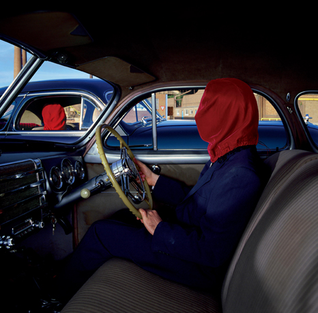
Album #123: The Mars Volta - Frances The Mute


The Mars Volta
Frances The Mute (2005)

The music press have always been quick to label The Mars Volta as pretentious musical wankers, more interested in disappearing up their own backsides than appealing to the popular music masses. Some of these people were probably still bitter that Cedric Bixler-Zavala and Omar Rodriguez-Lopez left At The Drive-In, thinking that their angry post-hardcore energy was TEH SHIZZZ, and that all this Latin/ambient/prog was all just musical flotsam, an unwelcome throwback to a bygone era of long songs, weird time signatures and multiple musical movements.

Basically the music press can get fucked.

I make no apologies for loving the Volta - for mine, they've taken the great parts of progressive rock and fused it with their own backgrounds. However, some of their music does require a great deal of concentration. Nowhere is this more evident than on their second album, Frances The Mute. Whereas their first album was about a fictional protagonist's week long coma, this one was based on a diary found by former Volta member, the late Jeremy Ward, written by someone who, like Ward, was adopted - the diary was a tale of the writer's search for his biological parents. Each song on the album is named for a person in the diary.

Yeah alright, so it's a little pretentious in theme, but how about the music?

The Album


I hope that answers your question.

"BUT DANIEL THAT IS NOT A REVIEW LOL WHERE IS YOUR EVIDENCE ON WHAT BASIS DO YOU POST THIS EXPLODING HEAD GIF"

I'm glad you asked.

Musically, the album covers a monstrous range of territory. Whether it's the warped Latin influence of L'Via L'Viaquez (resplendent with a twisted version of a slowed-down mariachi breakdown), the tender balladry of The Widow or the majestic ambience of Miranda That Ghost Just Isn't Holy Anymore, the album displays more than just a straight rock aesthetic. They're all great but it's probably the end of Miranda that has the most impact; when the drums enter, it's like all of the emotion that builds up is released. It's catharsis on record. The latter two also feature Flea of the Red Hot Chilli Peppers prominently, playing trumpet solos on each; the turn on Miranda in particular is absolutely chilling, managing to convey a real sense of melancholia. 

And then, there's the bookends. Cygnus....Vismund Cygnus is scintillating from start to finish, burning along at a furious pace for the most part thanks to...well, everyone. Drummer Jon Theodore and new bass player Juan Alderete de la Pena create a stunning groove which is supplemented by a plucky riff from Rodriguez-Lopez. Bixler-Zavala's vocal on top of that is like a cherry on top of a sundae, if that sundae were made of BrewDog Hardcore IPA and the cherry was a bomb of pure BrewDog Hardcore IPA.

Yet it's the album closer, the thirty-two minute (YES YOU READ THAT CORRECTLY) long Cassandra Gemini that serves as the band's most experimental, grandiose and extraordinary composition ever. It doesn't deserve to be considered a rock song - in the tradition of songs like Genesis's Supper's Ready, it's more like a series of songs all interconnected to create one glorious piece of music, and to try and describe the whole thing is extremely difficult. It simply needs to be heard to be believed. Every member of the band contributes some piece of genius, and even if it might be longer than some full-length albums, it's the perfect end to such a mind-bending album.

There are minor (VERY MINOR) faults; there are a couple of moments where the ambient noise that either acts as a link between songs, or as part of some songs themselves, gets a little grating. However, much like on predecessor album De-Loused in the Comatorium, the fact that it serves some artistic purpose (giving the whole album an interconnected feel) means that it can be overlooked somewhat.

Additionally, the album's interconnected feel means it can't be listened to piecemeal - you need 77 spare minutes to listen to the whole thing, otherwise it just doesn't work. Though with that in mind, it could be argued that it's the album that best encapsulates this whole LOAD Project, which was born out of a desire to stop listening to music piecemeal and start listening to whole albums.

The Verdict

If I were to select one album from the last ten years that I would keep at the expense of all others, it's Frances The Mute. As a major fan of progressive music I rate it the best prog album I've ever heard, bar none. It is the culmination of thirty years of progressive development, and I love the whole damn thing from start to finish. 

My rating: 9.99999999999/10

Standout Tracks

Start at Cygnus....Vismund Cygnus, and listen to everything until the very end of Cassandra Gemini

Saturday, 3 May 2014

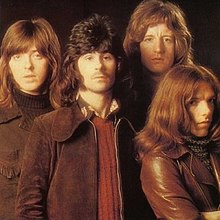
Album #122: Badfinger - Straight Up


Badfinger
Straight Up (1972)

By rights, Badfinger should have been one of the biggest, and richest, bands on the planet in the 1970s. Shepherded through their early career by Paul McCartney, and possessing the influence of The Beatles in their music, the group produced several huge singles, particularly the McCartney-penned Come and Get It. Sadly, all the talent and pop magic would ultimately go unfulfilled, as the band became destitute despite their chart success; the victims of an unscrupulous, 'soulless bastard' of a businessman named Stan Polley, who ripped the band off of well over a quarter of a million dollars while ensuring the band received very little money from their success.

Tragedy continued to befall Badfinger; guitarist Pete Ham, his mental state shredded thanks to the band's financial dire straights, took his own life in his garage in 1975; bass player Tom Evans followed suit in 1983 after an argument with fellow (and at that time, former) bandmate Joey Molland over money. The study of Badfinger's history really is the perfect cautionary tale to all musicians who are breaking into the industry, even today.

Thankfully, their music still exists as a testament to the band's not fully fulfilled promise. Straight Up was their third album, and despite being a commercial success it was criticised heavily by some critics for the 'poor' production of Todd Rundgren (George Harrison also produced a few tracks on the album, but he avoided criticism). 

The Album

The term 'power-pop' has been coined to describe a sound like Badfinger's on Straight Up - lots of piano, organ and guitars, heavily tracked and luscious vocal harmonies and an abundance of pop hooks, wonderful melodies and standard vocal topics (love and all its related catastrophes). Those vocal harmonies are only possible because Ham, Evans and Molland are all very good vocalists, and all take lead vocal duties at times on this album (generally on songs they've written).

The album's two main singles are among the finest pop songs of the decade. Baby Blue is built around simple chords and an arpeggiated riff, with a heartbreaking, touching lyric penned by Pete Ham. Ham also delivers a stunning lead vocal, full of emotion and power, with support from Evans in the harmonies. The bridge in particular, where Ham is pleading "what can I do/what can I say?" is remarkably affecting. Day After Day is also a love song, though not quite as powerful, being more of the brooding variety. Also written by Ham, it's heavily overdubbed by producer George Harrison (who also contributes a fine slide guitar solo on the track; when you listen to it and compare it with Harrison's slide guitar parts on All Things Must Pass, or even his appearance on John Lennon's How Do You Sleep?, you can certainly tell it's a Harrison special). Even so, Ham's lead vocal stands out strongly, carrying a reflective, hopeful quality.

There's some other decent pop tracks on the album though that indicate Badfinger were a little more than just a singles band. Opener Take It All is classic power-pop, piano driven with Hammond organ support, and a throaty lead vocal from Ham; Tom Evans' Money weaves in some country blues influences through the main guitar lick, and has a great dual lead vocal from Evans and Ham; Name Of The Game is immense in terms of the harmony backing vocals, which have been overdubbed about a hundred times; its piano and acoustic guitar instrumentation mark it as an early progenitor of the power ballad, and it's a great song (apart from Ham's lead vocal being drowned out by the backing vocals at times, which is a major production mistake in my view.)

There's more bluespop with Suitcase, where the licks are British blues and the vocal is gutsy, while Sometimes acts as a throwback to the early/mid 60s guitar pop sound of The Beatles, featuring a catchy chorus and a tempo perfect for boogieing. Most of the great songs though are written by Ham; Evans and Molland do contribute songs here, but they're not great (Money aside), and Molland's songs in particular (Sweet Tuesday Morning and Flying) are the weakest on the album; still 'pop' songs, but not as catchy, and further hindered by Molland's comparatively weak vocal when compared to the much more talented Ham and Evans.

The Verdict

For giving us Baby Blue and Day After Day, Straight Up is of great value. Delving deeper into the album though reveals that, indeed, Badfinger were crafters of fine pop with catchy hooks and beautiful harmonies. It's worth checking out.

My rating: 7.4/10

Standout Tracks

Baby Blue
Money
Day After Day

Friday, 2 May 2014

Album #121: NOFX - So Long and Thanks For All The Shoes


NOFX
So Long and Thanks For All The Shoes (1997)

A few bands (and albums) I've reviewed so far on The LOAD Project have been chosen because of their association with my younger years - a sort of musical time machine, if you will. For whatever reason, they form part of the soundtrack of my teens and early twenties. 

Along with bands like Pennywise, Area 7 and Millencolin, NOFX were a staple feature of Friday night drinks at the wetlands/Patto's house/the Wellsy's/wherever we found ourselves. So Long and Thanks For All The Shoes is the album that I associate the closest; I seem to have a hazy, drunken memory of seeing the Neapolitan ice cream album cover a number of times in the CD pile that constituted the musical selections for these nights out. I enjoyed what I heard, but then again, it was twelve years ago and I was usually drunk.

Today, I'm going to listen to it (I'm not drunk....well not as badly anyway) with a fresh, older, objective ear and see how it ranks in punk terms.

The Album

What you see is what you get with NOFX. There's no pretentious bullshit, no massive overdubs or reliance on studio trickery. There's half an hour of straight up frenetic punk rock, with the occasional detour into ska and reggae territory. Fat Mike's lyrics swing between cynical politics and reflections on drug use (or the lack thereof) and explore other places in between; Fat Mike has always been a decent lyricist who is at his best when he's got a reason to be pissed off, and this album is no different. Musically, the band are four very competent, multiskilled musicians (and in the case of drummer Erik Sandin, he's not so much 'competent' as a goddamned beast). 

From the outset, and the acerbic It's My Job To Keep Punk Rock Elite, Fat Mike and friends lay forth the manifesto of the album. There's none of the commercially-minded pop punk here, just an adherence to the 'old' ways of short, fast, loud. For the most part, that's maintained through rapid fire tunes such as Kids of the K-Hole, Murder the Government and the supremely catchy Monosyllabic Girl (the latter two clock in at less than a minute). The highlight though is Fat Mike's bitter attack on Riot Grrl Kathleen Hanna, Kill Rock Stars, which does punk rock anger right, in both vocal delivery and sonic aggression. Special mention also has to be made of The Desperation's Gone, which bemoans the lack of urgency, anger, emotion and malice in late 90s punk rock.

NOFX also feature several ska tracks that act not only as a welcome change but also emphasise the band's ear for clever, pleasant melodies. All Outta Angst is by-the-numbers fun ska-punk, but its breezy reggae-tinged guitar and bright horns make it an ideal skanking song, and it's proof that you can write a commercial sounding punk tune that isn't remotely commercial. The instrumental Flossing a Dead Horse and the mildly confusing, yet still decent, Eat The Meek, keep the ska theme running (the latter in particular has a great trumpet solo at the beginning from guitarist/trumpeter El Hefe). 

Yet the album's defining track is probably the hardest to genre-pigeon hole; it's like a strange combination of French rock, punk and ska. It's a cover of Les Champs Elysees and I guarantee you'll never get it out of your head. Fat Mike does a fine job of singing entirely in French, and it's toetappingly catchy.

The Verdict

So Long.....is a great slice of the NOFX sound. It's stonkingly good fun and stonkingly good punk, even if a couple of songs frustratingly end before they've seemingly begun. When the album closes with a hidden track of American shock jock Howard Stern decrying the band, stating, "no talent, that's the name of this band" and declaring that it's "just not rockin'", you're left with the distinct impression that Stern really is a fucking dickhead if he doesn't think that NOFX rock.

My rating: 6.5/10

Standout Tracks

Les Champs Elysees
Monosyllabic Girl
Kill Rock Stars

April Recap

Perhaps it's a growing confidence in knowing how to be more objective in reviewing albums, or maybe it's that it's taking more and more to impress me, but April saw very few albums receive the maximum five-star score. That's not to say there weren't some great albums, but I definitely think it's taking a lot more than just 'really good' or 'great' to earn a maximum rating.

Best Albums of April

Four albums received either a 5 or a 4.5. Of those, only one earned five stars. They were:


Worst Albums of April

Man, there were some right stinkers this month (and a contender for the Worse than Nickelback Award). The worst albums this month were:


Coming Up

This month's schedule is still under construction. However, this month I am going to be testing out a new scoring system. To allow me more scoring flexibility, I am moving from a five star system to a score out of 10. I'm hopeful this will allow me to differentiate better between albums in terms of their quality.

Thanks again for continuing to read....only two thirds of the year to go!

Wednesday, 30 April 2014

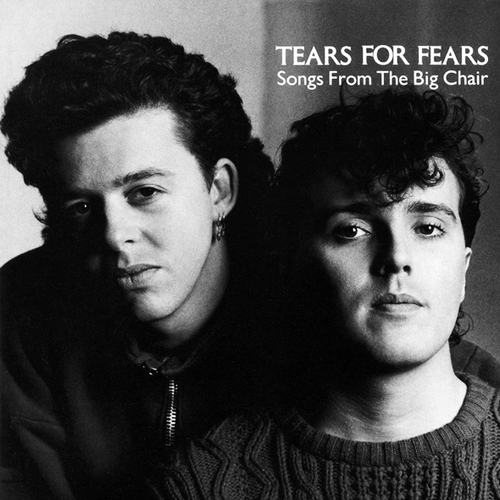
Album #120: Tears for Fears - Songs from the Big Chair


Tears For Fears
Songs From The Big Chair (1985)

After the monstrosity that was Here Come The Drums the other day, I was forced to listen to Tears For Fears' classic track Head Over Heels, to wipe the heinous memory of Rogue Traders from my mind.

Upon completing my listen, I realised that I really, really wanted to review a Tears For Fears album. Not only because they're a great band (with the distinction of having their first three albums chart massively in Britain) but because I've always felt that they've not received all the credit they deserve, being overshadowed by other pop artists. Despite me trying to steer away from the obvious sometimes, I felt there was no better album to choose than the one that is considered their defining album, Songs From The Big Chair.

My main question was a bit like when I reviewed Icehouse though - is it just singles, or is there something more to Tears For Fears?

The Album

Unlike Icehouse, there's something more. The band's lush arrangements and production, utilising a standard 80s blend of guitars, bass, drums and synths, are key features not just of the singles but of the album tracks also. Additionally, it's the way that the band fuse together all those swirly layers of synthesiser and guitar that give the songs a particular personality. The hero of the album though is bandleader and chief songwriter Roland Orzabal. It would do him a disservice to say he's just a pop songwriter - sure, he penned his share of great hooks on this album - but there's also nuance, feeling and craft present in his work here....and not just on the big songs.

Those three big songs though are absolute monsters, and all are deservedly thought of as some of the most instantly recognisable from the 80s. Shout is a sprawling, synth/bass driven ode to protest, with a jangly guitar lick playing a supporting role throughout. Orzabal's lead vocal is splendid, sending tingles down the spine at times, and there's even a fairly simple, yet powerful, guitar solo at the song's conclusion. Everybody Wants To Rule The World is sublime pop; all instruments work together and, at times, take the lead (the verses are basically synth and bass, while the guitars play prominence during the choruses...and there's even a couple of guitar solos to boot). The song is brilliantly crafted (witness the guitar-driven bridge in the mid-section which breaks the song up beautifully) and Curt Smith's vocal of some more quality Orzabal lyrics about the powerhungry is terrific. Head Over Heels is a superb pop love song, though (and this may be controversial) it's my least favourite of the three. Synths again drive the song, which interestingly falls in the middle of a kind of sonata (sandwiched by the song Broken twice, albeit with the second version being live and abbreviated).

Outside of those three big songs (and accompanying sonata tune) there's only four other tracks on the album, and they are a bit of a mixed bag. The tender, touching ballad I Believe (written by Orzabal originally for Soft Machine drummer, and 60s prog legend, Robert Wyatt) is a brilliant, brilliant tune. Lush piano fills the soundscape, supported by flourishes of saxophone, while Orzabal's vocals alternate between a soft, heartfelt croon and, later, more powerful acclamations. Listen is a pretty tune with a very hooky melody, with anthemic synth strings, wind chimes and opera vocals - in fact, it has many hallmarks of ELO-style pop. Unfortunately, it might be pretty (and Curt Smith, again, does a great job on lead vocal) but it really meanders around, not going anywhere. The Working Hour overdoes the sax solos horribly (funny sidenote- the man providing the sax solos on the album, Will Gregory, is now one half of the electronic duo Goldfrapp) but there's enough of the lavish Tears For Fears musical style present to, again, make the song a decent listen. Lastly, Mother's Talk, which was a single from the album also, is nowhere near the same class as the other monstrously successful songs. Yes, its mountainous-sounding drums rumble with pure power, and the synthbass line is pretty damn cool, but there's no hook to speak of and because there's no hook to attach to, this pop song ends up....well, not very poppy at all. It's the only song on Songs From The Big Chair I didn't like at all.

The Verdict

Songs From The Big Chair is surprisingly good. Those classic songs help, of course; they'd be worth stars on their own; but even some of the album tunes have that earcatching Tears For Fears trademark sound. It'd be a great driving album for when you're touring through boring country, because there's plenty of interest going on in each soundscape.

I'd recommend it, especially if you already know/like some (or all) of the band's big hits.

My rating: ****

Standout Tracks

Shout
Everybody Wants To Rule The World
I Believe
Head Over Heels