Pages

Sunday, 6 April 2014

Album #96 : Blur - Blur


Blur
Blur (1997)

1997's self titled album marked a turning point for Blur. To that point they had been content to make quintessentially English pop about quintessentially English things - people, places, stereotypes and idioms. Guitarist Graham Coxon, though, was sick of this musical approach. He was developing an interest in American alternative rock and lo-fi sounds, in particular the work of Pavement. Consequently, when he took more of an active role in the band's approach, the group's dynamic changed.

Surprisingly, Damon Albarn, the head of the group, went along for the ride.

The result was this album, which is frankly unlike any Blur release before it. Forget the Kinks style pop explorations of Parklife, because this album sizzles with pure, raucous energy.

The Album

Coxon's love of lo-fi music translates to a number of songs on Blur. These tracks, with their fuzzy guitars, rough mixing and low, hollow-sounding vocals are some of the more interesting cuts on the record, though for fans of Blur's poppy pop, they may be a struggle to listen to. Country Sad Ballad Man is the first, with Albarn's echo-drenched vocals barely heard amongst a backdrop of washy guitar noise that is scarcely melodic. You're So Great is all Coxon, his loud acoustic guitar combined with a heartfelt lo-fi warbled vocal, with a splash of solo electric guitar matching the warbly sound. The crackle to the recording gives it a 'lost' feel, as though it were something from the '40s just recently discovered. Chinese Bombs is short, punchy and dominated by those buzzy guitars.

While those three tracks are defined by their lo-fi quality, other tracks are produced to a higher standard but still feature aggressive, fuzzy guitar and bass. Song 2 was penned as a parody of the grunge aesthetic, with its booming riff and nonsensical, almost incoherently screamed lyrics. It's also rather a catchy tune. I'm Just A Killer For Your Love is more grunge; an almost atonal 'melody' created by bass and guitar (Coxon, for extra effect, adds some wah to the buzzsaw guitar sound), and vocals that sound as though they were recorded through a megaphone. M.O.R is one of the more raucously rocking tracks on the album, even if the melody is a straight rip of David Bowie's Boys Keep Swinging (hence the Bowie/Brian Eno co-songwriting credit), closely followed by Movin' On with its crunchy riffs and dissonant keyboard swells.

However, the album is not just lo-fi adventures and angry alternogrunge. There are nods to three classic English groups of the 60s. Firstly, there's the simply brilliant Beetlebum, with its Beatlesesque harmonies in the chorus; secondly, Look Inside America, despite its title, owes a debt to the guitar pop of The Kinks; and finally, the sprawling Strange News From Another Star takes elements of early Barrett-era Pink Floyd (with some Bowie's Space Oddity thrown in for good measure). All three are cracking tunes.

Then, there's a collection of four tunes that see the band flexing their experimental muscle. On two tracks, Blur go full-on space rock, and while they aren't the best tracks on the album, they are at least sonically intriguing. The best of the two is On Your Own, which is the most un-anthemic singalong anthemic singalong you'll ever hear. Minimal drums and maximum vocals encourage crowd singing....but the spacey synthesiser splashes throughout don't. Meanwhile, Theme From Retro is the sort of song that The Flaming Lips would make their trademark years later. From start to finish it's a real trip - synth strings abound, supported by Hammond organ and Alex James' bass, while Albarn lets fly with some rambling vocal nonsense. It's texturally lush and incredibly interesting.

On the semi-industrial Death of a Party, the group fuse together keyboards with a deeply intoxicating bass line. That industrial feel comes from the occasional crunchy buzz of the guitars. At other times, the song (as was accurately postulated by a writer for Pitchfork) reminds you of the Gorillaz sound that Albarn would explore years later. Lastly, there's the album closer, Essex Dogs, which is a tough, tough listen. It's essentially Coxon wringing a collection of cacophonous sounds out of his Telecaster while Albarn spouts free verse over the top. The band's rhythm section (James and Dave Rowntree) keep time during all this nonsense. Yet you get the sense that this is what the band were aiming for - that it was supposed to be tough to listen to - and if so, it worked. It's an old-school sonic exploration in the space-jammy Pink Floyd mould, so I enjoyed it immensely.

The Verdict

Blur have written more enjoyable, more poppy songs than any of the ones on this album (save maybe Look Inside America). However, in my view, this may well be the band's best work, even if it lacks a unifying artistic theme as can be found on the also quite excellent Parklife. On Blur, the group are deliberately heading away from the sound that made them popular, and doing it with style and panache. 

This album shows that Blur were far more than just popsters. They were mature, adventurous, talented musicians and songcrafters. Additionally, there's barely a bad song on Blur, and it covers a broad spectrum of sounds and influences.

The challenge has certainly been set for tomorrow's Oasis album!

My rating: ****

Standout Tracks

Beetlebum
Strange News From Another Star
You're So Great

Tomorrow, Oasis' 1997 release, and similar extension/departure from the established norm, Be Here Now. Is it really as bloated as people say? Is it truly, in the words of Noel Gallagher, "the sound of five blokes, on coke, in a studio, not giving a fuck"? We'll find out tomorrow!

Album #95 : Mumford and Sons - Sigh No More

Mumford & Sons
Sigh No More (2009)

Folk music has a history that stretches back further than most other musical genres. It's gone through a number of shifts and revivals in the last fifty years especially, the latest of which is the 'indie folk' scene. While I don't mind some 'indie folk' (I'm quite partial to the work of Blitzen Trapper, for example, though they are more indie and less folk) it really does consist of bohemian-dressed peeps with hippie haircuts churning out mildly depressing acoustic tales of woe, a far cry from even the Sixties Revival led by the likes of Bob Dylan, The Byrds and Crosby, Stills, Nash and Young.

Mumford and Sons, for the three people in the world who haven't heard them yet, are an English quartet fronted by noted Stephen Fry lookalike Marcus Mumford. Sigh No More, their debut, came out in 2009 and exploded in popularity, mainly because of the song Little Lion Man. No surprise to see that they are on the front cover, looking bohemian (and I can confirm that when they play live, they also dress like that.)

It's Part Four of Albums Picked By My Wife.....and I don't think she's going to like me when she reads it.

The Album

Heavy on the banjo, bass drum and acoustic guitars, Sigh No More contains a quaintly American feel to its English sensibilities. The lyrics are flecked with Shakespearean references and peculiarly English whimsy at times, yet hammering away is the unmistakeable twang of the banjo underneath. It's an odd contrast. The band also employ the use of large sounding vocal harmony sections, and if I'm honest, they are far and away the best part of this album overall. As a vocal troupe they are incredible, and Mumford's lead vocal swings between a gently croaking lilt and a gruff explosion of passion and pain.

What is unfortunate is that many of the songs themselves are somewhat trite and cheesy. Folk music, at its very best, tells stories of struggle, hope and persecution; it represents the downtrodden using fine metaphor and allegory. Don't expect that too often on Sigh No More, because most of the songs feature lyrics that wouldn't be out of place on a Backstreet Boys album. I counted the word 'heart' 49 times - I think we get the picture, lads, and I think we can see who you're really trying to sell records to. It's disappointing, because there's enough here musically to like, apart from the vocals; the band are also adept at building feeling through the music, as well as those gradual growths in intensity that often culminate in crashing crescendos.

The best song on this album does tell something of a story though. Dust Bowl Dance is told from the perspective of a young man whose farming father has died, and through the nefarious acts of another has lost his land....and in true troubadour fashion, the song details his anger, the furious confrontation and the fatal, murderous acts of the righteous and enraged. It's a great lyric matched with a steadily building musical arrangement (which features some booming drums played by the talented Mumford) symbolising the protagonist's path to action. Thistle And Weeds doesn't really tell a story but it's a great metaphor for generally not being a dick, and apart from the walking chord progression in the middle that has been ripped off from The Kinks' Sunny Afternoon, it's a majestic tune. Towards the end, after a fairly quiet beginning and middle, a rollicking piano line begins and the song, as so many other do, builds to a huge climax (as does Mumford's superb vocal). I'll also give an honourable mention to Timshel, where the music is really low in the mix, bringing those fantastic vocal harmonies to the fore, and Sigh No More, which opens with more great vocal work, before giving way to a stomping acoustic guitar riff and matching fingerpicked banjo work.

Hard to find too much to get enthused about after that, though. The Cave has its moments, namely its very delicious picked main riff. I Gave You All and Awake My Soul feature more great vocal work, but bog-standard lyrics. Winter Winds also has some great little moments - the horn section and strings, when the song kicks into its most intense section, are evocative of some Irish/Celtic folk bands and are genuinely energising...but again, its fairly bland, high-school poetry lyric is annoying.

And then....there's that song. The one about the lion man. Little Lion Man is one of the most overhyped, overplayed and overrated songs of this century. Why? All it has going for it are a catchy chorus and a swear word. That's it. (Mind you, I did appreciate the line, Your grace is wasted in your face as a terrific use of assonance.) It is, for all intents and purposes, a cheesy, throwaway pop song. That it was voted number 1 in a Hottest 100 is a travesty, because it's not even the best song on the album it was on. In fact, if it were not for the lamentable After the Storm, it would be the worst.

The Verdict

Sigh No More is, musically, pretty good. The four are very good musicians and splendidly gifted singers. Lyrically and thematically though it's bland and uninteresting, treading over tired, all too frequently revisited ground, which is not what folk music is about. 

At least, it's not what good folk music is about.

There are some songs here that I would recommend as a listen. They pretty much aren't the singles, though, because the singles, by and large, are the biggest culprits of the cheesy woe-is-my-heart tale. The album tracks though are very, very good.

And fuck Little Lion Man.

My rating: ***

Standout Tracks

Dust Bowl Dance
Thistle and Weeds
Sigh No More

Tomorrow, Part 1 of the EPIC CONTEST BETWEEN BLUR AND OASIS!


Friday, 4 April 2014

Album #94 : Placebo - Sleeping With Ghosts


Placebo
Sleeping With Ghosts (2003)

Placebo are a band that I have always been on the verge of getting into, but there's always something that holds me back. I enjoy some of their work, but not enough to dive headfirst in their albums. Bandleader Brian Molko is both their greatest asset and their biggest weakness - he's a great creative talent with a penchant for writing clever lyrics about human frailties, but his nasal whine can be quite grating.

After three very successful albums (albeit with their previous release, Black Market Music, copping a bit of a pasting in the music press) they released Sleeping With Ghosts, their fourth album. It's notable for continuing to be very Placebo in themes, however the dark 'emo' sounds from the first three albums are largely replaced by more accessible tones. There's even some real beauty to be found in here. As an album, it deals generally with the theme of human relationships, and all the ups and downs they present.

The Album

Apart from the driving guitar sounds, Placebo also use synthesisers as a feature instrument on some songs. English Summer Rain, for instance, has touches of electronica in its production and is mainly synth-driven, with a rumbling bassline acting as a bedrock for the tune. On the slow, crawling Something Rotten, the synths mingle effectively with the phased guitars for the most part, and later when the guitars turn to a swollen buzz, there's a spacey synthesiser melody that enhances the guitar track. It's quite clever and doesn't detract from the Placebo blueprint of slightly aggro guitar pop.

That blueprint is, as you'd expect, present on a number of tracks. Instrumental opener Bulletproof Cupid has an aggressively loud guitar sound, and swells like waves on a beach. The Bitter End is largely guitar-driven, with some abrasive riffs playing over another rock-solid rhythm combo. There are also deft touches of synthesiser in the choruses; overall, it's a really cool tune and, unsurprisingly, made for a decent single. Second Sight takes some cues from punk, fusing the gothic Placebo sound with rapid-fire snare fills and speedy, driving guitar riffs. I found it to be one of the more energetic songs on the album.

Surprisingly for a band with Placebo's reputation, a couple of the album's real highlights are actually gentler, more emotional tracks with slower tempos. Sleeping With Ghosts is, in my view, the best song on the album. Taking an optimistic theme (true friends last forever), its piano and acoustic guitars are mellower, as is Molko's vocal. The band have scaled back the energy and focused on producing a powerful, meaningful track to match the lyric. Closing track Centrefolds was a real surprise, featuring a haunting, yet beautiful, piano line (which turns dissonant at times, adding an unsettling element to the tune) and a superb vocal performance from Molko.

The Verdict

Sleeping With Ghosts is a decent album with a few highs and a few lows, with everything else being pretty solid. It doesn't deviate massively from the usual (read - commercially successful and radio-friendly) Placebo sound, but it does show that when the group wants to reduce the intensity, they are still capable of producing terrific tunes.

For non-fans, it's probably a good place to start because it's not as intense a listen as some of those earlier efforts.

My rating: *** and a half

Standout Tracks

The Bitter End
Sleeping With Ghosts
Second Sight

Tomorrow's album is unknown at the time of writing, as it's the 5th of the month which means my wife chooses the album. She hasn't told me yet. If she doesn't, then she misses out and I'll choose something that she would probably select....


Thursday, 3 April 2014

Album #93 : The Beach Boys - Pet Sounds


The Beach Boys
Pet Sounds (1966)

The Beach Boys found fame in the 1960s composing and producing songs about surf, sand, cars and babes....and nothing else. Their brand of surf rock, featuring multi-layered vocal harmonies and rocking arrangements found a home in America, the land of surf, sand, cars and babes (and nothing else).

By the mid 1960s, though, and with his mental state growing more fragile, the group's talismanic genius, Brian Wilson, had grown tired of churning out album after album of surf rock. On the verge of burnout, he began to become not only more introspective of his mental demons, but also sought to push the boundaries of musical production. Inspired by The Beatles' Rubber Soul, which he saw as the perfect album, Wilson set out to create something better. The result was Pet Sounds, incredibly the band's eleventh studio album in five years.

It was to play a part in the redefinition of pop and rock music. It was also the beginning of the end for the Beach Boys as a chart-topping force.

The Album

Drawing largely on baroque influences and instruments, Pet Sounds is far removed from the early surf rock sound. Guitars and drums are at a minimum, replaced by horns, strings, harpsichords, flutes and percussion. However, those famous vocal harmonies are turned up several notches, and were never better at any time in the band's career than right here (save for Good Vibrations, perhaps). Additionally, Wilson's growing experimentation with LSD meant the songs also took on a psychedelic edge, with a heavy use of reverb on instruments and vocals (one example being I Know There's An Answer, which was written during Wilson's second acid trip). The result is the most experimental, boundary-pushing Beach Boys album in their entire catalogue.

The songs themselves are a testament to Brian Wilson's abilities as a songwriter (though he was ably supported with lyrics by Tony Asher). Wilson's gift for creating melody and weaving intricacy into a song's arrangement is all over the album. Leading the way is a song that deserves consideration as one of the finest ever written, God Only Knows. One of the few tracks not sung by Wilson (his brother Carl takes the lead vocal), it is utterly gorgeous. French horns and harpsichords play us in, before Carl Wilson's lead vocal takes us to a higher plane - haunting, beautiful, crisp. Baroque influences abound due to the ever-present harpsichord, and at the song's denouement, C Wilson, B Wilson and Mike Love's vocals swirl around each other creating a kind of vocal Shepard note. 

It simply must be heard.

That's not all though. Wouldn't It Be Nice is one song closer to the 'old' Beach Boys sound, featuring a more traditional rock percussion track, though the instrumentation is gloriously lush with horns, accordions and guitars. It takes an optimistic tone musically, and this is supported by a set of hopeful lyrics. Sloop John B, based on an old West Indian folk song, is a highly underrated tune. More great vocal harmonies (there's a brief moment near the end where it's just the vocals alone, and it's stunning) and a simple folky chord structure make the song such a great listen. Also of an upbeat mood is I'm Waiting For The Day, with its BIG choruses (featuring booming drums and strings, as well as vocal harmonies) and even bigger coda.

Most of the album's tracks, however, would be classed as 'baroque pop', and there's some variety in these baroque tunes (which, to be frank, there needs to be; I find baroque pop to be good as something different, but it shouldn't be an album's dominant musical landscape.) They range from the dreamy yet doleful You Still Believe In Me and the short, yet pretty instrumental Let's Go Away For Awhile, to the downbeat yet beautiful Caroline, No and Don't Talk (Put Your Head On My Shoulder). The latter two are almost as good as any of the 'big' songs on Pet Sounds; the former with a downbeat melody, accentuated by Brian Wilson's double tracked lament and the soft tones of a vibraphone, and the latter featuring sombre, yet creative, chord progressions and the gentle emotion-generating string arrangement.

There are also signs of the demons that were beginning to plague Wilson, encapsulated partly in the song That's Not Me (which, interestingly, was actually sung by Mike Love). Wilson himself thought the song related perfectly to him, although when it was written by he and Asher that wasn't the intention. However, the track I Just Wasn't Made For These Times entirely sums up Wilson's mental state, as he began to believe that his musical visions were far outstripping the technological capabilities of the time, as well as dealing with people who thought that Pet Sounds was too ambitious. 

Which, in fairness, it probably was.

The Verdict

We, however, should be thankful for Wilson's ambition. History records that Pet Sounds became the catalyst for so many bands to reinvent their sounds; upon hearing the album, Paul McCartney was inspired to continue the musical arms race, leading The Beatles to compose and record Sgt. Pepper's Lonely Hearts Club Band, which also helped change the face of music. A massively diverse range of musicians, from Elvis Costello to somebody called Biffy Clyro, have cited the album as inspirational.

In terms of songwriting and production, it truly is one of the great albums. It helps that it's also just so damned beautiful to listen to. It's not quite perfect though - for mine, it lacks those electrifying goosebump moments that elevate great albums to another level (although, I'll grant that God Only Knows is one great big electrifying goosebump moment) and it goes back to the baroque/psychedelia well a little too often. 

As far as that Rubber Soul comparison? Well, Pet Sounds has higher highs, but Rubber Soul is more consistently good. So it's not quite a five star album because it doesn't quite have that consistency of quality....but it is, nonetheless, an album that you must listen to if you've never heard it. The Beach Boys (and rock music) would never be the same again because of Pet Sounds.

My rating: **** and a half

Standout Tracks

God Only Knows
I Just Wasn't Made For These Times
Sloop John B
Caroline, No

Tomorrow, another request album!

Wednesday, 2 April 2014

Album #92 : Dire Straits - Dire Straits


Dire Straits
Dire Straits (1978)

Dire Straits went from humble beginnings (their name was a pretty accurate description of their early financial situation) to one of the biggest bands on the planet in the space of four or five years. In all the hubbub surrounding some of their bigger, more well known releases (i.e. Love Over Gold and Brothers In Arms) their early work is often largely overlooked, the classic, iconic Sultans of Swing notwithstanding.

This album, their self-titled debut, was the result of a chance decision to play a five-track demo to a London DJ the group liked, in the hope of getting his advice on where they could go with their sound. The DJ loved it so much he started playing it (especially Sultans of Swing)...and the rest was history.

The Album

The early Dire Straits sound is one based in blues, folk and country music. This stripped back, laidback style is perfect for the guitar noodlings of Mark Knopfler. Nimble of fingers, he has a remarkable gift for making his guitar playing sound so easy and natural, even when banging out million-note runs. Beyond Knopfler's majestic skills, the musicianship is solidly dependable.

Obviously the biggest and best song on the album is Sultans of Swing. This ode to a crap jazz band Knopfler watched in Ipswich happens to also capture the public's shift in musical mood over the last twenty years; it also captures well the nature of most jazz bands. With a wonderful hook and a magnificent guitar solo at the close, it deserves every ounce of hype it gets. However, it's not the only great cut here. Opener Down To The Waterline uses a sweet instrumental chorus structure, consisting of a lightfingered earcatching picked guitar riff (the axework, as you'd expect, is intricate throughout). The sprawling, rootsy Water of Love, with its slide guitar work and simple arrangement, is another great tune. It features a sometimes insightful, sometimes cliched set of lyrics, delivered in that trademark Knopfler drawl.

Setting Me Up is another track I enjoyed - a rockabilly style guitar riff and elements of country music fuse together in this cleverly humourous tune. It's a sound that they would only sparsely revisit over the rest of their career. This country influence can also be heard on the decent Southbound Again, especially in the guitar riff; it's another jaunty song with a catchy hook. On a different musical note, Wild West End is a fairly placid guitar ballad with folky elements, though again, there's some good lyrics and more of that dexterous guitarwork.

Gradually, the band would shift away from these influences and develop a more rounded sound (by the time they got to Love Over Gold, they were au fait with progressive rock influences and more complicated arrangements), however this album represents perfectly the early sounds that the group was interested in.

The Verdict

It's not their best album (it's also not their worst - that's the followup Communique in my view) but Dire Straits is a fine debut that laid the groundwork for the career that was to follow. It established Knopfler as a songwriter and guitarist of note, and suggested that the band had plenty of promise. 

Although there are a few tracks that are of little interest, for the most part it's a good collection of soft blues, country and folk-tinged rock tunes. Worth checking out, if only to hear the two water-related songs....

My rating: ***

Standout Tracks

Water of Love
Down to the Waterline
Sultans of Swing

Tomorrow, one of the most influential albums of all time.......

Tuesday, 1 April 2014

Album #91 : Poison - Open Up And Say...Ahh!


Poison
Open Up and Say... Ahh! (1988)

80s glam metal/hard rock has a lot to answer for. For every Guns 'n' Roses there's a Warrant; for every Motley Crue there's a Slaughter; and for every Skid Row....well, there's another Skid Row.

Poison, generally speaking, probably slot in somewhere in the middle. They certainly produced their fair share of hits (most of which are on this album) but somewhere along the line, they (or, to be more precise, Bret Michaels) became one big monster joke, eventually reaching a point where they he was beyond parody. It probably also didn't help that they hit the big time right before glam rock was given the arse, in favour of the grittier, more "real" alternative/grunge sound. Their first two albums, though, are great examples of the 80s glam vibe.

Open Up and Say... Ahh! was their second album, and their biggest selling by some distance. Its popularity was down to the presence of some of the group's biggest singles. However, looking deeper, there's a little more to this album than just an acoustic power ballad....

The Album

Essentially, this album is a testament to some of the excesses of 80s rock - girls, sex, cash, living free and easy. It's packaged in an easy to listen to, hard rocking style, though without the harder edge of some of their contemporaries. By the band's own admission, it's a real stadium rock record...particularly some of the singles, which contain all the necessary ingredients of a stadium rock anthem (big singalong chorus, massive solos, instrumental breaks inviting handclaps from a massive audience). Speaking of solos, the absolute star of this record is guitarist CC DeVille...the man is a fair dinkum beast, melting his fretboard (and faces) with some sick solos and thumping out some rockin' riffs.

Needless to say the album's best songs are some of the singles. Leading from the front, the anthemic Nothin' But A Good Time, which has all of those ingredients in spades. Telling a story that most of the band's fans could probably relate to (not enough money to do anything, all you want to do is party), it does so in one hell of a catchy way. You can't help but pump your fists in the air, shouting, "DON'T NEED NOTHING BUT A GOOD TIME". Fallen Angel was unrecognisable until the chorus, at which point I had a lightbulb moment of realisation. More cool riffs and solos, and a few nice lyrical touches (describing the dream of getting big in LA as 'rolling the dice with (your) life' is a heartily accurate description), and the chorus is another arena singalong.

The song the band (and the album) are best known for, however, is the power ballad to end all power ballads, Every Rose Has Its Thorn. It's notable for its difference to the rest of the album (an entirely acoustic-driven composition), its deliberate decision to eschew fistpumping riffery for emotion and feeling, and Bret Michaels' vulnerable vocal performance. I'd go so far to say as it's the best thing Michaels has ever done. Additionally, CC DeVille elects to play a solo laced with wistful reflection and heartbreak. It shows that beneath all the makeup and hair, a sense of heart resided.

The album tracks contain no major surprises. The theme of 'rock hard, live hard' persists, and there's more fucking kickarse riffs and solos than you can shake a stick at, but the quality of the songs wavers somewhat. The band's cover of Your Mama Don't Dance is highly underrated. It's a sensational cover, keeping enough of the original's charm but being unmistakably Poison - a glam take on a straight blues/rock tune. There's also a stretch of three quality glam tunes in the middle of the album. Good Love was close to my favourite track, starting with a cool guitar lick and harmonica solo, which gives it a country/blues tinge. The main riff also features a bit of a nod to the Bo Diddley beat and 50s rock and roll. Tearin' Down The Walls and Look But You Can't Touch are both head-noddingly good; rollicking along at a good pace, they are both very hooky rock tunes with more DeVille guitar genius. 

There weren't any bad songs as such, but in Back on the Rocking Horse and Love On The Rocks, the band produce acceptable stock-standard glam tunes that just seem to lack a certain something (certainly compared to other tracks on the album). Again, if not for the riff/solo work of DeVille, they would be bog-standard tunes; he lifts them to the barely average. They are the very definition of filler, and perhaps prove that there really can be too much of a pretty good thing.

The Verdict

Open Up and Say... Ahh! rocks. Hard. 

Unbeknownst to the band at the time, it represents a certain style and sound that was on the way out (until The Darkness and Steel Panther were to resuscitate it). Interestingly, some hallmarks (like those stadium-rock friendly features) are still very much in evidence today.

There are better glam albums out there...but probably not many. This is one of the better ones you'll hear that is straight-up rock and roll, without orchestras and pianos and synths.

It's also worth listening to for CC DeVille alone.

My rating: *** and a half

Standout Tracks

Every Rose Has Its Thorn
Your Mama Don't Dance
Good Love
Nothin' But A Good Time

Tomorrow, we return to naff 80s soft rock/blues town!

March Recap

March Recap

This month on The LOAD Project has seen some unusual and unknown albums, with a few big selling releases sprinkled in between. It's probably been one of the more varied months too, with everything from obscure 70s jazz fusion to booming thrash metal to 80s pop magnificence. 

Next month, I'm hoping to bring more requests into the schedule, along with trying to find some more "big" albums, in terms of popularity, critical acclaim and general Importance To Growing Up.

Best Albums of March

A whopping five albums received a full five stars in March. They were:


Worst Albums of March

There was also some terribly awful shite that penetrated my ears this month. The worst of the worst were:


Coming Up

Checking last month's recap, I saw there were some artists I'd teased that I didn't do in March, so I'll be looking to do them in April instead. While I haven't finished my schedule yet, some artists coming up in the first half of the month are:

  • Dire Straits
  • The Beach Boys
  • The Easybeats
  • Opeth
Plus, I settle the age-old question: Blur or Oasis?

Monday, 31 March 2014

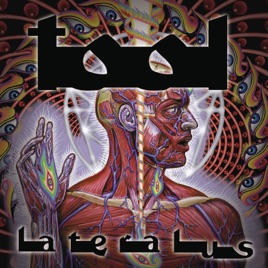
Album #90 : Tool - Lateralus


Tool
Lateralus (2001)

I make no secret of the fact that Tool are one of my favourite bands, not just of the last 20 years, but of all time. The reason for this is because they have taken an "archaic" musical form - progressive rock - and somehow made it more relevant to the modern world. Additionally, in Danny Carey, they boast one of music's most sublime drummers, a man who, along with Mike Portnoy, is one of my few modern drumming heroes.

Lateralus has quite an interesting origin story. Released five years after Aenima (they've never really been about pumping out material, given that in 21 years they've released...um...four studio albums), the album was released after the band pulled a shifty, announcing an album and tracklisting (that subsequently found its way onto Napster) that was fake. It took a month before the group announced the real details.

Clocking in at just a few seconds shy of 80 minutes (just long enough to fit onto a single disc), it's arguably the band's finest, most cohesive work.

The Album

Something Tool have always done well, certainly as well as most other bands, is craft songs that shift between light and dark, between grand heaviness and quiet reflection, yet have this shift be akin to travelling on a rather inconsistent rollercoaster. To avoid this analogy being further tortured, let me explain. One of Tool's great strengths is going from loud to quiet (or vice versa) a number of times within a single song. Sometimes this is immediate, sometimes this is through a gradual buildup, and though you know it's coming, when the change arrives it is like a kick in the guts (in a good way).

On Lateralus they take this strength and pump it full of musical steroids. Compared to their previous releases, the quiet, mellow parts are even quieter, and the monstrous grand explosions of all four members are even grander and more spine-tingling. Additionally, compared to Aenima, there's less of those suite-style link pieces that, frankly, could be quite annoying.

Reviewing most of the songs would result in the same comments, so I'm just going to put them here in a single paragraph. The drumming is typical Carey, all headscratching polyrhythms and a far greater reliance on toms, rototoms and other percussion than is shown by 99.9% of modern drummers. Some of his fill work and general 'timekeeping' is simply mindblowing. Maynard James Keenan goes through every conceivable part of his vocal range, from stage whisper to melodic tone to frightfully painful and evil scream. Adam Jones' guitar doesn't emanate flashy solos, instead content to be a lead instrument sometimes, while taking a back seat at other times. Justin Chancellor proves his stature as an underrated bass player, doing a similar job to Jones, in that for the most part, he's there providing the skeleton for the songs, while at others his bass positively rumbles and thunders.

All four have shining moments throughout. For Carey, it's almost every song, though in particular there's the whirlwind insanity of Ticks and Leeches and the constant, steady tom work of Reflection. For Keenan, he also makes Ticks and Leeches his own, spewing forth a savagely vindictive lyric and vocal, reminiscent of Hooker With A Penis (and revisited five years later with Vicarious), while on Parabol he sings with an almost placid, calm air. He manages to combine both approaches superbly on The Grudge, Schism, Parabola and Lateralus. Jones contributes something brilliant to every track, whether through a "solo" or, more commonly, a chunky, powerful riff that forms the basis of the song. Chancellor's biggest moment is, of course, the bass intro and bassline to Schism.

That, however, is breaking up each member's contribution, and that's not what Tool's about. They are at their finest when all four combine to create something magnificent, which on this album, is often. I struggle to single out highlight tracks because, if I'm honest, I think almost all of them are stunning. I only exclude Mantra (aka the slowed-down sound of Keenan's cat) and Faaip de Oiad (which is an utter mindfuck); even Eon Blue Apocalypse, Adam Jones' touching tribute to his dog, is a pleasant 'link track'. Outside of those three, everywhere you look, you are confronted with genius.

The Verdict

I feel as though I haven't done a very good job conveying just why I love Lateralus so much. On a purely visceral level, it evokes so many feelings, and has such magnificently grand musical highs, that it's hard not to like. On the other hand, from a technical perspective, it is composed and recorded brilliantly. It has its wanky moments (the title track, despite its unadulterated brilliance, is based on the Fibonacci sequence right down to the shifting time signatures)...but then again, that's progressive rock to a T.

What makes this the band's best album in my view is that attention to detail, however; a great deal of thought and effort has gone into crafting these songs, and it shows.

It is simply remarkable.

My rating: *****

Standout Tracks

I struggle to pick only three or four, but....

Lateralus
Disposition/Reflection/Triad (heh heh)
Parabol/Parabola (double heh heh)

Tomorrow, the March recap, and the first album of April. I'm going to avoid pulling some sort of April Fools stunt because that would be predictable, and I'm all about unpredictability.


Album #89 : The Go-Go's - Beauty and the Beat


The Go-Go's
Beauty and the Beat (1981)

The Go-Go's started life as an all-girl punk band in 1978. At the time of the group's inception, only singer Belinda Carlisle and rhythm axewoman Jane Wiedlin were present in terms of the lineup that would take the band to the top of the charts. A desire to move to a new wave/pop style resulted in several lineup changes, namely the addition of lead guitarist Charlotte Caffey, drummer Gina Schock and bassist Kathy Valentine.

With this five-piece lineup in place, The Go-Go's were ready to go, and in 1981 they released their debut album Beauty and the Beat. Songwriting duties were largely handled by Caffey and Wiedlin (though not always together), although one of the album's singles (and one of the group's defining moments) needed a little help from an unlikely source....

The Album

Packed full of new wave, post-punk and proto-pop punk (yep, I just invented a new genre, what of it?), Beauty And The Beat alters between summery Californian powerpop and darker, moodier post-punk cuts. The majority of the songs are undeniably catchy, and the musicianship on display is solid (with the exception of Carlisle, who is fantastic, and Schock, whose snappy snare fills are a real feature of the record). 

Two singles frame the album. The first, Our Lips Are Sealed, was written by Wiedlin and, unusually, Coventry 2-Tone ska legends The Specials' lead singer, Terry Hall. It differs from the usual Go-Go's sound in that it is slower, lusher, more out and out pop. The chorus in particular is a monstrous hook, and it sits in your head long after the song has passed. The second, We Got The Beat, is a prime example of that new wave-meets-punk aesthetic. It's built around a driving guitar riff, which is overshadowed only by a walking bassline and Carlisle's high-register vocal. There's even a drum and vocal only break, complete with crowd-participating handclaps. It's short, punchy and splendid.

Outside of the singles is a good-quality collection of album tracks. The highlights of these are the musically interesting This Town, with its 14/4 time signature in the verses, a chorus where the bright guitar tone contrasts with the darker chord progressions, and Belinda Carlisle's best vocal performance of the album; How Much More, which is the closest the band come to a pure punk feel, as Gina Schock unleashes those machine gun fills, Caffey gives us a hooky riff and the group spin out some high-tempo guitar chugginess; and the jaunty, breezy You Can't Walk In Your Sleep (If You Can't Sleep).

The only real disappointments are Fading Fast, which despite a darker, more reflective tone, lacks the attitude you might expect to find in a song about leaving behind a douchebag relationship; and Automatic, which is all German precision and angular beats....but it doesn't work, and comes off rather flat.  

Two disappointments out of eleven is still a pretty good strike rate, though.

The Verdict

Beauty And The Beat is a sometimes fun, sometimes serious, always rocking album. It's easy to see why the band began to build a substantial fanbase from the very beginning, because as debut albums go, this is a really good one. 

Definitely worth a listen.

My rating: *** and a half

Standout Tracks

This Town
Our Lips Are Sealed
How Much More

Finishing off the month of March......TOOL.


Sunday, 30 March 2014

Album #88 : Joe Cocker - Fire It Up


Joe Cocker
Fire It Up (2012)

By and large, Joe Cocker has avoided the fate that has befallen many of his hard drinking, hard living contemporaries; namely, turning himself into some second-rate crooner, churning out Christmas albums of songs that have been covered more times than the number of sex workers and waitresses Tiger Woods has banged, and appearing in "spontaneous" staged TV specials wearing expensive, ill-fitting suits and playing with 30-piece orchestras in his lounge room.

(Yes, Rod Stewart, I'm looking at you.)

What Cocker has done is continue to produce soft, adult rock with a bluesy edge, occasionally making forays into balladry and country. Such is the case with Fire It Up, his second album with producer Matt Serletic, and featuring a band made up of session guns (including, rather humourously, Ray Parker Jr. Yep, the bloke who did Ghostbusters.)

The Album

Even after a long, long career, Cocker's voice sounds just as good as it ever has. That gravelly rasp barks out all over the album, and there are no signs of any weakness in his vocal, nor any dropoff in his range. There is, however, one thing that his voice lacks on this album, and that is feeling. Whether it's a reaction to the substandard material he has to work with, or the slick too-perfect production of the album, I'm not sure. But apart from maybe two or three tracks, Cocker is sleepwalking his way through this album...and that's a damn shame.

I don't want to be too critical of producer Serletic either - the album is well produced, none of the instrumentation is too over the top (or too showy, which is a common theme in modern 'popular' music production - we can't have musicians showing that they're good!) and generally, things are in their right place. The problem is that the music is soulless, and Cocker's career-best moments have been where the music and vocals are loaded with soul and feeling.

Positives? Apart from finding out that Cocker still has the goods, I Come In Peace is the album's best track. Penned by Australian rock legends Rick Brewster (The Angels) and Ross Wilson (Daddy Cool, Mondo Rock), it contains occasionally prominent swirls of Hammond organ, giving it an old-school rock feel. There's lots of little layers of piano, acoustic guitar and electric guitar in the mix, and it works well. Additionally, it's one of the few tracks where Cocker puts in a shift and injects some effort into the vocals. Eye On The Prize is another good track, standard smoky blues fare, and again it's made better by Cocker's gravelly snarl. He sounds like he gives a shit and sings accordingly.

Beyond that though, it's all just so by-the-numbers that it disengages the listener. The array of talent enlisted to pen the different tracks is a who's who of professional songwriters, but they are all either country hit makers or pop/rock hitmakers whose stock in trade is bland, inoffensive, radio-friendly staple songs. I really don't feel this befits a gravelly blues/rocker like Cocker. Worse than that, it's like they threw their castoffs to Cocker for this album because most tracks even lack anything remotely resembling a pop hook.

The Verdict

Fire It Up sounds exactly as it should. It's an album slickly produced by a commercial producer, played by musicians who are paid to get in, lay down a basic track and get out again, using songs written by professional songwriters who churn out material for a living. With all that in mind it's no wonder that Joe Cocker has little to work with. Yeah, he sounds disinterested for the most part (actually, that's unkind - maybe it would be kinder to say he's going through the motions) but who's surprised, when the songs themselves sound so nondescript?

At least we know that Joe can still belt out a tune. There's something comforting in that.

My rating: * and a half

Standout Tracks

I Come In Peace
Eye On The Prize
The Letting Go

Tomorrow's album is a power packed New Wave debut by five sassy, talented Californian women.