Pages

Wednesday, 21 May 2014

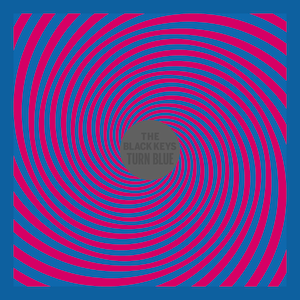
Album #139: The Black Keys - Turn Blue


The Black Keys
Turn Blue (2014)

When Ohioans The Black Keys first came out in 2002, they garnered cult attention because of their stripped back, lo-fi, raw bluesy sound (created by just a drummer and a guitarist/vocalist). For the majority of their first four studio albums, this was the band's blueprint - gutsy, edgy, ballsy blues rock, with a seriously dirty aesthetic....but there was something undeniably real about The Black Keys' music. Its rawness gave it an imperfect quality that was part of its charm.

Well, that and it fucking rocked.

The writing was on the wall though with Brothers; the band's sound was ever so slowly changing to include heavy keyboards and more lavish production values, thanks to their collaboration with producer Danger Mouse. This continued (combined with a decision to write hooky hit singles) on the allegedly quite critically popular El Camino. 

The band's latest release, Turn Blue, keeps this lavish production going, again thanks to Danger Mouse's obsession with keyboards. Though this time, the hooks and sharpness of El Camino have been replaced with moody introspection and psychedelia. Does this represent the next stage of The Black Keys' 'evolution', or are there signs that the magic of old is on the wane?

The Album

The magic isn't on the wane, it's on fucking life support. Those early hallmarks are all but dead; where once the music burned with ballsy blues, today it simpers with snotty synthesised pop. Where once guitarist Dan Auerbach's axe sounded like a series of tuned chainsaws scything their way through a forest of rock and roll, today it is reduced to jangly chords buried under layers of keyboard, only briefly peeping out to show its stuff. There's no dry, lo-fi feel anymore, because The Black Keys have joined the ranks of the slickly-produced, commercially appealing. It probably doesn't help either that Auerbach's marriage was disintegrating during recording, because that too contributes to the sad, moroseness enveloping the album's sound.

And I for one think that's a fucking shame, because anything from Thickfreakness, Rubber Factory or even Attack & Release is more interesting, entertaining and dynamic than the entirety of Turn Blue. For that we must blame Danger Mouse; rather than letting the essence of The Black Keys be at the forefront of the songs, it must instead be buried under layers of keyboard. At times (Turn Blue, Fever and 10 Lovers especially) the band are less earthy blues rock and more synth/dancepop band and that is an absolute travesty against music; to reduce two men with a gift for filthy, muscular blues to little more than the 21st Century version of Roxette with guitars is fucking disgusting. Other times, like on the potentially good but not quite there In Time, the songs are crying out for production restraint, to let the sombre, introspective guitar tone tell the story and carry the song...except Danger Mouse has to RUIN EVERYONE'S SHIT with his fucked up 80s pop keyboards. And when they're not playing synthpop, they're playing fairly predictable, safe guitar pop (Gotta Get Away, the Flaming Lipsesque Waiting On Words and Year In Review), though even these tunes are decent; Gotta Get Away in particular is the only uptempo, rollicking moment on the album, with a decent little solo from Auerbach, while Year In Review features a great introspective lyric.

The album's three shining moments occur almost by accident. Two of them are remarkably psychedelic space rock in nature, while the third (It's Up To You Now) is one of only two non-Danger Mouse produced tracks (the other, unsurprisingly, is the rollicking keys-free Gotta Get Away.) Opening track Weight Of Love sounds eerily like early to mid 70s Pink Floyd, and that's not just because The Black Keys have basically stolen the chord progression from the Floyd's Breathe, but the acoustic guitars, simplistic Roger Waters-style bass, wailing guitar work and drummer Patrick Carney's Nick Mason impressions on the kit essentially make this a pure copy of the Floydian psychedelic sound. Nevertheless it's a great song, with two superb solos from Auerbach. Bullet In The Brain is also terrific psychedelic pop/rock, with spooky space rock keyboards, more Mason-style adventures from Carney and some haunting, hollow reverb-drenched vocals. It's Up To You Now is the only song that calls to mind the earlier sounds of the band; rumbling rhythms from Carney's toms, buzzy guitar (and supporting keyboard - SUPPORTING, Mr Danger Mouse, not DOMINATING THE GODDAMNED MIX PISSING EVERYONE OFF YOU ARSEHAT), some thick, chunky blues riffs and an equally meaty Auerbach solo. It was the only time in 45 minutes that I felt like I was actually listening to the same Black Keys who recorded songs like Have Love, Will Travel and I Got Mine.

The Verdict

No doubt Triple M are fucking falling over themselves to fellate the latest singles from The Black Keys. Additionally, I'm sure critics are falling over themselves to laud this as a 'masterpiece' and 'nuanced' and 'evidence of their continued evolution as a band to a more mainstream aesthetic'.

FUCK. ALL. THAT. BULLSHIT.

Turn Blue is decidedly poor, the sound of a band being ruined by a combination of wanktastic production and some sort of sick desire to become the new Duran Duran or something. There's very little here to recommend to anyone - old school lovers of the Black Keys (like me) will find that the fucking raucous edge that made them so appealing has been dulled completely, while people who thought that El Camino was their first album won't find any simple rocking hooks here.
I'm sure you wanted to make a moody, introspective album about your heartbreak, Dan......if only there were a style of music perfectly suited to tales of heartbreak, revenge, love and loss....perhaps with the name of a colour in it.....blues maybe.......

My rating: 4.8/10

Standout Tracks

Gotta Get Away
Weight of Love
It's Up To You Now

Tuesday, 20 May 2014

Album #138: The Smiths - The Queen Is Dead


The Smiths
The Queen Is Dead (1986)

There's very little I can say about The Smiths that hasn't already been said by hundreds of other music writers. Extraordinarily influential on an entire generation of musicians that followed them (hi Britpop), they boast in Morrissey and Johnny Marr two of the most revered musicians of the 80s. Some critics have even said that the band are the most important guitar band of the 80s. Not bad for four Manc lads signed to an independent record label.

In recent years, Marr and Morrissey have seen themselves all over the music press, though for different reasons - Marr because of his dalliances with other bands (notably Modest Mouse and The Cribs) and his solo work, and Morrissey because....well, he's a fuckwit of the highest calibre. At any rate, despite his fuckwittiness, The Smiths are massively acclaimed, and prime candidates for the LOAD Project. I've chosen their third album, The Queen Is Dead, from 1986. I'm not gonna lie, I expect to have my mind blown.

The Album

I didn't have my mind blown.

That, however, does not mean that The Queen Is Dead is a terrible album; far from it. It's really rather bloody good...in fact I would even go so far to say as it's a fantastic listen with barely any noticeable flaws.

I'm just not convinced it merits OMGWTFBBQBESTALBUMEVARRRR!!!!!!!!!!111!111one!!!!eleventyone status.

What it is, is some fantastic indie guitar pop with a few minor flat points. Lyrically it's strong, apart from.....well, a few minor flat points. Its appeal is probably in the fact that when it's on, it's really on - musically and lyrically there are terrific moments of synergy, where the band show just why they were darlings of the critical and musical performer sets alike.

Moments of synergy like There Is A Light That Never Goes Out - lyrically brilliant (even if it treads on familiar ground that had previously been walked by The Who on Quadrophenia, all tortured young person who feels so alienated at home that they consider themselves homeless), and musically superb (guitar and bass provide a good groove, while synth strings add a mildly sombre touch to the massively depressing lyrics), Cemetry Gates (Morrissey's lyrical FUCK YOU to critics who slagged him off for 'thieving' the words of his literary heroes, set to catchy guitar pop), I Know It's Over (a ballad that throws back to the Mersey Beat sound, with a thick, groovy bass line from Andy Rourke, guitars and synth strings providing melody, some loose improv from drummer Mike Joyce, and a Morrissey vocal that is rather spinetingling....oh and some terrific lyrics, including the brilliant line, "It takes guts to be tender and kind"), Bigmouth Strikes Again (relentless Marr jangly guitar, a great bassline, and lyrics from Morrissey that are rather vicious, while painting the song's protagonist as a self-indulgent entitled wanker.), and Vicar In A Tutu (quite a fun tune - a shuffle beat, a walking bassline and a country-style picked guitar twang accompany some rather tongue-in-cheek lyrics from Morrissey, who shows a cheeky sense of humour to go with all the morose social commentary and depressing woe-is-me self-analysis.)

At other times, the synergy is close but not quite there: The Queen Is Dead is a great opener, all cynical snarl and social observation from Morrissey, jangly layers of guitar from Marr, rock-solid rhythmic power from Rourke and Joyce (in fact, Rourke's bass playing is immense)...it just goes a bit too long, finishing with an overly extended instrumental passage; Frankly, Mr Shankly takes on a bouncy 60s pop vibe and nails it pretty well, with breezy guitars and vocals (yep, even the morose Morrissey sounds happy), though it doesn't fit at all with the rest of the album; The Boy With A Thorn In His Side sees Morrissey direct a bunch of questions at the music industry, bemoaning the band's ignored status, and he delivers a great vocal to boot...musically it's okay, though I found the synth strings to border on the overbearing.

Even the two 'minor flat points' are just that - 'minor'. Never Had No One Ever has a simple, but meaningful, lyric - Morrissey's youthful lament about his childhood as an immigrant in Manchester - but musically, despite Marr's guitars sounding quite nice, it's desperately morose and plodding (I suppose it fits the music, but it's not particularly exciting or awesome; an admittedly minor quibble), while closing track Some Girls Are Bigger Than Others has the inverse problem - musically it's splendid, as multiple guitar tracks create an almost orchestral sound thanks to Marr's superb work, ably supported by Rourke's bass...but Morrissey contributes a fucking awful set of lyrics that were probably meant to be irreverent but come off as being purely shithouse, devoid of....well, everything.

The Verdict

I said I wasn't sure it necessarily deserved the mantle of GREATEST ALBUM IN THE WHOLE HISTORY OF EVER. I stand by that - give me Frances the Mute or Kid A or OK Computer or Highway 61 Revisited or Physical Graffiti any day of the week.

Yet The Queen Is Dead certainly deserves to be at least considered one of the (or possibly the single) finest albums released in the 1980s. It was the blueprint for so much indie guitar pop (and Britpop) that was to follow, and those roots can be heard clearly all over the album. Additionally, it's a slow burner; I liked it as I was listening to it, but it wasn't until going back over my listening notes and thinking about the songs that I realised that it actually was seriously good music by seriously good musicians.

So yeah, highly recommended, worth the hype, and clearly a terrific album.

Morrissey's still an utter fuckwit though.

My rating: 9.5/10

Standout Tracks

There Is A Light That Never Goes Out
I Know It's Over
The Queen Is Dead
Cemetry Gates

Monday, 19 May 2014

Album #137: Manic Street Preachers - This Is My Truth Tell Me Yours


Manic Street Preachers
This Is My Truth Tell Me Yours (1998)

Welsh rockers Manic Street Preachers have certainly had an interesting history. Beginning life as a four piece, the band's lyrics were contributed in their early days by rhythm guitarist Richey Edwards, and because of his skills the Manics developed a reputation for politically charged, intelligent songs.

In 1995, however, that all changed; Edwards went missing, never to be found, and the band considered splitting up. However, after six months hiatus, they resolved to carry on, and despite the loss of Edwards were to develop into (for a while at least) one of Britain's biggest bands. With bassist Nicky Wire taking over lyrical duties, the group continued as a threepiece.

1998's This Is My Truth Tell Me Yours is probably the Manics' best known work. Critically and commercially it was a massive success, and that alone makes it worthy of inclusion to the Project. (That, and I haven't listened to the Manics in a very long time.)

The Album

This Is My Truth Tell Me Yours is a collection of Britpop structures and sounds with heavy use of strings and a noticeable arena rock aesthetic. Yet for all those typically commercial flavours, there's an undeniable smartness to many of the tunes. The heavily political lyrics of Richey Edwards have been replaced with a more worldly, mature lyrical approach from Nicky Wire. Consequently, the album very much presents as the sound of a band who are all grown up.

The word 'sprawling' can be used to describe the album's first two tracks, The Everlasting and If You Tolerate This Your Children Will Be Next. Sweeping strings, pleasant if occasionally morose melodies, and the great vocal of James Dean Bradfield tie the two together. If You Tolerate This is one of the standouts - a tune written about Welsh volunteers in the Spanish Civil War, its straightforward phased guitar riff swaps places with more grand strings and keyboards throughout the tune, while managing to keep a stadium singalong quality. You're Tender and You're Tired follows along the same lines, with a grand chorus and plenty of atmospheric production. The most Britpop tune on the album is Ready For Dreaming, right down to the stadium chorus and the Alan White drumbeat (that's Alan White of Oasis, not Alan White of Yes, by the way.)

There are also some tunes that show a greater range of sonic approaches. You Stole The Sun From My Heart creates a point of difference from the string-heavy Britpop aesthetic, forgoing the strings for guitars (and lots of them) - the chorus is a real singalong effort, while the riffs call to mind the likes of Supergrass and Blur; Tsunami is a great little tune, deriving influences from Indian music (it even features a tabla and sitar parts); Nobody Loved You melds a sizzling guitar riff with the oh-so-grungy superquiet verse/SUPERLOUD CHORUS structure, and even sees Bradfield hit some croaky falsetto; and the brilliant Be Natural fuses progressive elements with a Tears For Fears-style 80s powerpop aesthetic, thanks to the heavy reverb throughout on both instruments and bass.

As musicians the three are decent; Bradfield is a fine vocalist and a more than capable guitarist, especially when he's allowed to play nifty little solos, while Wire and drummer Sean Moore are solid players. The Manics are a prime example of the whole being greater than the sum of its parts, because as a threepiece they create a fantastic sound.

The Verdict

There's plenty to like about This Is My Truth Tell Me Yours. It should be played to bands like Coldplay as an example of how bands can make smart, emotionally investing music that still has a 'commercial' aspect. While it sometimes skirts the line of melodrama, there's enough musical difference to pull away from that edge.

My only criticism is the sad lack of Welsh lyrics. Looks like I'll need to rely on the Super Furry Animals for that.

My rating: 7.7/10

Standout Tracks

Be Natural
You Stole The Sun From My Heart
If You Tolerate This Your Children Will Be Next


Sunday, 18 May 2014

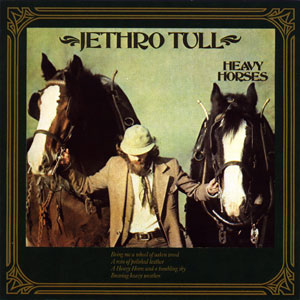
Album #136: Jethro Tull - Heavy Horses


Jethro Tull
Heavy Horses (1978)

Jethro Tull certainly cannot be accused of being boring or uncreative. Over their fortysomething year history, the band has recorded albums in a significant number of styles - blues, progressive rock, folk, AOR, jazz....hell, even metal (don't believe me? Go and find out how many Grammies Tull won.) Of course, they've probably had just as many lineup changes, though there have been two absolute mainstays - vocalist/flautist/multiotherinstrumentalist Ian Anderson and guitarist Martin Barre.

Throughout the 1970s, though, the band was creatively and commercially at their absolute peak. This decade had the band's 'classic' lineups, delineated only by who was in the rhythm section (besides Anderson and Barre, pianist/organist John Evan was the only other mainstay). By the mid 1970s, the band's rhythm section was the extraordinary Barriemore Barlow on drums, and John Glascock on bass - the latter described by Deep Purple's Ritchie Blackmore as 'the finest bass player in rock'. Despite all this technical mastery, Anderson (as songwriter) decided to embark on a trilogy of folk-based albums. 

1978's Heavy Horses was the second of these...and arguably, it's the last truly great Tull album.

The Album

The key to Heavy Horses' success is just how tight the band sounds throughout the entire album. Off-time rhythmic changes, unusual time signatures and seemingly unpredictable accents by Barlow are made to seem second nature by the band. It's the sound of a band incredibly familiar with one another. Adding to this synergy are some fine Anderson compositions, played by a collective of very, very talented musicians. The album is very folky in style - lots of mandolin, acoustic guitar, folk-style lyrics and strings - yet at times retains a harder, gutsier edge.

The title track is, simply, bloody fantastic. A snappy, tight intro leads to a first verse that is stunning - Anderson's deep, rumbling voice accompanied by a beautiful piano section, played by Evan. Later verses see acoustic guitars and strings take more prominence, and Evan's contributions are limited to background texture, but that first verse is the best one in my view. From there it's another six minutes of shifting dynamics (a rather jarring, fast tempo change midway through works fantastically, before shifting back again), super work from Barre and Barlow, and lyrics about big bloody horses. Similarly fantastic (personally I preferred it slightly) was No Lullaby, which is far removed from folk. Barre's heavy opening riff and solo signal that this is going to be a harder rock song, and then the rhythm section takes over. Glascock makes a simple repeated note sound positively marauding, creating a slow groove that Barlow does his best to fuck up completely by playing some brilliant fills. Strings and flute support each other in the verses, Barre whips out some more deft soloing, and Barlow later decides that sick fills are not enough, he's going to play his ride cymbal at 19000 hits per second.

Those two tracks are by far the longest at over seven minutes each; the rest of the album's material is of a more 'standard' pop length. Of those tracks, the pick of the bunch are the closer Weathercock, the opener ...And The Mouse Police Never Sleeps and the Glascock lead bass extravaganza Journeyman. Weathercock does feature some pretty dodgy lyrics (about a weathercock, would you believe) though they do fit the folky theme; fortunately, the musical arrangement is amazing; Anderson plays a brilliant flute solo, Barre tries to outdo him with a blistering lead break, Barlow loosens up with some ballsy drum fill work and Glascock goes along for the ride. The song basically ends with everyone trying to outdo each other. Mouse Police is tight (Barlow and Glascock especially are glued together) with a decent organ solo from Evan, and Journeyman is built around Glascock; his lead bassline provides the bedrock for the rest of the band to build on, and build they do. It's one of the better sets of lyrics (being rather descriptive of office slavery) and features more solid work from Barre and Anderson.

There aren't really weaknesses, as such. The remaining songs are solid, but not as good as their album compadres. Acres Wild is pure English folk, as is Moths; both are pleasant but hardly exciting. Rover has some decent moments, namely its whippy tempo, snappy guitar and flute work, but is little more than charming. One Brown Mouse is a good showcase for the keyboard work of David Palmer, and there's more great stuff from Glascock on this track, but despite some promise it just never quite seems to come together.

The Verdict

It may not be their finest album ever, but Heavy Horses represents the wider Jethro Tull sound well. Although it may be very folk-influenced, there are more than enough moments that are essentially classic Tull - Anderson's flute fluttering away, Barre providing deft flourishes, while the rhythm section provide a super backdrop.

It's a pity that circumstances dictated that this was the last full album of this lineup - Glascock died of a congenital heart defect in 1979, and Barlow left soon after, devastated at the loss of his friend. It does however serve as a fitting epitaph, even if it wasn't meant to be that way, because Jethro Tull were never quite the same after this.

My rating: 8.0/10

Standout Tracks

No Lullaby
Heavy Horses
Journeyman
Weathercock

Album #135: The Roots - Rising Down


The Roots
Rising Down (2008)

The Roots have spent the better part of twenty years cultivating a reputation as one of the most fearsome hip hop outfits on the planet, yet they bear one remarkable difference from other hip hop groups - they are a band. Led by master vocalist Black Thought, and drumming maestro ?uestlove, part of their appeal is in their setup itself - hip hop with live instruments played by accomplished, talented musicians. It has given their music an edge that perhaps 'traditional' hip hop, with its focus on samples and beats, doesn't always have.

Rising Down is the band's eighth album. I've chosen it to review because of its supposed dark, 'incendiary' nature, and its contemporary, political themes. The Roots have been a band that I've wanted to explore far more than my limited knowledge, and I'm hoping this is the start.

(And yes, I know they are Jimmy Fallon's studio band. I think perhaps they deserve to be known for more than just that.)

The Album

It's certainly true that the word that comes to mind when looking to describe the sound of this album is dark. Many of the songs are brooding, foreboding pieces, thanks to the pairing of ?uestlove's dry, relentless drumming and Kamal Gray's buzzing, futuristic synthesisers. Deep, rumbling bass (provided by Owen Biddle) completes the mood setting - this is far from a happy album.

Then, of course, there's Black Thought, who spends most of the album proving why he's one of hip hop's most masterful performers. Zippy flow, dexterous rhymes and deep, insightful, biting lyrics abound throughout Rising Down, and there's barely a track that he doesn't manage to elevate to a higher plane. His matter-of-fact, realistically-observant style also contributes to the album's overall feeling.

As is to be expected for a hip hop album, there are also guest appearances - some from hip hop/R & B names like Talib Kweli, Mos Def and Chrissette Michele, while others are from fellow Philadelphians like DJ Jazzy Jeff, Dice Raw and former member Malik B. Such is the quality of Black Thought's work though that he is hardly outshone by others, even though (especially in the case of Malik B) their contributions are great.

Thematically, the album touches on several topics, some of which are common hip hop themes, while others deal with more modern issues. The album's bookends, Rising Down and Rising Up, fit into the latter category; surprisingly for such a brooding album, it's the more upbeat, bright-sounding Rising Up that stands out, its Afrobeat influences driving a heavily melodic tune, with the melody provided by a prominent piano track. ?uestlove's fluid, jazzy drumwork is also a real standout. Lyrically, it deals with (among other things) the depressing nature of modern commercial radio and its risk-averse playlists. Rising Down deals with themes of global warming, income disparity and the general shittiness of the world. The magnificent Singing Man pulls no punches; Black Thought rhymes about the life and times of an African child soldier with brutal honesty, while guests Greg Porn and Truck North (two Philly MCs) deliver great verses about high-school shooting perpetrators and Islamic terrorism respectively. Also pulling no punches is the brutally forthright track I Will Not Apologise. Dice Raw provides a brilliant verse about the irony of black rappers defining themselves as hoods, gangsters and ho-obsessed dudes to suit a white audience that draws on, and accepts as gospel truth, this stereotype; the verse also points out that black rappers are not to blame for this, and that the blame should go to an America where, historically, black men have been expected to behave 'like monkeys' in order to be successful entertainers. Black Thought also follows up with a verse about struggling to survive in everyday life. The theme of the song is to tell an uncensored tale about real life, and no apologies will be given to those who do not understand. Musically, the track has a keyboard riff that reminds me of some of Rick Wakeman's work with Yes, and ?uestlove contributes an off-beat rhythm.

Speaking of ?uestlove, his work on the track 75 Bars demonstrates his abilities for all to see - sharp, jazzy, whippy, rhythmic, he's like a metronome on speed. Yet for all this jazzy speed, he also lays down one of the funkiest drumbeats you'll ever hear. Black Thought adds a masterful vocal contribution to the song, making it one of the album's standouts. The solid Get Busy is a fairly straightforward boast track, though DJ Jazzy Jeff's scratching contributions are a testament to his skills on the deck (he's not just Will Smith's friend, you know). Criminal is also a great tune - even if the three verses all deal with typical themes of crime and cash and murder and jail time, there are some interesting lyrical takes (the hook, for example, compares street crime to the financial world and observes that perhaps the wrong people are being called criminals) and musically, the song is intriguing. Indie-rock style guitar lines drift over a rumbling bass line. Additionally, this song provides one of the few moments where Black Thought is matched, as Saigon contributes a wonderful guest verse. 

The Verdict

Rising Down is a really, really good album, full of superb MCs doing their thing over tight, rhythmic beats and dark, moody keyboards. Eight albums in, and it's obvious that The Roots know what the fuck they're doing, and know how to change shit up and keep it working. It also helps that in Black Thought and ?uestlove, they have two of the most creative, talented minds in music.

It may not be the best place to start, coming twenty or so years into their career, but nevertheless it's a terrific listen from start to finish.

My rating: 8.8/10

Standout Tracks

Rising Up
Singing Man
I Will Not Apologise
75 Bars

Friday, 16 May 2014

Album #134: Rammstein - Mutter


Rammstein
Mutter (2001)

Angry German industrial metallers Rammstein are famous for several things:

a) being angry
b) being German
c) playing a brand of industrial metal fused with progressive rock fused with techno fused with you get the picture here
d) their FUCKING INSANE live show
e) their FUCKING INSANE lead singer Till Lindemann
f) that song Pussy and its X rated music video

I don't mind admitting that some of their stuff (ok, ok, Du hast on Rock Band 3) has been a guilty pleasure. There's something cathartic about evil German lyrics being growled at you by a rather scary German dude, even though, for all I know, Till is singing about puppies and rainbows and healing the fuckin' world.

Mutter, the band's third album, is apparently a good bridge between the band's early sound and their later, more melodic/symphonic, sound. To be fair I could have picked just about any of their first four albums and I would have found familiar songs and the Rammstein sound, but Mutter it is. Ich freue mich auf zu hören Rammstein arbeit!

Das Album

Gotta be said - it's bloody good.

Driving industrial metal is the overarching theme of Mutter. Guitarists Paul H Landers and Richard Z Kruspe create a ballsy, dense and glorious crunch to their dual metal riffage, and it can be found on almost every tune, supported by Ollie Riedel's thick bass lines. Keyboard player Flake adds deft touches of organ, keyboard and synth strings for extra texture, and provides a good contrast to all that dark Teutonic ballsiness....and then there's Till Lindemann, and what a voice! He's no sweet crooner, that's for sure (on the one song where he actually tries to sing, it doesn't really work) but he has a throaty growl from the depths of East Germany, and matched with German lyrics it sounds fucking insanely good.

Yet there are plenty of times where that industrial metal aesthetic is supported by other musical styles. Opener Mein Herz brennt is pure symphonic metal, with the metal brutality supported by breezy string arrangements, and it's a kickass track; the album's title track also takes a symphonic route, with a gentler arrangement (particularly more melodic guitar lines) and an attempted non-throaty growl vocal from Lindemann to go with the prominent strings. Nebel forgoes the metal approach for a more progressive sound - clean picked guitar lines, synthesisers and strings - supported by Lindemann's vocal, which threatens to get fiery but never quite does. Nevertheless, it succeeds in being quite an atmospheric, grand tune.

Yet it's heavy industrial metal that the band are famous for, and its these tunes that are the centrepoint of the album (though even then, there are two distinct metal approaches present on Mutter). The band's industrial style (aka Neue Deutsche Harte, or New German Hardness) is found on songs like Ich will, Rein raus, Speiluhr, Links 2-3-4 and Sonne. The picks of those are Ich will, Links 2-3-4 and Sonne (though the other two are still pretty good tunes). Ich will is heavy as fuck - thick, crunchy guitars, a thunderous rhythm section and, of course, Lindemann's 'evil' vocal (yet amongst the heaviness, there's a light synth melody that bubbles away). Links 2-3-4 was written as a response to critics of the band who said they were fascists and Nazis - it in fact outs Rammstein as being incredibly left wing, politically, and draws on the work of Bertolt Brecht (though ironically, the drumming is very military march in style). Sonne is a rather brutal, fearsome tune - which makes sense when you learn it was originally written as an entrance song for heavyweight boxer Vitali Klitschko. It mixes up the brutal with the melodic really well.

The second distinct approach is that of thrash metal. A few tracks see Rammstein ratchet up the tempo and create an aesthetic that melds their Neue Deutsche Harte style with the old school 80s thrash approach. Feuer frei! is the best example here; not only are the riffs powerful, but Lindemann gives one of his best vocals on the album, and there's a calm breakdown in the middle of the song that acts as a welcome, but brief, breather from the metal frenzy. Zwitter is an underrated gem too, possessing a fistpumping, glorious chorus and some of the album's fiercest metal riffs - it's a total assault on the senses and absolutely wonderful, as is Adios, which, much like Feuer frei!, features some calmer sections to balance out the brutality. 

Das Urteil

Mutter is the sound of a band at the top of their game, yet with plenty of room to grow. Even though their lyrics are almost entirely in German, Rammstein are a band who are fucking amazing to listen to, generally. Apart from the fact that they create a great sense of mood and atmosphere in their music, there's also a great deal of theatricality mixed in - it seems that, above all else, Rammstein are about putting on a damn good show, even on a recorded album.

I'll definitely be checking out more of the band's material.

My rating: 8.4/10

Herausragende Songs

Zwitter
Ich will
Feuer frei!
Sonne

Album #133: Split Enz - True Colours


Split Enz
True Colours (1980)

True Colours marked the commercial arrival of Split Enz. I say 'commercial' because the band had actually produced several albums before this, featuring densely packed, bombastically arranged musical epics (some of which, if I'm honest, are seriously bloody good). However the success of I See Red, plus some well received poppy festival sets in 1979, convinced Tim Finn that melodic new wave pop was the way to go.

So it was that this album was the first to wholly pursue the powerpop sound, and consequently it was the launching pad for a few years of towering success (and arguably the launching pad for Tim's younger brother Neil on his path to musical glory.) I've never heard an Enz album in its entirety so I'm looking forward to it.

The Album

True Colours manages to fuse Tim Finn's desire for more melodic, poppy arrangements with elements of the band's earlier, more eclectic sound. Mostly, this is done through the magical keyboards of Eddie Rayner, who in my view elevates this album from good to great. His synthesiser stamps its authority all over this album, creating amazingly varied sounds and textures (added to that, he's a hell of a player). Though to be fair, he is working with some tremendous Finn-crafted material.

The album is famous for providing several of the band's best known songs. I Got You (Neil Finn's first truly great pop song) is worth every bit of its reputation. A great contrast between the uneasy verses, with their staccato guitar and synth swirls, and the dense, hooky choruses, is a great deal of the song's charm - additionally, the chorus is musically magnificent, rather simple yet rich. I Hope I Never is one of my all time favourite Enz tracks. Tim Finn delivers a fucking glorious vocal, paired with his own beautiful piano playing which packs a great emotional punch. While it's closer to baroque pop than anything, it still features Rayner's immense synth strings to add even more grandeur to the arrangement. Poor Boy is the third well known single, and it's decent; again, the mood is somewhat blue, helped by the morose chord progressions and Tim Finn's plaintive vocal. Nigel Griggs provides a notable bass line, but, again, the star of the piece is Rayner. His ethereal, spacey synth notes add texture to the verses, while the choruses are an extremely memorable keyboard line.

Outside the singles/well known tunes though, there's still some gold to be found - in fact it would be fair to say that the album features very few truly weak spots. Shark Attack is a bundle of high-octane energy, pumping out a punk-style tempo fused with synth-driven pop. It's a great opening track because of its frenetic nature (even if a recent superb cover by Dan Sultan and The Break shows that perhaps this song should have been a surf rock tune from the beginning). I Wouldn't Dream Of It is rather good new wave, right down to the heavy synth, groovy bassline and simplistic guitar melody, while Neil Finn's Missing Person keeps the new wave feel going but draws parallels with The Police. I also really enjoyed Nobody Takes Me Seriously, which shows the Enz's fascination with offbeat arrangements, jarringly discordant chord changes and distinctly un-pop pop. Finally, closing track The Choral Sea is a fascinating listen. Sonically it has more in common with the band's early, sprawling sound; swirling keyboard lines, a funky bass line with a very minor key change, some disco-style guitar rhythm work....all matched to a distinct disco backbeat from Malcolm Green. After about ninety seconds it dawns on you that you are listening to a Split Enz disco instrumental, and it may well be the best disco instrumental track ever recorded. The band maintain interest through the foreground of the soundscape - keyboard solos, drum and percussion breaks, guitar solos.....it's nowhere near being a pop tune and yet it's one of the album's gems, precisely because it has no intention of being a pop song. It's one hell of a way to end an album....

The Verdict

Deservedly regarded as one of the great Kiwi musical releases (NO AUSTRALIA YOU CAN'T HAVE THEM SO PISS OFF), True Colours really is a great pop album, though unlike today's idea of 'pop' it contains great lyrics, technically proficient performances and a willingness to find ways to create individuality within a pop framework. Most pleasingly, there's plenty of great material outside the big singles, and I think that's always the sign of a great album.

Thoroughly enjoyable and highly recommended.

My rating: 8.6/10

Standout Tracks

I Got You
I Hope I Never
The Choral Sea
I Wouldn't Dream Of It

Thursday, 15 May 2014

Album #132: Live - Throwing Copper


Live
Throwing Copper (1994)

The latest album from my adolescent life to receive a fresh listen through older ears is Live's Throwing Copper. The singles from this album bombarded radio and music video programming (hell, they probably still do), while the album itself used to get a runout alongside Korn and Metallica during the occasional late 90s pissup.

Personally speaking, I found them to be a bunch of pseudo-heavy tryhards, though my opinion of them certainly got worse when they ditched the pretense and became a full on Christian rock band. Lead singer Ed Kowalczyk was largely to blame for this, though I will admit that I thought him a decent vocalist (even if he was another 90s alternative singing-like-he's-constipated dude).

However, it's twenty years since the album's release, and probably twelve or thirteen years since I last heard anything from the album, so in the spirit of The LOAD Project, let's see if we can find the cause that has seen the album shift eight million units to date.

The Album

I'm not quite sure what people were thinking.

I can only assume that people purchased the album to get all the radio staples in one place. I can only further assume that a great many people who purchased the album only actually ever listen to the singles.

I make this assumption because, a handful of tracks aside, Throwing Copper consists of fairly asinine pseudo-grunge, featuring blaring riffs paired with wannabe intellectual lyrical content. It's a shining example of the artistic wasteland that was the great majority of 90s alternative radio rock. Actually, I'm sorry, I called it pseudo-grunge - according to Wikipedia it's post-grunge, a surefire sign that music writers have gone too fucking far in attaching the prefix post- to musical genres.

Don't get me wrong. When Live hit the target, they hit the target well. For example, I Alone is the best of the album's hit rock singles, using clearly contrasting dynamics to create a rollercoaster effect for the listener. The chorus is bold and powerful, Kowalczyk shifts effortlessly from hushed low tones to full throaty rock vocal, and the lyrics are one of the few on the album that aren't craptacular. The same can be said for the ballad Lightning Crashes, where Kowalczyk provides his best vocal on the album (or possibly ever in his entire life), the lyrics tell a simple metaphor for the circle of life, and the song uses a steady, gradual upward shift in dynamics. The album's final released single, the oddly titled White, Discussion, is also one of the better songs here. Although lyrically it's utter wank, and at times Kowalczyk brings back that trusty constipated vocal, sonically it delivers an alternogrunge experience akin to that of early Pearl Jam, even if it doesn't have PJ's dynamic bombast, nor pure musical skill.

Sitting smack bang in the middle of the ledger, occupying the 'distinctly average' zone, are the album's other two singles, Selling the Drama and All Over You, and the attempted prog/alternative fusion of Pillar of Davidson. They have their good moments - the singles, as to be expected, have hooky, fistpumping choruses, while Pillar of Davidson makes a good fist of establishing a storytelling vibe through the tune - but neither really manage to keep the blood flowing. Nevertheless, they are still reasonable listens.

Unlike the rest of the album, which I would rather kindly describe as 'turgid'. Waitress is abhorrent; lyrical dreck about how EVERRBODY NEEEDS SEERMMM CHANNNGE wrapped in a grating riff structure. Not since Nickelback have I ever wanted to skip a song so badly. Shit Towne does its best to live up to the name, because it really is shithouse. T.B.D is four minutes of sweet fuck all (even John Cage's famous 4.33 has more going on in it) and Stage fails where White, Discussion managed some success, trying to be all cool, self-assured angry grunge (resplendent with TEH SWEARZZZ) but instead seems like somebody allowed a fourteen year old to write down his thoughts after his parents said he couldn't have a TV in his room.

The Verdict

We really ought to forget that modern rock radio didn't exist in the 1990s. Albums like Throwing Copper are why. 

Did not like (a few songs aside).

My rating: 5.2/10

Standout Tracks

I Alone
White, Discussion
Lightning Crashes

Wednesday, 14 May 2014

Album #131: Eels - Wonderful, Glorious


Eels
Wonderful, Glorious (2013)

I only know of Eels by reputation. Bandleader (well, actually, to be fair, he is the band) E (real name Mark Everett) is a doyen of the indie rock scene, and generally seen as one of the more genre-hopping musicians of the modern age. By extension, Eels have been a band impossible to pigeonhole, such has their sound and style changed from album to album. They've done standalone records, a concept trilogy, and albums dealing with Everett's long, troubled family history.

Last year's Wonderful, Glorious was developed by E by jamming with the band's current supporting musicians (though all songs are credited solely to Everett). Reviewers at the time highlighted the album's harder indie edge, while pointing out that Everett, unusually, sounded happy, in stark contrast to the band's often dark, depressing mood. 

The Album

Combining edgy indie rock with jazz and even 60's garage rock influences, Wonderful, Glorious is musically quite an interesting, and very listenable, album. The drumming is often heavily reliant on big rumbling tom rhythms, the bass playing is solid and occasionally super-groovy, while the guitars alternate between intertwined picked melodies and fuzzy, scratchy distorted riffs. 

The raw, 60s edge can be heard on Peach Blossom and Your Mama Warned You. Both have sparsely recorded guitars and crackly vocal lines, though the former also has a snappy, dry drum sound that gives the recording a mildly lo-fi edge. Peach Blossom also cleverly uses some sweeter keyboard lines to offset the scratchy fuzz of the guitars. The countryesque drawl of On The Ropes provides one of the album's genuinely beautiful moments, while The Turnaround is the album's choice tune; those meandering guitar lines mix together beautifully, while Everett's vocal moves from a lower, ethereal lilt to an urgent, anguished cry at the song's climax. New Alphabet is like a Beck castoff, its bluesy riff and matter-of-fact gruff lyric calling to mind anything from Beck's golden period of the 90s, Stick Together creates a catchy jazz vibe thanks to the chord progression hook and the jazz club tom rhythms, while the underrated Wonderful, Glorious melds disco stylings in the verses with pure Beach Boysesque multi-tracked harmony vocals and organs in the choruses.

It's not all good news for mine, though. Everett is a wonderful songwriter; a real storyteller with a gift for conveying power and emotion through lyric, vocal and music together. Yet his gruff, raspy vocal doesn't always work with the material, and can be too scratchy for mine - for example, the otherwise decent Bombs Away, featuring a quite glorious vocal about no longer holding your tongue when speaking to others, can be a tough listen when Everett's hacking away. The better songs on the album also happen to be songs where either that rasp works well, or it isn't really as noticeable. Additionally, some songs are little more than filler - for instance, Accident Prone, which could have been a half-decent edgy indie folk tune, ends up being little more than a laboratory combination of Iggy Pop and Lou Reed, all gnarled growl and deep-voiced tuneless warble, while Open My Present and You're My Friend don't exactly set the world on fire. 

The Verdict

There are probably better albums to start off with if you're going to explore the Eels catalogue than Wonderful, Glorious. E's vocal stylings take some getting used to, and it would be interesting to hear how he handles a softer approach to music. Nevertheless, it's a decent slice of indie rock that proves there's still a place in indie music for an abrasive, edgy aesthetic.

My rating: 6.9/10

Standout Tracks

The Turnaround
New Alphabet
Peach Blossom

Monday, 12 May 2014

Album #130: Coldplay - A Rush of Blood To The Head

Coldplay
A Rush of Blood To The Head (2002)

MUSIC PRESS IN 2002 OR SO: "Hey wow everyone, here's the next Radiohead, set to TOTALLY BLOW MUSIC APART, they're this band called Coldplay and they're like HEAPS GONNA BE THE NEXT RADIOHEAD or at the very least, the next Starsailor or Keane or Train or Travis or......"

ME: "..........................righto....................I guess I'll check it out........

<minutes later>

ME: "BAHAHAHAHAHAHAHAHAHAHAHAHAHAHA 'THE NEXT RADIOHEAD' BAHAHAHAHAHAHAHAHA"

Yep, it's true, I've never liked Coldplay. A more banal, uninspiring band there has never been; they have always seemed to me to be the biggest nanna stadium band in the world. It is a constant source of bemusement to me that they are as popular as they are. I can only assume that they are prescribed by psychologists as a natural form of Prozac, so little energy do they often convey.

Sure, every so often they somehow manage to get it right (hi there, Fix You) but considering they've managed to release, what, seven albums of Muzak, there's gotta be something about them, right? There must be something I'm not getting?

Let's find out with their second album, A Rush of Blood To The Head, which Wikipedia rushes to tell me received 'immense acclaim from contemporary critics' except for Pitchfork, which said it was, well, boring and middle of the road. 

The Album

Actually, I think I get it entirely now.

Modern popular rock music is devoid of personality, of difference, of edge. Foo Fighters, Kings of Leon, the Black Keys, Coldplay.....it lives comfortably in the world of safety, of the tried-and-true (though at least the Fooeys know how to fucking rock every so often). Bands like Coldplay offer people for whom music is little more than a nice thing to listen to a chance to feel like they are really knowledgeable, or on the cutting edge - 'listen to these guys, they used to be indie you know, I really like them, maybe you've heard of them?' 

The truth is, Coldplay is anthemic AOR for people who don't want to actually invest energy and thought into their music - simple, pleasant soundbites are all they want. That challenging stuff is for nerds and hipsters. And yeah, I'm aware that first line totally marks me as a music snob...yes, I am, but I say it here with all the objectivity I can muster. There's not much on A Rush Of Blood To The Head that is abject shite. There's not much (if anything) that's complex, emotionally draining, affecting, ballsy, energetic....it's all just so bland and inoffensive that it requires no actual thinking outside of OOH THAT IS NICE.

You want proof? Two of the three biggest, most successful singles on this album - In My Place, Clocks and The Scientist - manage to be good enough songs but totally, utterly inoffensive. Yeah, I get the hype about Clocks - that piano riff is heavily sampled for a reason, so good does it sound, and it hits all the right notes as an anthem track by creating an actual atmosphere through its soundscape - but to label it 'one of the finest songs of the decade' does nobody any favours, and suggests that the person hasn't listened to much music. I also want to defend The Scientist, because it is, again, actually quite a good song. A beautiful, evocative piano ballad with a tender vocal from Martin, it also uses electric guitar in a clever, tasteful way, adding extra texture at the song's close. In My Place though is bogstandard, boring adult contemporary. While it starts with some rather booming drums, any energy in the song is quickly pissed away when the boring, meandering guitars and vocals enter. 

Yet the album's least successful (by far) single, God Put A Smile Upon Your Face, actually possesses some fucking personality. The acoustic chords are darkly melodic (there's none of that 'beautiful anthem' feeling here, other than in the chorus where it's obvious the band just can't help themselves), guitarist Jonny Buckland thinks he's The Edge with all his jangly noodling, and there's a cool bassline. It manages to at least convey something interesting. All this suggested to me was that people like Coldplay when they're not interesting AT ALL.

This was further confirmed by a couple of quite decent album tracks. Daylight is the only song on the entire album that could possibly lead anyone to conclude that the band were 'the next Radiohead', using a bassline that does remind one of Colin Greenwood's work (of playing a bassline that seems to float above everything else in the mix) and featuring a string section that plays a discordant, jarring chord progression. Politik was also okay as an opener, starting with some decent verve....but then that was, just like in In My Place, completely lost; while Amsterdam, with its combination of piano and booming organ chords is like a precursor to Fix You, only with none of the latter's emotion, power and shifting dynamics. Beyond that are a series of ballads and soft rock tunes that do nothing to excite or engage.

I also feel the need to point out something that emerged during my listening. While reading some of the Wiki entries, I noticed that whoever had written them was either a complete music illiterate or in the Coldplay entourage somewhere (NB. these are not mutually exclusive events). Comments describing the composition of songs were overblown to the point of parody (maybe they were actually parodies). Observe some of these choice comments made on the page for God Put A Smile Upon Your Face:

"The song starts with a hushed acoustic ballad...(then) builds into a roar of electric guitar and soaring with vocals...(it) also includes an uptempo metronomic drumming rhythm."

Righto, Captain Fuckwit, let's clear some things up shall we?

a) I'll pay the 'hushed acoustic ballad', though that does nothing to describe the fact that the chords actually create a sense of darkness, about the only time on the album everything isn't saccharine bullshit
b) A ROAR OF ELECTRIC GUITAR. A ROAR. A FUCKING ROAR. Have you ever heard of Iron Maiden? Judas Priest? Megadeth? Deep Purple? Manowar? Dream Theater? Slayer? Pantera? Black Sabbath? THEY HAVE GUITARS THAT ROAR, FUCKSTAIN. If you genuinely, GENUINELY, think that Coldplay's electric guitars 'roar' then might I suggest you not listen to anything harder, like Yanni or John Denver, because FUCK ME YOUR EARS MIGHT ACTUALLY EXPLODE
c) I doubt I'd call what Martin does here 'soaring', it's more like 'singing normally, oh maybe slightly louder but that's most likely achieved through the mastering of the album'
d) Writing the phrase 'uptempo metronomic drumming rhythm' shows you to be so completely devoid of any musical understanding that Coldplay probably is the perfect band for you. Even the biggest Pitchfork wankers wouldn't use a phrase like that. Fuck, I'm a drummer, and not once have I ever turned to my bandmates and said, "shit guys, what this song needs is an uptempo metronomic drumming rhythm". All you have done is taken a thesaurus so that you can make the phrase, "simplistic boring risk-free timekeeping that an untrained monkey could do", sound like the musician is some sort of percussion genius. YOU ARE A FUCKWIT OF THE HIGHEST ORDER, or to put it in terms you might understand, "uneducated opinionated observer of percussive compositional elements".

The Verdict

If this album were a person, it'd be described by its friends as 'nice but boring', 'a real wallflower' and 'afraid to take risks in case people don't like them anymore'. A Rush Of Blood To The Head might not be the most painful album I've heard (hell, it's far from it, if I'm honest) but for OMGWTFBBQEMOTIONPOWER music it sure as shit fucking struggles to evoke any feelings whatsoever...even hatred seems like too much effort for this.

Still, good luck to them. They've sold zillions of albums and are a massive musical deal, and that can't be denied. It also can't be denied that they do what they do well - most of those bands I mentioned at the start (except for Radiohead who manage to be extremely popular AS WELL AS genre-bending and artistically adventurous) amounted to little more than piano-based bland blips on the landscape, while the Coldplay juggernaut marched on - so there's clearly some quality there.

For mine though, despite occasionally showing its wares, A Rush Of Blood To The Head is like a stripper who refuses to remove her thick raincoat, or her pants, or her jacket, or her blouse....potential is there but it's all one big tease.

My rating: 6.0/10

Standout Tracks

The Scientist
God Put A Smile Upon Your Face
Daylight