Pages

Wednesday, 19 March 2014

Album #77 : Kraftwerk - Autobahn


Kraftwerk
Autobahn (1974)

There are bands in every genre who transcend their genre labels, being considered by all and sundry to be legends and pioneers in music. Bands that, even though you hate a genre, you can't help but admire, or at the very least, respect for the immensity of their contribution to music.

German electronic geniuses Kraftwerk are such a band.

Even people who hate, or are generally ignorant of, electronic music in all its forms can tell you something about Kraftwerk. Whether it's "aren't they the weird German robot dudes" or "hey they're the guys that play their whole live show behind four laptops", they are themselves a pop culture icon. (I bet they hate that.)

Autobahn was not their first album. It was not even their first electronic album (that honour belonged to the little-known predecessor, Ralf und Florian, named, of course, after the band's visionaries, Ralf Hutter and Florian Schneider). However, the sheer technological wizardry and groundbreaking use of electronic effects on the title track, as well as the group's inventiveness (famously, the electronic drums used on the album were invented and built by Hutter and Schneider themselves) would see this album considered one of the most influential albums in electronic music.

The Album

Autobahn is the opener, and what an opener it is. Beginning with the roar of a car engine, and a horn played on a synthesiser, what follows is nothing short of a masterpiece; a 22 minute musical recreation of the sounds and experiences of driving on one of Germany's famous autobahns. The heavy use of phasing on the droning synth chords is meant to evoke the monotony of driving long distances, and every so often there's a synth line, simulating the Doppler effect of cars zooming past, that goes from one channel to another. There's also a more pleasant section, that features guitar and flute, seemingly describing driving through wonderful, peaceful scenery. At nine minutes, the track takes a more industrial tone, the Doppler droning becomes more prominent, as the song indicates that the driver is in the fast lane, flying past cars with ease, while the Moog bass line thumps away, steady, unflinching, immovable.

There's even a section that depicts the tuning of a radio, going through the different radio stations (which seem to all be contributing something to do with the Autobahn) complete with the squeal of the detuned radio. Genius.

It's also the only album on the track with lyrics; the repeated refrain Wir fahren fahren fahren auf der Autobahn (We drive drive drive on the Autobahn) is heard several times. There are also some heavily vocoded sections that sound positively evil. The chords change at about the sixteen minute mark, and while the intent is the same the tone shifts slightly, to be more akin to the feeling you get when you know that a long journey is almost at an end, that kind of hopeful relief.

Basically, it is an absolute masterpiece given it manages to convey an entire series of feelings and events using largely electronic instrumentation....in 1974. 

After that, the rest of the album is a bit of an anti-climax, though the remaining songs are also unified by a common theme - that of the night. The Kometenmelodies (Comet Melodies) were inspired by Comet Kohoutek, first sighted the year before. The first 'Melody' begins with a near-tuneless electronic melody, before a doom-laden, ominous section begins (complete with deep, rumbling electronic drum blasts, as if some giant monster is stomping through the forest). The second 'Melody' is much more formed; dense, pretty synthesiser chords are supported by a steady electronic beat and the occasional electronic chimes. It is a stark contrast to the moody, blackly depressing Melodie 1, and is a far better song. 

The last two tracks are Mitternacht (Midnight) and Morganspaziergang (Morning Walk). The former contains a quite ominous section where the electronic drums are used to play a slow rhythm, that's a cross between the drip of water in an empty, metallic basement and the clacking of heels on a tiled floor. Over that is played an even more ominous set of synth chords and the hellish whine of spooky electronics. As a mood piece it's bloody eerie and very effective. The latter starts with an amazingly creative recreation of birdsong, using only electronic instruments; there's a plaintive, hopeful flute line, then what (to me) sounds like the babbling of a stream, again played with electronic instruments. Finally, the song concludes with a piano, guitar and flute melody. It again is a contrast to the rest of the album.

The Verdict

A great album by a group of visionaries. The title track alone needs to be heard to be believed. This album showcases why Kraftwerk are the godfathers of electronic music. Inventive, tuneful, artistic; it has it all. There's some compositions that fall a bit flat, but on the whole it's a beacon of risktaking invention.

My rating: ****

Standout Tracks

Autobahn
Kometenmelodie 2

Tomorrow's album is a little known indie release from a Canadian band. It's another attempt by me to review a more recent album to keep things fresh. See you then!


Tuesday, 18 March 2014

Album #76 : The Saints - (I'm) Stranded


The Saints
(I'm) Stranded (1977)

The Saints are regarded by many as Australia's first proper punk rock band. Formed by Chris Bailey, Ivor Hay and Ed Kuepper, the group rose to prominence well before other, more "well-known" punk groups like The Sex Pistols and The Clash. At the time of their rise, they were faster, louder and more violent than just about any other band in Australia.

Their debut album, (I'm) Stranded, wasn't a massive seller, however as time has passed, it has become known as one of Australia's greatest albums. It would have been remiss of me to ignore this pioneer release in punk rock, so I'm reviewing it for you today.

The Album

Abrasive, raw, edgy, wild; all four are adjectives which sum up this album perfectly. It's a magnificent sample of everything that made punk rock so vital in those early years, exuding a kind of energy and carefree attitude that today's poseur punks rarely achieve even in their dreams. This raw, aggressive sound and style is the album's greatest strength. To non-punk fans or to those who don't usually prefer their music quite so rough, that is also its biggest weakness. (Personally, I loved it - the album's rough as guts production and buzzing guitar sound perfectly encapsulates 70s punk to me.)

The title track opens the album, and it's easy to see why it made such an impact; it really was without peer upon its release. Aggressive guitars, Chris Bailey's trademark half-sing half-yell vocal style, and all the personal fury and anguish you can muster; it's arguably the first truly great punk song. One Way Street is a contender for the album's standout song (yes, it's almost as good as (I'm) Stranded), combining messy, raw punk rock with a somewhat hooky aesthetic. Erotic Neurotic features one of the catchier, cooler buzzsaw riffs on the album, along with a highly noisy guitar solo and some heavily cymbal-accented drumming from Ivor Hay. Kissin' Cousins is also a nifty little track; a punk cover of a song from an Elvis Presley movie, and a pretty good cover to boot.

There are a couple of tracks where the angry, carefree edge is replaced by a slightly slower tone. Messin' With The Kid still has the album's abundant raucous guitar sound, however this time it's playing a slower, bluesy riff, and at almost six minutes, it's the album's longest song. The second half is essentially an extended jam; it adds some diversity to the album, while still being quite a good song. Story of Love, written solely by guitarist Ed Kuepper, is also a departure from the punk style; a more straight-ahead rock tune, with an extended solo in the midsection. With cleaner production and a more careful mix, it would make a great 80s pop/rock tune. For mine it was an unexpected highlight.

There aren't too many disappointing moments; closing track Nights In Venice is one, but only because it's quite....well, boring. It goes on and on, seemingly leading nowhere....until the closing minute or so, when all four members of the band absolutely cut loose on their instruments; the chaos actually draws you back into the song, and prevents it being a total write off. Wild About You wasn't great, more of the same only less interesting, but it does have two wicked guitar breaks from the impressive Kuepper.

The Verdict

Yep, it fully deserves all the far-too-late plaudits it has received. (I'm) Stranded is essential listening for anyone who considers themselves a punk rock fan, because it is so important in the development of the genre; and it's essential listening for anyone who appreciates the lost art of simply recording an album full of music that is loud and angry because it bloody well can be.

My rating: ****

Standout Tracks

(I'm) Stranded
Story of Love
One Way Street

My next album is another highly influential album in its genre (nay, in all music), featuring a 22 minute long title track that revolutionised music as we know it.

Album #75 : Brand X - Unorthodox Behaviour


 Brand X
Unorthodox Behaviour (1976)

Everyone knows Phil Collins as 'the bloke who sang Sussudio' or 'that fuckwit with the shitty fucking Disney songs who RUINED MUSIC'. Fewer people, but still a substantial proportion, know Collins as 'the dude who was the drummer for prog legends Genesis but then when Peter Gabriel left he took over as the singer'.

Even less people know that Phil Collins is all of those, but also was, for a few years, the drummer for a jazz fusion band called Brand X. 

This album is their debut. It's also the second jazz album I've listened to consecutively, and in my view, it's far jazzier than Miles Davis' In A Silent Way, though not as influential or experimental.

The Album

First and foremost, the four members of Brand X are all phenomenal musicians. Collins' drum work at times is mindblowing; it can be somewhat difficult to reconcile the knowledge that this man, who flies around his kit with Flash-like speed, is the same dude who sang You'll Be In My Heart. Guitarist John Goodsall is a proper jazz guitarist, lots of dexterous flood-of-note solos and licks that make a Rock Band player week, bassist Percy Jones wrings a unique sound out of his bass and is remarkably gifted, and finally keyboard player Robin Lumley switches between keys and piano throughout the album, adding deft touches of class.

The first three tracks are outstanding cuts. Nuclear Burn might as well be called This Is The Phil Collins Show because he dominates the track from start to finish. Lightning fast jazz work is laced throughout, with some crazy fills, snappy hi-hat work and a remarkable tightness with Jones' bass. Typically for a jazz album, it's full of technically awesome solos, and apart from Collins, Goodsall also delivers a highlight on his guitar. Following that is Euthanasia Waltz, which is more about Goodsall and Jones than Collins (even if he throws in a few savagely quick tom rolls that leave you breathless). Jones' bass solo here simply has to be heard; his bass is unlike any other I've heard. The third track, Born Ugly, is a contender for best track on the album. There's wah guitar, an off-time jazz piano solo, another wonderful guitar solo from Goodsall....all wrapped up in a very standard jazz exploration, full of solos and expressive instrumental sections. Only Collins is withdrawn here, taking a back seat and playing a jazz timekeeper; still some snappy hi-hat work, lots of snare drags and a few quick fills, but nothing as wondrous as on the first two tracks.

After that, however, the quality takes a bit of a drop. Sure, Running on Three is a tight, jazz/pop song, and Smacks of Euphoric Hysteria has some more great work from Collins, but the title track is, in all honesty, fairly boring, while closing track Touch Wood is kind of pointless; it feels like the introduction to a song rather than a whole song itself. It's a disappointing end to a promising start.

The Verdict

For people who love listening to talented musicians letting fly on their instruments, Unorthodox Behaviour is worth a listen. It is further evidence that Phil Collins was not just some douchey adult contemporary singer; in his day, he was one of the best drummers on the planet. He's also surrounded here by similarly talented musos.

Otherwise, it's an album where you can probably just listen to the standout tracks and skip the rest.

My rating: ***

Standout Tracks

Nuclear Burn
Born Ugly
Euthanasia Waltz

The next album review is a classic Australian punk album......

Sunday, 16 March 2014

Album #74 : Miles Davis - In A Silent Way


Miles Davis
In A Silent Way (1969)

Those people with more than a passing interest in musical history will know of the storm of outrage that greeted Bob Dylan's infamous electric performance at the Newport Folk Festival. To the hardcore folkies, the use of electric instruments was forbidden, a heinous crime, punishable by death; a betrayal of the folk troubadour ideal.

To hardcore jazz fans, legendary trumpeter Miles Davis's album In A Silent Way was their Newport Folk Festival. After flirting with jazz fusion, on this album, Davis jumped in feet first; not only eschewing traditional jazz structures, but by going electric.

And didn't the jazz community react badly. Jazz critics panned the album and decried Davis as a traitor to the cause - this sounds like rock, they said, and they hated it as a result. Rock critics, on the other hand, thought it was amazing and believed that Davis was moving in their direction.

The truth, however, is somewhere in the middle, hence the album's status as a fusion album. Mind you, those jazz critics were not going to be appeased any time soon, as this album marked the beginning of a distinct electric fusion period for the jazz maestro.

The Album

In A Silent Way consists of two pieces of music, both about nineteen minutes long. Producer Teo Macero helped Davis adopt a new way of working for this album; performances were recorded, individually selected and then spliced together, creating the music. This was completely different to the way most jazz bands recorded at the time, where the recording was usually done live, in a single take, allowing for greater individual ad-libbing of solos. Additionally, the two pieces are in a simplistic use of the sonata form; the first and third parts of the pieces are identical (acting as the exposition and a modified recapitulation) and the middle is the development of the piece. 

Of the two pieces, In A Silent Way/It's About That Time is the better one. The In A Silent Way section (written by organist Joe Zawinul) is an early precursor of the ambient movement, its electric piano and guitar providing a sombre, subtly droning backdrop. Swirling around, just above that backdrop, are a trumpet solo from Davis and a mournful soprano saxophone line from Wayne Shorter. It's About That Time begins at 4.11, and assaults you from the outset with a wild, discordant Davis solo. Adding to the chaos is a similarly discordant electric piano section that mingles with Davis's trumpet. Later, there's a cool-sounding double bass/organ rhythm line, and a deftly fingered jazz guitar solo from another legend of jazz fusion, John McLaughlin. Drummer Tony Williams also gets to display his chops, with some jazzy ride cymbal work and snappy off-time snare beats. Impressively, he stays perfectly matched to Dave Holland's double bass. The presence of electric piano and organ in the mix demonstrate to great effect the fusion of jazz and more progressive rock influences.

The other composition, while not as influential, risk-taking or groundbreaking, is still a great piece of music that is slightly more akin to traditional jazz, particularly in its percussion. Shhh/Peaceful features some terrific solo playing throughout. In Shhh, it's Davis who takes centre stage, albeit with a gentle, smooth solo section. Given the song's title, this is no surprise; nor is the equally gentle use of electric piano, guitar and organ. The only non-gentle thing is Williams' rhythmic, unflinching hi-hat pattern. In Peaceful, McLaughlin takes over with some remarkable jazz guitar playing. It sounds absolutely effortless, especially when McLaughlin is playing more complex, note-heavy sections. Williams adds in a few accented hi-hat notes to break up the steady rhythm, and later, McLaughlin trades solos with the duo of Chick Corea and Herbie Hancock on electric piano. 

The Verdict

It might lack the insanity of its followup, the acclaimed and successful Bitches Brew, but In A Silent Way is still an important album in musical history, and a pretty good listen to boot. It's the sort of music you could put on during Sunday sippers and please everybody; the non-musically inclined won't complain because it's unobtrusive jazz, while the musically inclined will be fascinated by its complete rejection of both the jazz and rock structures and labels.

It also isn't the best album to listen to if you want to discover Miles Davis, trumpet genius. However, it's a great place to start discovering Miles Davis, musical risktaker.

My rating: ****

Part II of Jazz Odyssey features Phil Collins. Please don't run away though, he isn't singing shithouse Disney songs....

Friday, 14 March 2014

Album #73 : Mansun - Attack of the Grey Lantern


Mansun
Attack of the Grey Lantern (1997)

I like to pride myself on my knowledge of British music. I'm no John Peel, but I've always had more of an interest in British bands than, say, American ones. However, I have no hesitation in saying that I have never heard of Mansun, a British band from the border town of Chester. They experienced some chart success in the late 90s, before fading into obscurity after only four albums (the last of which was cobbled together after the band's mysterious split).

Today's album is their debut effort, Attack of the Grey Lantern. Allegedly, it started life as a concept album, and while there are certain recurring characters and themes, it is, as lead singer/songwriter Paul Draper later said, "half a concept album...a con album."

It's also my latest request fulfillment; hope you enjoy the review, Dan!

The Album

All of the hallmarks of Britpop are here in abundance - big guitars, vocal harmonies, heavy...um...."borrowing" of other people's songs and ideas....you get the picture. There are moments that sound like Oasis, there are moments that sound like Blur, there are moments that sound like The Beatles, and there are even moments that sound like Tears For Fears. Putting my cynical hat on for a second, I would say it's quite a derivative work.

However, even good music can simply be variations on a theme, and this album is certainly very good music, even if it's not always original. Draper and co eschew wanky self-obsessed instrumentation for creating complete songs, and it is a strength of the album, as most of the tracks are very good pieces of work. Draper also shows a sense of knowing a good lyric at times.

The album's high points are usually characterised by catchy riffs and vocals. Egg Shaped Fred was my favourite tune on the album. It's loaded with very prominent vocal melodies, and even fits in a singalong chorus at the end, matched to one hell of a catchy guitar riff. Wide Open Space is not quite as heavy a song, but is no less beautiful; Draper's angelic falsetto is allowed to breathe because of the sparse instrumentation in the verses...but the choruses are grandiose, sweeping affairs with a heavy riff. Disgusting owes much to the mainstream pop/rock stylings of Tears for Fears, even though the guitar riff is not too dissimilar to Blind Melon's No Rain at times. 

The Beatles comparisons come thick and fast with the song Taxloss (and yes, it's extremely similar to Taxman - you only have to listen to the melody of the word 'taxloss' in the song to confirm that). It's a very catchy, cool tune, and even finds time to go all dance music on our arses....but at seven minutes, it's two minutes too long, unfortunately. The opening track is also unashamedly "borrowing" from someone else - this time, John Barry's song You Only Live Twice (yep, James Bond fans, the title song from the movie). The Chad Who Loved Me (yeah, yeah, well played, Mansun) is a good song; don't get me wrong; but it owes much to Barry's orchestral score for that Bond theme. Also of note is the track Mansun's Only Love Song. It takes a very typical pop vocal hook, and fairly mushy pop lyrics, and matches them to a decidedly anti-pop musical backing, full of discordant notes, off-key strings and unusual synth effects.

The Verdict

Don't let its status as an album you probably haven't heard of fool you - Attack of the Grey Lantern is a very good album and a great debut. It's excellent music that is delightfully melodic and easy to listen to. I don't know anything about the band's followups, but based on the evidence of this album, it's a shame the group didn't have time to properly grow together and really develop their craft.

Britpop fans would definitely enjoy it. Even if its highs don't scale the Oasis/Blur/Pulp mountain, in general, it is every bit as good as most Britpop releases out there.

My rating: ****

Standout Tracks

Egg Shaped Fred
Wide Open Space
The Chad Who Loved Me

For the next two days, I'm going to be delving into the murky world of jazz. Tomorrow's album is a classic album from a jazz maestro....

Album #72: The Jimi Hendrix Experience - Electric Ladyland


The Jimi Hendrix Experience
Electric Ladyland (1968)

History records that Electric Ladyland is the final album released by The Jimi Hendrix Experience, one of a number of elite power trios in 60s music. Hendrix had, by this time, firmly established himself as one of the most influential guitarists in the world, combining an incredible flair for invention with an ear for blues/soul music. 

However, when it came to the recording of this album, the Experience (Hendrix, drummer extraordinaire Mitch Mitchell and bassist Noel Redding) were already destined for the scrapheap. Redding had formed his own band, and had limited time to contribute to the recording. Additionally, Hendrix's perfectionism cost him the services of his producer and engineers. Consequently, Hendrix himself plays bass on a number of tracks here, and there's even a handful of tunes where Hendrix plays with a completely different band.

This album is arguably Hendrix's most experimental. It may also be the greatest work the Experience put out. Let's find out more. 

The Album

Electric Ladyland is, in many ways, a microcosm of mainstream English pop/rock in 1968. There's blues, soul-tinged pop, classic English pop rock, experimental spacey psychedelia and straight rock. The album's heart and soul is blues, though, and it's no surprise that many of the album's killer moments come through the blues tracks. The biggest standouts share a similar name. Everybody familiar with the Hendrix oeuvre knows Voodoo Child (Slight Return), a five minute opus that displays Hendrix's genius for all to see. Beginning with a sweet wah-laden riff, we are then treated to Hendrix making some unholy sounds with his guitar; the solo after the final verse is savage and untamed, and also very fucking cool. It deserves to be considered one of the greatest solos of all time. Voodoo Chile is a different song. Clocking in at fifteen minutes, and featuring English keyboard star Steve Winwood, it is a pure blues track, with typical supernatural lyrics and a slow, steady blues groove. There are glorious instrumental moments for Hendrix, Winwood and Mitchell here, and they make this song a compelling listen.

Other blues songs on the album are the underrated, rocking tunes House Burning Down and Gypsy Eyes, and the duo of Rainy Day, Dream Away and Still Raining, Still Dreaming. There's also a cover of Come On (Let The Good Times Roll), which is more R & B than pure blues, but still a rollicking little cover with some sharp work from Mitchell.

Beyond that, there's some sprawling musical territory covered here. Crosstown Traffic and the brilliant All Along The Watchtower are more traditional rock songs in sound. The former is an uptempo rocker with a classic riff and some solid metaphorical lyrical work. The latter features several Hendrix solos, all with their typical invention and feel, while there's even a slide guitar break as well. Interestingly, it doesn't have choruses; credit that to Bob Dylan, who originally penned and recorded the tune (though with about 0.2% of the style and panache of this infinitely superior cover). Have You Ever Been (To Electric Ladyland) takes some of the sounds of soul music, with a major emphasis on backing vocals, and produces something akin to psychedelic soul, while the stunning (and also extremely underrated) Burning of the Midnight Lamp ditches the soul for absolute Floydian psychedelia. It's the first time Hendrix used a wah pedal on an album, which marks it as fairly important; it's also a killer tune, and the chord progressions throughout are goosebumps-inducing.

But that's not all in terms of psychedelic jams. 1983... (A Merman I Should Turn To Be) is the sort of track I would consider polarising. Apocalyptic lyrics tell of Hendrix's desire to return to the sea, and these are set to a soundscape of flutes, jazz drums (there's a couple of drum solo sections that are superb) and a haunting guitar riff. As a sonic adventure, it's almost without peer. However, to others, it could be quite dragging (unlike Voodoo Chile, which never lets up on its assault on the senses, this song goes through the occasional period where nothing is happening). Personally, I find it enthralling, and a testament to Hendrix's perfectionism and composing abilities.

Finally, there's Little Miss Strange, a song penned and sung by Noel Redding. As was the case with Redding's previous contribution to an Experience album (She's So Fine on Axis: Bold As Love), it's a fairly typical English pop/rock song; limited guitar heroics, and more of an emphasis on structure and vocal harmonies. It's not too bad, to be fair; I quite enjoy it; but on an album full of experimentation and virtuosity, it sticks out like a sore thumb.

The Verdict

Call me biased, but every Hendrix Experience album would have to get at least four stars, if not more. This is no different. For sheer musical wizardry, this album is a must listen. For diversity in style and sound, it's a must listen. For anyone who loves guitar and guitar players, it's a must listen.

It's the Experience's most complete album, and that's why I think it's their best. If I ever wanted to prove why Hendrix was a man ahead of his time, Electric Ladyland is the album I'd play.

My rating: *****

Standout Tracks

Voodoo Chile
Voodoo Child (Slight Return)
Burning Of The Midnight Lamp
All Along The Watchtower

My next album, assuming I can track it down, is another request - it's a British band's 1997 debut album......


Wednesday, 12 March 2014

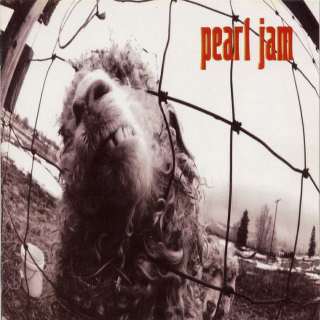
Album #71 : Pearl Jam - Vs.


Pearl Jam
Vs. (1993)

After smashing their way into the musical mainstream with their monster debut Ten, Pearl Jam reconvened after a mammoth tour to record their second album. Beginning with rehearsals in Seattle, the group (including new drummer Dave Abbruzzese) relocated to the 'tranquil' surrounds of California....which singer and songsmith Eddie Vedder hated.

After a prolonged lull, and a period where the band went out of their way to make Vedder uncomfortable, the group finally unleashed Vs., their second album, which featured a much harder sound in general (as well as some traces of funk, country and folk). As the followup to something as massive as Ten, it perhaps is somewhat overlooked in the group's catalogue other than by PJ fans.

So, today, I'm going to review it, because I think it's one of their most important albums, and also one of their best.

The Album

The first three tracks on Vs. must be considered as among the best three-punch opening combos to an album I've reviewed so far. We begin with the raw, aggressive Go, its dark riffs matched with some really sharp drum work from Abbruzzese (who also wrote the riff) and Vedder's powerful growl. It's followed by Animal, with its mild funk flavour present in the wah-pedal infused riff (not for the last time on this album either). There's some crunchy riffage, some neat lead guitar from Mike McCready and more decent drumming and singing. The third track is the largely acoustic ballad Daughter. Featuring an evocative vocal about a girl who is beaten by her parents, who don't understand her learning disability, it's Vedder's first real shining moment on the album, even if his usual growly anger is rarely glimpsed. Abbruzzese sharpens the rhythm with some deft, jazzy hi-hat work, and there's a tasteful solo from the impressive McCready.

The challenge after that is to keep the quality coming. Generally speaking, Vs. does that very, very well. The commercial sound of Dissident is somewhat jarring on an album where aggressive guitar and grunge/funk is the order of the day, however its bluesy riff is still a hooky earworm. W.M.A. points out, in typical Pearl Jam fashion, the inherent unfairness of racial profiling before it was even a thing; Vedder's lyric, "He won the lottery when he was born", calmly observes the sheer luck experienced by the very privileged. Glorified G is not quite as appealing as other tracks, but its piss-taking lyrics (taking aim at your stock standard MURRICAN gun owner) and demented country-flavoured riff are enough to distinguish it from the rest of the album.

Blood and Rats continue the grunge/funk theme; the former is a track full of incoherent fury from Vedder and some sweet bass work from Jeff Ament, while the latter makes the interesting point that rats are not as scummy as humans. Splitting those two tracks is album (nay, career) highlight, Rearviewmirror. Built around a repeated six-note riff, it is driven by a thick, steady rhythm (created by Vedder and Stone Gossard on dual rhythm guitar, supported by Ament and Abbruzzese). There's a quiet breakdown, which calms the listener, before building again, this time even louder and more energetic than the opening verses; Vedder's vocal returns to that passionate, high-register growling scream. It's that use of multiple shifts in tone and intensity that mark it as one of Pearl Jam's finest.

Of the final three songs, Elderly Woman Behind The Counter In A Small Town is the best by far, and another great tune. Taking folk and country influences, and combining them with the group's more alternative ballad sounds, Vedder delivers a heartfelt, touching lyric with a deep, resigned vocal, only rarely cranking it up when describing the title character's desperation and emotional relief. Leash is a final visit to Anger Land, with one more stop off in Grungy Funky Wah Pedal Riff City. Vedder again sings with real bite and venom....it's not a bad song at all. Closer Indifference goes down the path of Ten's closing track, Release; it's a slower, more moderate track with simple percussion and calming guitar. The only key difference is that while Release turns up the intensity further into the track, Indifference hardly leaves the station. Vedder's mildly reverberating vocal is the real star; it's pleasant but nothing more. 

The Verdict

There's plenty to like about Vs. Apart from the fact that it provides some of the band's signature songs, its willingness to stray from the established "mainstream grunge" sound of their debut marks Pearl Jam's previously unseen desire to broaden their musical horizons. It manages to build on their earlier work without going back to the well to rip off what worked before. For that, it deserves respect.

Well worth your time, and as I said at the start, it's probably still my favourite Pearl Jam album, because it has diversity while still remaining an aggressive, rocking release. 

My rating: ****

Standout Tracks

Elderly Woman Behind The Counter In A Small Town
Rearviewmirror
Go
Daughter

Tomorrow, we ask the question: have you ever been to Electric Ladyland?

Tuesday, 11 March 2014

Album #70 : David Bowie - Low


David Bowie
Low (1977)

Low, David Bowie's eleventh studio album, was recorded while the artist was in recovery from a rather serious cocaine addiction. While this addiction had resulted in Bowie's last great musical 'character', the Thin White Duke, it had eaten away at Bowie's physical and mental health to the point where Bowie himself would eventually concede that the Duke was no good for him, and he eventually moved himself away from his drug problem (Los Angeles) to the relative safety of Europe.

It was that backdrop, as well as the presence of keyboard wizard and ambient experimenter Brian Eno, that was to result in one of Bowie's most polarising and schizophrenic releases. However, time has also come to regard it as one of his grandest, most influential albums in his long and storied career.

The Album

Upon its release, Low was split into two parts - the more 'standard' rock side, featuring seven shorter, more fragmented songs, and an avant-garde ambient experimental electronic side, featuring four more complete 'portrait pieces' of locations that were immediately familiar to Bowie (as well as, consciously or otherwise, reflecting his own mental battles).

Side A (the 'rock' side) still contains some electronic experimentation, as Eno puts his Moog synthesiser and his EMS Synthi AKS 'suitcase synth' to good use. It's bookended by two fairly happy instrumentals (well, happy, comparatively speaking) in Speed of Life and A New Career In A New Town. The latter is the more musically complete, with a Bowie harmonica solo providing a soulful counterpoint to Eno's synth stylings. In between, there's ample evidence of Bowie's songwriting shift to fragmented, nonsensical ideas. Breaking Glass is half a song but quite a good half, with drug-addled lyrics set to a slow groove and mildly funk-based drumbeat. What In The World is this album's Side A in a three-minute nutshell, with a basic guitar riff completely overshadowed by chaotic synth noises, nonsensical free association poetry and reggae/Latin rhythmic touches. It gives the impression that it's not quite complete yet it probably is. Sound And Vision is another great tune, Bowie's contrasting high/low vocals (delivered in a withdrawn, secluded style to match the lyrics) are themselves set to a guitar motif that provides contrast, as it is quite upbeat. So is Eno's synth motif that later matches the vocal melody.

Elsewhere on Side A, Always Crashing In The Same Car features Bowie, a sea of complete detached calm, in a swirling mix of synthesiser and guitar; a solo from guitarist Ricky Gardiner is methodical and note-perfect, and Bowie's lyrics convey a sense of frustration in repeatedly making the same mistakes over and over again. Be My Wife features no synthesisers, according to the album's liner notes (however I'm sure I can hear some in the mix). It also features a ragtime piano intro for some reason, and despite the personal pleas in the lyrics, it left me a bit cold (though again, Gardiner's solo is methodical, careful and subtle.

That takes care of the 'rock' side. Now for Side B's ambient portrait pieces.

Side B is unlike anything Bowie recorded previously (though he had, in fairness, begun to experiment with electronic sounds and the 'motorik' beat on Station to Station). First track Warszawa is nothing short of spectacular. Written about Bowie's visit to the desolate city of Warsaw in 1973, the song conveys perfectly that bleak desolation, especially in the first minute when it established, through a particularly dark synthesiser motif, that feeling. The second section sees a key change and a mass of synthesised strings, adding wistful melancholy to the dank depression of the early synth lick. Its third section, however, is the sign of things to come on Side B; Bowie, singing lyrics that may be in Polish (research is not conclusive) warbles painfully above a choir of Bowies. There's another key change here, and then the song finally goes back into a reprise of the first section. It is hauntingly beautiful ambient music, yet at the same time, is stunning art.

Art Decade is Bowie's observation of West Berlin as a 'dying' city; its plodding, moody nature, driven slowly by discordant synth rhythms, succeeds in conveying this (though without as much inherent beauty as in Warszawa). Weeping Wall (yep, it's about the Berlin Wall) is the least effective 'portrait piece' as I'm not personally convinced that it conveys its message of the Wall's inherent despair quite as well as other tunes convey their messages. Nevertheless, it's of interest for two reasons; Bowie plays all instruments on the song, and uses insistent stabbing synthesiser notes to form the song's rhythm section. There's even some notes of guitar clearly heard here, and the vibraphone adds a nice touch. As a minimalist piece it's good, but as an art piece it doesn't click.

Final track Subterraneans was written about the residents of East Berlin and their personal misery, pining for a life left behind. This track was one of the most worked-on on the album, with most of the instrument tracks being reversed (the bass line and some prominent synth melodies in particular, multiple layers of synthesiser provided by Eno, and Bowie creating a crescendo of harmonies with his vocals at one point. It's lush for an ambient piece, but again, its melancholy feeling and use of jazz saxophone (to represent the 'old' life of the East Berliners) conveys its intended message to great effect. Bowie's vocals, wordless groans for most of the track (another musical motif designed to evoke the misery of the East) are later briefly replaced by complete nonsense lyrics. It's a suitable ending to Side B, and further stamps Bowie as one of music's greatest risktakers.

The Verdict

It's tough to listen to, but I found Low to be ultimately rewarding. Viewed through the lens of Bowie's personal struggles at the time, and with the reminder that Bowie has always been about pleasing himself, first and foremost, this is a wonderful, wonderful album despite its inaccessibility. It's the sound of a man far from being at ease with himself and trying to express his pain, his feelings and his thoughts not through lyrics (as most songwriters would do) but through music and texture.

Aided by Eno and long-time producer Tony Visconti, Bowie did just that....and his next album would take this avant-garde approach even further.

My rating: ****

Standout Tracks

What In The World
Warszawa
Sound And Vision

Tomorrow, a 90s grunge classic (no, not that one.....not that one either.....the other one by that band.)

THE MEGA LONG WEEKEND TRIPLE THREAT REVIEW SPECIAL (featuring special guest comments!)


The Mega Long Weekend Triple Threat Review Special:

Guns 'n' Roses - Appetite For Destruction (1987)
Steel Panther - Balls Out (2011)
Velvet Revolver - Contraband (2004)

This was certainly a very interesting long weekend. Myself, my two bandmates from Geronimo and my bass player's brother headed up to Robinvale for the weekend, ostensibly to play two gigs but also to enjoy a ski race and others' company. This did have me worrying slightly as to how I was going to maintain the LOAD Project rage.

The best way? Have the bandmates set the albums. 

So today's mega review represents albums 67, 68 and 69 (if only Steel Panther was album 69, that would be a delicious irony, LOL DELICIOUS 69.) Each review is heavily abbreviated, partly for space reasons, partly because I'm interested to see how I summarise each album up as briefly as possible.

The Appetite For Destruction review also features guest comments from Pete (PG) and Harri (HL), my comrades in Geronimo.

So....here we go.

Appetite For Destruction

Sprawling, magnificent glam-style hard rock, built around kickass riffs, MAD SOLOS and the high-pitched vocals of Axl Rose. There are moments that verge on the sublime, such as Sweet Child 'o Mine ("The opening riff speaks for itself" - HL; "As does the bass line" - PG), the rollicking headbanging of Paradise City (the last two minutes is some of the most supercharged in all of rock, as Slash solos LIKE A DAMN BOSS over a flying sped-up version of the track's main riff), the high-octane rock of Nightrain ("It's about an actual high-alcohol wine the band used to drink" - HL) or the slide-guitar playing, Axl shagging some chick and putting the audio into the bridge of the song craziness of Rocket Queen. And how can I forget the band's ode to heroin, Mr Brownstone, with its wicked drumming and guitar wizardry.

Basically all the stuff people have said about this album is true. It's a magnificent work and a brilliant rock album. I didn't really like My Michelle but that was about it. 

Standout tracks:  Paradise City, Rocket Queen, Mr Brownstone

My rating: *****
Balls Out

If you don't like Steel Panther, either for their pure adherence and aping of the 80s hair/glam metal ethos, sound and execution or their frankly ridiculous lyrics that are like machismo on steroids, I suggest you have a checkup because you may be clinically dead. They make The Darkness look like Andre Rieu, and even if just about every song can be boiled down to "WE ARE STEEL PANTHER AND WE HAVE LARGE PENISES AND WE FUCK EVERYTHING THAT MOVES AND IT FUCKS US" it's wrapped up in such fucking awesome rock riffs and soaring vocals that you just don't care.

It's hard to identify specific songs that rule, so many are great (even if they are one note jokes) but the great moments on the album are either monstrous falsetto vocals, wild shredding guitar solos or astoundingly funny lyrics. It simply has to be checked out by anyone who loves guitar rock music.

The only negative is the appearance by noted musical loser Chad Kroeger on the otherwise cool It Won't Suck Itself.

Standout Tracks: Tomorrow Night, It Won't Suck Itself, Just Like Tiger Woods

My rating: **** and a half
Contraband

The second GnR related album of the long weekend, Velvet Revolver is basically the Gunners but they subbed Scott Weiland of Stone Temple Pilots in for Axl. The result is not quite what I expected; at times it plays like a GnR album, but rarely. It seems to lack the tuneful quality of Appetite, although Slash comes to the party with his typical guitar heroics. Instead, there's a good selection of solid, but unspectacular, rock tunes that follow the standard rock song structure.

Additionally, while Weiland is good and everything, he's no Axl (well, no late 80s Axl, anyway). He also seems to lack the ballsy quality to his vocal that he frequently exhibited as a Pilot. 

It's a pretty solid listen, but in comparison to the other two long weekend albums, it's a bit of a fizzer, really.

Standout Tracks: Big Machine, Fall To Pieces

My rating: ***

So, there you go. The three albums listened to in Robinvale. Thanks to Haz, Potsy and Sean for their awesome company, and if I can convince them, hopefully Haz and Potsy will join me on a future review in The LOAD Project!

"We had a good laugh" - HL
"Fucken awesome" - PG

Tomorrow's album is a change of pace, as we tackle a member of Bowie's Berlin trilogy.

Saturday, 8 March 2014

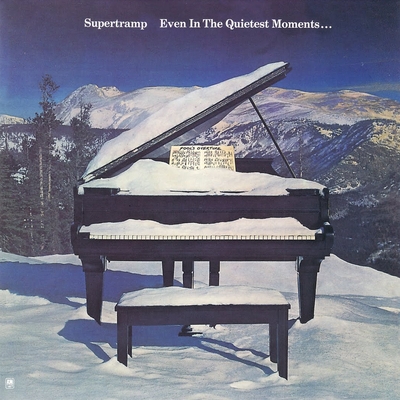
Album #66 : Supertramp - Even In The Quietest Moments


Supertramp
Even In The Quietest Moments (1977)

Confession time, everyone.

Firstly, I quite like the music of Supertramp, especially everything from Crime of the Century through to the commercially successful Breakfast In America. 

Secondly, when I was younger I used to get quite confused by photos of the band. Where's the chick, I used to ask myself. There's clearly a chick singing on this album. Why are there five dudes?

Turns out singer/guitarist/keyboard player/co-songwriter Roger Hodgson is in fact not a chick, he is just a dude with a really high voice. So....there you go.

Even In The Quietest Moments was released in 1977, and showcases the band's not-quite-prog, not-quite-rock and not-quite-pop style. Despite never really receiving massive critical praise, it's been a guilty pleasure of mine for a long time. So, today, I felt I should explore it with a more critical eye and see what I think of it today.

The Album

The album opens with the fairly successful hit, Give A Little Bit. This delightful slice of tuneful acoustic guitar-driven pop is a pleasant way to start, even if it bears no resemblance to the rest of the album. It demonstrates Hodgson's pop crafting skills to perfection as he creates a hooky melody. After that, though, there's some remarkably different tunes. 

Lover Boy is intriguing from a structural standpoint. The quite poppy, upbeat piano and vocal verse sections are almost whimsical about the titular character, a man who has ordered a book that guarantees him luck with the ladies. It's the swirling, foreboding long middle section though, punctuated only by a whimsical verse and a pick-up in tempo, that are really appealing, giving the impression that the 'lover boy' is somewhat nefarious. There's also some decent guitar work here, which adds a nice touch to a fine tune. Even In The Quietest Moments is shiny and shimmering, if that makes sense; the guitar sound is bright and summery, even though the melody it plays isn't; Hodgson's vocal is at its finest as well. The only negative part is the slightly too long middle section, though the clarinet is nice and prevents the song from being boring. Downstream is a really classy song; it's just Rick Davies (also a piano/vocal/co-writer) on piano and vocals, and his deeper, bluesier voice is in fine fettle, delivering a passionate vocal about just getting away from it all.

Babaji is a pleasant enough song (fantastically sung by Hodgson too), but a bit like Even In The Quietest Moments, I find it just goes a touch too long. The opening is, however, very beautiful music. It could have been a tremendously gorgeous pop song with just a little bit of focus. Next is the great (but a touch too long....are you seeing a pattern here yet?) From Now On. A great piano riff/melody from Davies is matched by an equally gritty vocal; Davies was always at his best when singing about a man battling the odds. But although the band goes for the choral vocal at the end a la Hey Jude, and it sounds alright, by the time you get there you are just a touch sick of hearing Davies sing that 'that's the way it's got to be/from now on'.

Closing track Fool's Overture is pure progressive rock. The opening few minutes (bar the strange horns, bells and playing of a famous Winston Churchill speech) are played entirely on string synthesisers and the melody is strangely appealing. The piano/bass/drums section, when it kicks in, is supported by a wistful synth melody and equally wistful saxophone solo. The Hodgson solo piano/vocal sections are goosebump-providing; magnificent vocals and that part sorrowful, part foreboding piano section combine beautifully. 

Whether the song needed the long section with the wind and choir (and snippet from a previous Supertramp tune...) that gradually reintroduces that opening synth string riff is debatable; personally I think the song can live without it; but it is more proof of the purely progressive nature of the track. I really like the song from a personal opinion standpoint, but again, some of it is either ridiculously pretentious or, worse, completely pointless.

The Verdict

Yeah, you know what? I still like Even In The Quietest Moments. Some moments on the album are absolutely beautiful and show that Supertramp, for all their naffness, could produce wonderful pop/prog/rock music. Putting that critical hat on though shows that this album, like most of their releases, was inconsistently outstanding; generally very good but occasionally pointless.

This may explain why they were successful, but not massively so; the singles could be very, very good, but sometimes the album tracks were lacking a certain urgency.

Still, it's a decent album with a few rather good songs.

Most pleasingly, even at the age of 33, it still makes me feel like I did listening to it when I was 10.

My rating: ***

Standout Tracks

Give A Little Bit
Lover Boy
Downstream

Tomorrow, I welcome you to a place where we've got fun and games. I'm on the road tomorrow too, so my bulk reviews will be posted again on Monday...possibly with guest comments! See you soon!